A single raised voice or sharp glance can shift the entire mood of a room. Yet forward-thinking organizations are learning that catching those moments early changes everything. Workplace programs now emphasize early recognition of emotional signals, turning potential blowups into opportunities for connection and calm. This approach, explored deeply in the science of recognition of emotional signals, draws on neuroscience and practical experience to equip leaders and teams with tools that actually work.
Emotional conflicts fracture teams and families. The ongoing tension breeds burnout, damages relationships, and hurts performance. The Noll Method’s 90-Second Power Move™ is a proven, neuroscience-based skill for restoring calm, tested from boardrooms to maximum-security prisons. Master this life-changing technique to transform chaos into collaboration. Book a no-obligation zoom call with Doug Noll today!
The Hidden Costs of Ignoring Emotional Tension
Every day, unresolved frustration simmers in offices, factories, and remote calls across North America. People hold back until they can’t, and the fallout hits productivity, morale, and even health. Industry data shows the U.S. workplace stress management market size was estimated at USD 3.65 billion in 2025, a figure that quietly reflects how widespread these challenges have become. Companies that wait for problems to explode pay a steep price in turnover, absenteeism, and lost focus. The smartest organizations are shifting to prevention, training people to notice the first flicker of anger or anxiety before it takes over and derails entire projects or team performance.
This isn’t about forcing positivity or pretending conflict doesn’t exist. It’s about recognizing that emotions are data early warnings that something needs attention. Leaders who learn to read these signals gain a genuine edge, transforming difficult conversations into moments of real understanding that strengthen relationships rather than fracture them under pressure.
Spotting Emotional Signals Before They Escalate
The signs are often subtle: a tightened jaw, a sudden change in tone, crossed arms, or that telltale pause before someone speaks. In meetings, it might look like someone checking out or pushing back harder than necessary. At home or in customer service, it shows up as rising volume or defensive language. The key is noticing these cues early enough to respond thoughtfully rather than reactively, which is the foundation of how to stay calm in an argument.
Training begins with simple awareness. Employees and managers alike discover they can pause, breathe, and assess what’s really happening beneath the surface. This early recognition prevents the kind of escalation that leaves everyone drained and relationships strained. It directly supports techniques to avoid fighting with your partner or colleagues, turning potential arguments into constructive dialogue before they gain momentum.
The Neuroscience Behind Calming Heated Moments
Recent brain research shows why naming emotions works so powerfully. When someone feels truly heard and their feelings are labeled accurately, the emotional centers of the brain quiet down within seconds. This process, known as affect labeling, creates space for rational thinking to return. It’s not therapy or manipulation it’s a precise, science-backed technique that shifts the conversation in moments, supporting emotional regulation in heated conversations.
Unlike traditional active listening, which often focuses on facts or solutions, affect labeling targets the feeling itself. “You sound incredibly frustrated right now” lands differently than “Let’s solve the problem.” The difference is immediate and measurable, backed by the science of de-escalation. Leaders who master this create emotional safety in conversation, helping teams move past tension without losing valuable time or trust.
The Noll Method: A 90-Second Path to De-Escalation
Doug Noll, an award-winning mediator and bestselling author, developed a neuroscience-backed approach that delivers results fast. His Noll Method relies on precise emotional phrasing the so-called 90-Second Power Move to calm situations that might otherwise spiral. By naming the underlying emotion with empathy and accuracy, the technique creates emotional safety almost instantly and supports how to calm someone who’s angry.
What sets this method apart is its simplicity and proven speed. In as little as 90 seconds, people move from anger to openness. Noll brings decades of real-world testing to the table, having refined the approach through executive coaching, keynote speaking, and intensive training sessions. His work shows up in boardrooms, family dynamics, and even the most challenging environments, proving that anyone can learn de-escalation techniques for everyday life and leadership empathy training.
From Maximum-Security Prisons to Corporate Leadership
Noll’s credentials run deep more than 40 years mediating conflicts and training people in emotional mastery. He once taught life inmates in California’s toughest prisons how to stop violence before it started, creating programs that dramatically reduced fights and arguments. That same skill set now serves leaders who want to handle angry employees, manage tension in meetings, and build stronger teams through proven conflict resolution training.
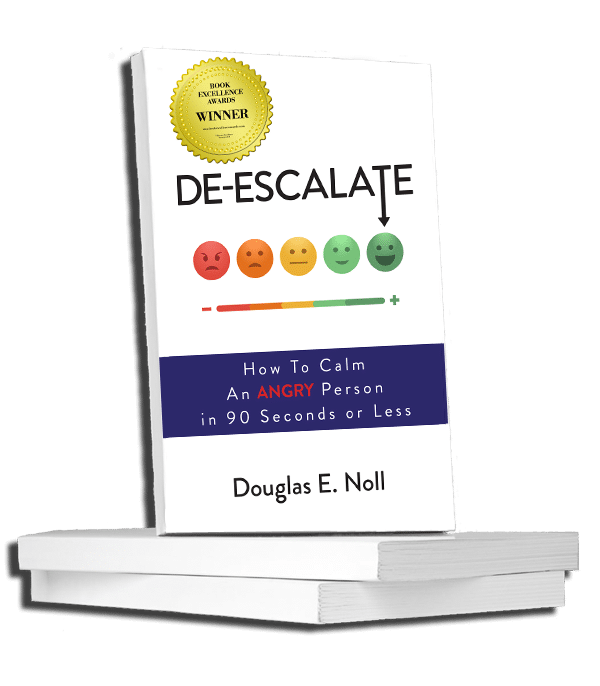
His differentiator is clear: he is the only expert offering this exact combination of proven techniques with a straightforward guarantee you will be able to stop fights and arguments once you master the method. Books like De-Escalate and the Prison of Peace project demonstrate the approach in action, while his leadership empathy training helps executives communicate under pressure with confidence and clarity. This unique background ensures real results across North America.
Putting De-Escalation to Work Every Day
Practical application starts with small shifts in how we respond. Instead of jumping to solutions or defending positions, leaders learn verbal de-escalation techniques that validate feelings first. In a tense staff meeting, a simple “It sounds like this change feels overwhelming for the team right now” can lower the temperature and open the floor to productive dialogue, supporting how to keep your cool under pressure.
- Listen without reacting focus entirely on the emotion being expressed to build trust instantly.
- Use affect labeling to name what you hear: “You seem angry and disappointed,” creating immediate calm.
- Avoid advice until the person feels heard and calm returns, preventing further escalation.
- Practice in low-stakes moments to build the habit under pressure and handle emotionally charged conversations effectively.
These tools fit naturally into conflict resolution training for leaders, classroom management, and even first-responder scenarios. Organizations that invest here see fewer office arguments, stronger collaboration, and employees who feel genuinely supported. Mastering these skills transforms how to respond to conflict at work and stops office arguments before they start.
Overcoming Common Doubts About Emotional Skills
Skepticism is understandable. Some believe fights and arguments are simply part of life and will never disappear. Others worry that working with emotions feels uncomfortable or even risky. Yet the evidence from prisons to boardrooms tells a different story. When people learn these skills, conflicts drop sharply not because emotions vanish, but because they are handled skillfully and early through proven emotional de-escalation in the workplace.
The fear of mastering emotions fades quickly once people experience the 90-second shift for themselves. What feels vulnerable at first becomes empowering. Leaders report clearer thinking, better relationships, and the ability to create emotional safety in any conversation. The method works because it respects how the brain actually functions, directly addressing objections and delivering tools for managing emotionally charged conversations with confidence.
Creating Lasting Change Through Early Recognition
Workplace programs that prioritize spotting emotional signals early are building cultures where people thrive. They move beyond reactive policies to proactive skills that prevent problems and strengthen teams. Doug Noll’s approach offers a practical, proven path forward one that leaders across North America are adopting to handle difficult people, calm angry students or employees, and lead with genuine empathy. This includes executive communication under pressure and tools for how to manage tension in meetings.
The results speak for themselves: fewer escalations, deeper trust, and environments where innovation and collaboration flourish. In the end, recognizing emotional signals isn’t soft skill training it’s smart business that pays dividends every single day, empowering organizations to stop fights and arguments while fostering lasting emotional safety and professional growth.
Frequently Asked Questions
What are the early emotional signals leaders should watch for in the workplace?
Early emotional signals include subtle physical and behavioral cues such as a tightened jaw, crossed arms, sudden changes in tone, defensive language, or a person mentally “checking out” during meetings. Recognizing these signs before they escalate is the foundation of effective workplace conflict management. Training employees and managers to pause, breathe, and assess what’s happening beneath the surface can prevent arguments from gaining momentum and keep team dynamics healthy.
What is affect labeling, and how does it help de-escalate conflict at work?
Affect labeling is a neuroscience-backed technique where you accurately name the emotion someone appears to be experiencing for example, saying “You sound incredibly frustrated right now.” Brain research shows this causes the brain’s emotional centers to quiet down within seconds, creating space for rational thinking to return. Unlike traditional problem-solving approaches, affect labeling targets the feeling itself first, making it one of the most effective verbal de-escalation techniques for leaders managing heated workplace conversations.
What is the Noll Method and how quickly does it work for calming angry employees?
The Noll Method, developed by award-winning mediator Doug Noll, is a neuroscience-based de-escalation approach that uses precise emotional phrasing known as the “90-Second Power Move” to shift someone from anger to openness in as little as 90 seconds. It has been tested across high-stakes environments, from California’s maximum-security prisons to corporate boardrooms, consistently reducing conflicts and arguments. Leaders who adopt this method report clearer communication, stronger team relationships, and the ability to create emotional safety in even the most challenging conversations.
Disclaimer: The above helpful resources content contains personal opinions and experiences. The information provided is for general knowledge and does not constitute professional advice.
You may also be interested in: Debunking Myths About the Inevitability of Workplace Fights
Emotional conflicts fracture teams and families. The ongoing tension breeds burnout, damages relationships, and hurts performance. The Noll Method’s 90-Second Power Move™ is a proven, neuroscience-based skill for restoring calm, tested from boardrooms to maximum-security prisons. Master this life-changing technique to transform chaos into collaboration. Book a no-obligation zoom call with Doug Noll today!
Powered by flareAI.co