In the heat of the moment, high-stakes conversations unfold every day whether in boardrooms where executives clash over strategy, in living rooms where partners argue about money, or in workplaces where a single frustrated comment can derail an entire team. Most people reach for the communication tools they’ve been taught: stay calm, use “I” statements, listen actively, present the facts. Yet these familiar tactics frequently backfire, turning manageable disagreements into full-blown arguments. The result is more frustration, eroded trust, and conversations that end worse than they began.
The problem is not a lack of intention or skill. It’s a deeper mismatch: conventional conflict-resolution training rarely accounts for what actually happens inside the brain when emotions surge. Until we understand that neurological reality, even the best-intentioned advice can make things worse instead of better.
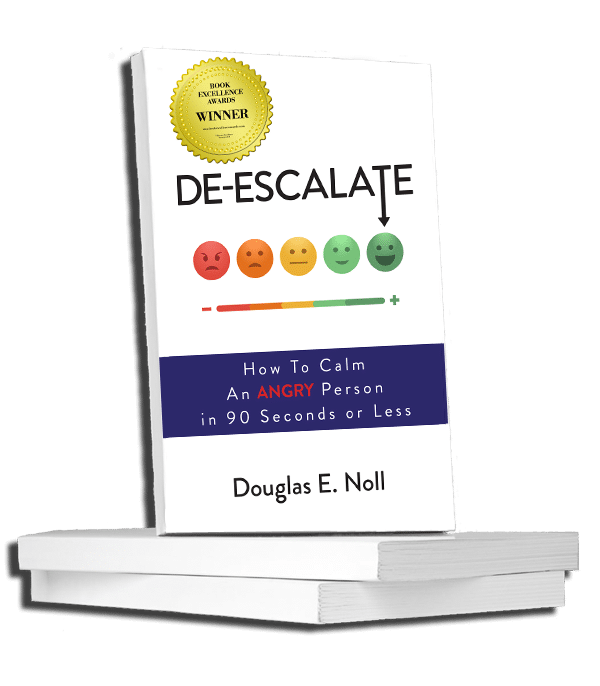
Emotional conflicts fracture teams and families. The ongoing tension breeds burnout, damages relationships, and hurts performance. The Noll Method’s 90-Second Power Move™ is a proven, neuroscience-based skill for restoring calm, tested from boardrooms to maximum-security prisons. Master this life-changing technique to transform chaos into collaboration. Book a no-obligation zoom call with Doug Noll today!
The Amygdala Takes Over
When anger, fear, or intense frustration floods the system, the amygdala the brain’s ancient threat-detection center assumes command. It temporarily sidelines the prefrontal cortex, the region responsible for logic, impulse control, perspective, and long-term thinking. In this state a person is not deliberately irrational; their nervous system has shifted into survival mode, interpreting the disagreement as danger.
Most traditional techniques assume the rational brain remains accessible. They urge people to explain the situation objectively, propose solutions, or appeal to fairness. But when the amygdala is in charge, those appeals rarely land. They are often experienced as invalidation, criticism, or threat prompting the emotional brain to double down rather than de-escalate.
Why Classic Phrases Escalate Instead of Soothe
Few instructions are more instinctive and more damaging than telling someone to “calm down.” The phrase sounds reasonable on its face, yet it almost always intensifies the conflict. It signals that the person’s emotional state is unacceptable or excessive, forcing them to defend their feelings before they can even address the issue. The result is a secondary argument about whether they have the right to feel upset.
Similar dynamics play out with other staples of conventional training:
- Jumping immediately to problem-solving (“Here’s what we can do…”) skips over the emotion entirely.
- Correcting factual inaccuracies (“That’s not what happened…”) feels like dismissal when someone is already flooded.
- Urging objectivity (“Let’s look at this rationally…”) can read as gaslighting to a person whose alarm system is screaming.
Each of these moves bypasses the emotional reality rather than meeting it, leaving the other person feeling unseen and driving the intensity higher.
A Neuroscience-Backed Alternative: Affect Labeling
Fortunately, decades of neuroimaging research point to a more reliable path. A landmark 2007 study led by Matthew Lieberman showed that simply naming the emotion a person appears to be experiencing what researchers call affect labeling reduces activity in the amygdala while simultaneously engaging brain regions tied to emotional regulation and reasoning.
A calm, accurate statement such as “You sound really frustrated right now” or “This seems incredibly upsetting” works because it validates the feeling without judgment, argument, or advice. By acknowledging the emotion directly, affect labeling helps quiet the threat response, often within 90 seconds. Once the amygdala settles, the prefrontal cortex regains capacity, opening the door to clearer thinking and genuine dialogue.
From Theory to Practice: Developing Lasting Skill
Knowing the science is one thing; turning it into reflex is another. Leaders and professionals who want real capability must build the skill deliberately. Start with low-stakes moments routine one-on-ones, casual feedback exchanges where the emotional charge is minimal. Name the feeling you observe, stay steady yourself, and notice what happens. Over weeks and months the response becomes automatic: emotion detected, emotion named, tension drops.
Organizations that embed this kind of training report concrete gains: faster recovery from friction, stronger interpersonal trust, fewer lingering resentments, and less collateral damage to productivity and morale. Proactive de-escalation is almost always more efficient than damage control after a blow-up.
The Rising Recognition of Emotional Tools
Wider society is catching on. Growing awareness of mental health’s role in performance has fueled demand for practical emotional-regulation resources. The global market for mental health apps was already valued at USD 7.48 billion in 2024, with North America accounting for more than a third of worldwide revenue. That momentum reflects a shared understanding: the ability to manage intense emotions is no longer a soft skill it directly influences well-being, collaboration, and results, especially for professionals under pressure.
Overcoming the Most Common Doubts
Skeptics raise predictable objections. “Arguments are inevitable,” they say. “This won’t work when the stakes are really high.” Yet practitioners who master affect labeling consistently report the opposite: they interrupt escalating arguments, calm visibly angry colleagues or family members, and hold their own center even when provoked.
A second hesitation is more personal: working with emotions requires first facing your own. That can feel uncomfortable or vulnerable. But the very act of regulating oneself under pressure is what separates reactive patterns from mature, effective leadership.
Changing the Game, One Conversation at a Time
Traditional communication training has value in calm moments. When emotions run hot, however, it frequently misses the mark because it overlooks the brain’s hard-wired response to threat. By contrast, techniques that speak directly to the emotional state starting with precise, nonjudgmental naming align with how the nervous system actually works.
The outcome is not the absence of conflict; disagreement will always exist. The transformation lies in how we meet it. In executive suites, classrooms, intimate relationships, and high-tension environments alike, the capacity to lower the temperature in roughly ninety seconds preserves relationships, protects performance, and builds cultures where people feel safe enough to speak honestly. The research is solid, the cost of inaction is high, and the practical tools are accessible today.
Frequently Asked Questions
Why does telling someone to “calm down” make arguments worse?
Telling someone to calm down signals that their emotional state is unacceptable, which forces them to defend their feelings before the actual issue can even be addressed. This typically triggers a secondary argument about whether they have the right to be upset. When emotions are running high, the brain’s amygdala has taken over, and dismissive phrases like this intensify the threat response rather than soothing it.
What is affect labeling, and how does it help de-escalate conflict?
Affect labeling is the practice of naming the emotion another person appears to be experiencing for example, saying “You sound really frustrated right now.” Research from a landmark 2007 study by Matthew Lieberman found that this simple act reduces amygdala activity while engaging brain regions linked to emotional regulation. It validates the person’s feelings without judgment or advice, often calming the threat response within about 90 seconds and reopening the door to rational dialogue.
Why does traditional communication training fail during high-stakes or emotionally charged conversations?
Most conventional conflict-resolution techniques like presenting facts, problem-solving, or urging objectivity assume the rational brain remains accessible during heated moments. In reality, intense emotions cause the amygdala to temporarily sideline the prefrontal cortex, which handles logic and perspective. This means well-intentioned advice like “let’s look at this rationally” can actually feel dismissive or threatening, escalating the conflict rather than resolving it.
Disclaimer: The above helpful resources content contains personal opinions and experiences. The information provided is for general knowledge and does not constitute professional advice.
You may also be interested in: Doug Noll’s Conflict Resolution for High Pressure
Emotional conflicts fracture teams and families. The ongoing tension breeds burnout, damages relationships, and hurts performance. The Noll Method’s 90-Second Power Move™ is a proven, neuroscience-based skill for restoring calm, tested from boardrooms to maximum-security prisons. Master this life-changing technique to transform chaos into collaboration. Book a no-obligation zoom call with Doug Noll today!
Powered by flareAI.co