Imagine a virtual team meeting: a project lead shares what they believe is constructive input on a deliverable. The tone is meant to be supportive, yet the recipient hears judgment. Silence follows. No one probes deeper. The underlying issue never surfaces, and the group moves on leaving real progress on the table. Scenes like this unfold daily across offices, remote setups, and hybrid environments. They rarely stem from flawed logic or absent information. More often, the breakdown begins with something quieter and more human: a mismatch between the emotion being sent and the one being received.
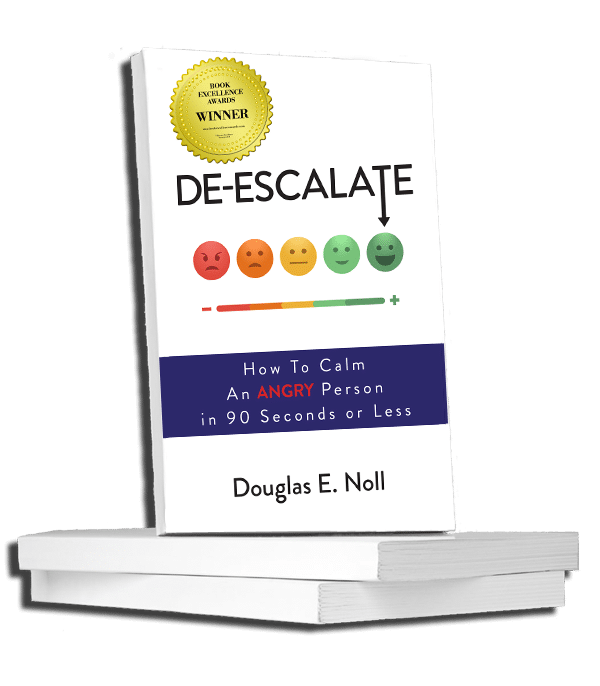
Emotional conflicts fracture teams and families. The ongoing tension breeds burnout, damages relationships, and hurts performance. The Noll Method’s 90-Second Power Move™ is a proven, neuroscience-based skill for restoring calm, tested from boardrooms to maximum-security prisons. Master this life-changing technique to transform chaos into collaboration. Book a no-obligation zoom call with Doug Noll today!
The Quiet Disconnect That Derails Dialogue
Call it emotional misalignment: the space that opens when the speaker’s intended feeling collides with a different interpretation on the listener’s end. Encouragement registers as criticism. A stressed update comes across as chronic negativity. The actual words may be precise and professional, but the emotional subtext mislands and that single misstep changes everything that follows.
Once the emotional read goes off course, trust begins to erode. People grow cautious. They withhold candor to avoid further misinterpretation. Over months or quarters, teams quietly lose the openness required for creative risk-taking, candid feedback, and early problem-spotting. The cost is rarely a single explosive argument; it is usually a slow accumulation of guarded exchanges, stalled initiatives, and higher-than-necessary turnover.
How Distance Amplifies the Misread
Remote and hybrid work have sharpened this vulnerability. Face-to-face interaction supplies a rich stream of cues slight shifts in vocal pitch, fleeting facial expressions, unconscious gestures that help us correct our emotional assumptions in real time. Strip most of those away and the margin for error widens dramatically.
A concise message without greeting or emoji can land as cold. A delayed reply can be read as irritation or indifference. The informal corridor chat that once diffused tension no longer exists in the same spontaneous way. Digital channels must now shoulder the full weight of relational nuance, and they are not naturally equipped for the task. Without deliberate effort, small misunderstandings snowball into lasting friction.
What Teams and Organizations Actually Lose
When conversations derail before solutions emerge, the damage appears in both soft and hard metrics. Innovation lags because half-formed ideas are kept private to avoid potential misreading. Feedback becomes superficial or avoided altogether. Psychological safety the foundation that allows people to speak up before problems metastasize weakens noticeably.
Over time the pattern feeds attrition. Professionals who consistently feel unseen or misjudged begin updating their résumés. Leaders spend increasing energy on damage control rather than forward momentum. The organization pays twice: once in lost productivity and again in recruitment and onboarding expenses.
Emotional Clarity Is a Skill, Not a Talent
The encouraging reality is that closing these gaps does not depend on charisma or luck. Emotional alignment can be developed systematically. Organizations that approach it as a core competency rather than an optional “nice-to-have” discover that communication improves measurably and conflict becomes more constructive.
Social and emotional learning (SEL), originally designed for educational settings, is increasingly adapted for adult workplaces. At its heart are capacities such as self-awareness, emotion regulation, empathy, and relationship management. The Collaborative for Academic, Social, and Emotional Learning (CASEL) framework identifies five interrelated competencies that, when strengthened, help adults interpret emotional signals more accurately and respond in ways that preserve connection rather than fracture it.
Interest in these skills continues to rise across sectors as leaders recognize that technical expertise alone is rarely enough when collaboration and trust are required to get complex work done.
Practical Habits That Make Alignment Easier
Meaningful change rarely demands a sweeping transformation. Modest, repeatable practices often produce outsized returns:
- Open meetings with a brief, low-stakes check-in (“How are you showing up today?”) so emotional temperature is visible before diving into tasks.
- Make space for short, blame-free updates about workload pressure, reducing the chance that stress festers unspoken.
- Agree as a group on feedback guidelines specific language for giving it, constructive ways to receive it so everyone operates from shared expectations.
- Leverage lightweight digital supports such as sentiment trends in team tools or quick pulse surveys that surface morale signals early.
- Equip managers with simple emotion-regulation techniques so they can remain grounded when a discussion heats up unexpectedly.
These steps do not remove disagreement; they make disagreement safer and more productive. When people sense they are being accurately understood, they stay engaged long enough for real solutions to emerge.
Responding to Common Doubts
Some decision-makers hesitate, worrying that explicit attention to emotions will feel overly therapeutic or consume too much time. Experience shows the reverse: unaddressed emotional undercurrents devour far more hours in repair work, rumor control, and disengagement. Others fear opening the door to endless processing. The antidote is intentional balance pair emotional literacy with crisp task orientation so discussions retain direction and momentum.
Why the Pattern Is Worth Breaking
Most workplace conversations do not fail because participants are unintelligent or ill-intentioned. They falter when emotional alignment slips and no mechanism exists to notice and repair the slip. In an era where meaningful work almost always requires sustained cooperation often across time zones, cultures, and screens the capacity to read and respond to feeling is no longer peripheral. It is infrastructural.
Teams and organizations that invest in this infrastructure do more than create warmer cultures. They build environments where difficult topics surface earlier, creative friction turns generative rather than destructive, and people remain willing to bring their full attention to shared challenges. The breakdowns are common, but they are not inevitable. The path forward begins with the simple acknowledgment that, in human communication, what is felt is frequently as consequential as what is said.
Frequently Asked Questions
What is emotional misalignment in the workplace, and why does it matter?
Emotional misalignment occurs when the feeling a speaker intends to convey doesn’t match what the listener actually perceives for example, encouragement being received as criticism. It matters because even technically precise communication can derail when the emotional subtext mislands. Over time, these repeated misreads erode trust, reduce psychological safety, and cause employees to withhold candid input, ultimately stalling collaboration and innovation.
How does remote and hybrid work make workplace communication breakdowns worse?
In face-to-face settings, real-time cues like vocal tone, facial expressions, and body language help people correct emotional misreads on the fly. Remote and hybrid work strips away most of these signals, making brief or emoji-free messages easy to misinterpret as cold or dismissive, and delayed replies easy to read as irritation. Without deliberate communication habits to compensate, small digital misunderstandings can snowball into lasting team friction.
What practical steps can teams take to improve emotional alignment and prevent conversation breakdowns?
Teams can build emotional alignment through small, consistent habits rather than sweeping overhauls. Starting meetings with a brief emotional check-in, establishing shared feedback guidelines, and equipping managers with basic emotion-regulation techniques all help create an environment where stress and tension are visible before they escalate. Lightweight tools like pulse surveys or sentiment tracking can also surface morale signals early, making it easier to address issues while they’re still manageable.
Disclaimer: The above helpful resources content contains personal opinions and experiences. The information provided is for general knowledge and does not constitute professional advice.
You may also be interested in: 8 Powerful Biblical Peacemaking Tools to Handle Anger With Grace
Emotional conflicts fracture teams and families. The ongoing tension breeds burnout, damages relationships, and hurts performance. The Noll Method’s 90-Second Power Move™ is a proven, neuroscience-based skill for restoring calm, tested from boardrooms to maximum-security prisons. Master this life-changing technique to transform chaos into collaboration. Book a no-obligation zoom call with Doug Noll today!
Powered by flareAI.co