Quick Listen:
In the thick of a heated argument whether over a critical decision at work or a personal misunderstanding at home logic often crumbles. People walk away baffled: “Why didn’t they just listen to reason?” The uncomfortable truth is that when emotions surge, the brain does not default to rational processing. Instead, it reverts to ancient survival circuitry that has little interest in balanced debate or careful evidence.
Emotional conflicts fracture teams and families. The ongoing tension breeds burnout, damages relationships, and hurts performance. The Noll Method’s 90-Second Power Move™ is a proven, neuroscience-based skill for restoring calm, tested from boardrooms to maximum-security prisons. Master this life-changing technique to transform chaos into collaboration. Book a no-obligation zoom call with Doug Noll today!
The Amygdala Hijack: Biology Overrides Logic
Deep in the limbic system sits the amygdala, an almond-shaped structure that functions as the brain’s rapid-response alarm. The moment it registers a perceived threat be it criticism, exclusion, or raised voices it launches what neuroscientists call an amygdala hijack. Within a fraction of a second, the sympathetic nervous system floods the body with adrenaline and cortisol. Blood is redirected away from the prefrontal cortex the seat of executive functions such as reasoning, impulse control, and empathy and funneled toward structures primed for immediate action: fight, flight, or freeze.
Once this shift occurs, a calm discussion of facts feels like an assault. The prefrontal cortex, temporarily starved of resources, cannot effectively weigh arguments or moderate tone. What began as a disagreement about strategy or priorities registers instead as a personal attack. Telling someone to “be reasonable” in that state is like asking a sprinter to solve calculus mid-race: the hardware simply isn’t online.
The 90-Second Physiological Wave
Fortunately, raw emotional intensity is not endless. Neuroanatomist Jill Bolte Taylor described a key observation now widely cited: the initial chemical rush of a powerful emotion racing heart, flushed skin, clenched jaw typically peaks and begins to subside within roughly ninety seconds, provided the mind does not keep feeding the fire with rumination.
After that brief biological wave passes, prolonged distress stems less from hormones and more from the stories we continue telling ourselves: replaying the slight, forecasting catastrophe, assigning malicious intent. Recognizing this natural ninety-second arc creates a narrow but powerful window. A deliberate pause in those first moments can interrupt the escalation before words are spoken that cannot easily be unsaid.
Affect Labeling: The Neuroscience-Backed De-escalation Tool
One of the most reliable ways to shorten that emotional surge is affect labeling calmly naming the other person’s feeling aloud without judgment, advice, or counter-argument. A well-known 2007 study led by Matthew Lieberman at UCLA showed that when people attach words to an emotion (“You seem really angry about that…”), amygdala activation decreases while activity in regions associated with emotional regulation and cognitive reappraisal increases.
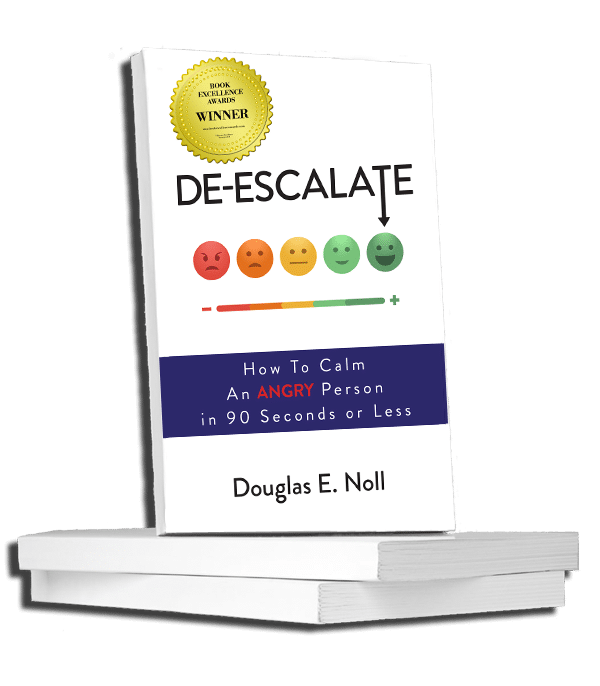
The simple act of verbalizing emotion engages the prefrontal cortex, helping restore balance to the threat-response system. Conflict resolution specialist Doug Noll has taken this principle further with his “90-Second Power Move,” a precise application of affect labeling that frequently calms even extreme anger in under ninety seconds. Noll has used the technique successfully in some of the most volatile environments imaginable, including maximum-security prisons.
Why Conventional Advice Often Fails
Standard conflict-management tips “use ‘I’ statements,” “stay calm,” “focus on the issue, not the person” frequently backfire during true emotional hijacks. They can sound patronizing or invalidating when the other person is physiologically flooded. Affect labeling, by contrast, validates the emotion first, lowering defenses before any attempt at problem-solving begins.
Why Facts and Logic Rarely Cut Through Emotional Heat
Most people enter arguments armed with evidence and reasoned points because that approach feels mature and defensible. Yet when the amygdala is in charge, additional facts do not persuade; they often intensify the perceived threat. The prefrontal cortex is still under-resourced, so every new piece of information is filtered through a lens of danger rather than curiosity.
This neurological mismatch lies behind countless stalled negotiations, fractured working relationships, and lingering family resentments. Shifting the goal from “winning the point” to “restoring emotional safety” changes the entire dynamic. Calm must come before clarity can return.
Growing Recognition of Emotional Health in Society
The demand for better tools to handle emotional turbulence is visible across broader trends. Awareness of mental health challenges has risen sharply in recent years, alongside greater acceptance of professional support and digital solutions such as telehealth and wellness apps. Businesses increasingly view employee emotional well-being as essential to productivity and retention, while governments and researchers continue investing in accessible screening and early intervention.
Techniques like affect labeling align perfectly with this cultural movement. They require no special equipment, cost nothing, and draw on rigorous neuroscience making them practical bridges between everyday conflict and long-term emotional resilience.
Practical Steps You Can Use Today
- Spot the physiological signs early: Notice your own racing pulse or tight shoulders and recognize the same signals in the other person. That awareness alone buys time.
- Count to ninety silently: Let the initial chemical wave crest and begin to recede before you speak. Most people underestimate how quickly the body can start to settle.
- Name the emotion neutrally: Try “It sounds like you’re really frustrated…” or “You seem pretty upset about how that was handled.” Keep tone low and steady.
- Resist fixing or debating yet: Offering solutions or counter-arguments too soon usually reignites the cycle. Validation must precede problem-solving.
- Build the habit in calm moments: Practice affect labeling during low-stakes conversations. Familiarity makes the skill reliable when pressure is high.
From Survival Mode to Real Dialogue
Logic fails in emotional conversations not because people are unwilling to think clearly, but because the brain, under acute stress, prioritizes survival over sophistication. Understanding the amygdala’s role, respecting the natural ninety-second emotional arc, and learning to use affect labeling with precision offer a way through the impasse.
The next time tension rises, put aside the instinct to marshal more evidence. Reach instead for accurate, compassionate naming of the feeling in the room. In most cases, that single move quiets the storm more effectively than any reasoned argument and quietly reopens the path to the mutual understanding both sides usually want deep down.
Frequently Asked Questions
Why does logic fail during emotional arguments?
When emotions spike, the brain’s amygdala triggers a “hijack” flooding the body with adrenaline and cortisol while diverting resources away from the prefrontal cortex, which handles reasoning and impulse control. This means the brain is literally less capable of rational thought during heated moments. Presenting more facts or logical arguments in this state often makes things worse, as the brain interprets new information as an additional threat rather than useful data.
What is affect labeling, and does it actually work for conflict resolution?
Affect labeling is the practice of calmly naming another person’s emotion aloud for example, saying “You seem really frustrated by this” without judgment or counter-argument. A 2007 UCLA study by Matthew Lieberman found that this simple act reduces amygdala activation and engages the prefrontal cortex, helping restore emotional balance. Conflict specialist Doug Noll has applied this technique in high-stakes environments like maximum-security prisons, often de-escalating extreme anger in under 90 seconds.
How long does an emotional hijack last, and what can you do during that window?
Neuroanatomist Jill Bolte Taylor observed that the initial chemical surge of a strong emotion racing heart, flushed skin, muscle tension typically peaks and begins to subside within roughly 90 seconds. After that, prolonged distress is driven more by rumination and negative self-talk than by brain chemistry. Waiting out that 90-second window before speaking, and using affect labeling once it passes, can prevent escalation and open the door to genuine, productive dialogue.
Disclaimer: The above helpful resources content contains personal opinions and experiences. The information provided is for general knowledge and does not constitute professional advice.
You may also be interested in: Caught Off-Guard? 5 Emotionally Intelligent Ways to Regain Control
Emotional conflicts fracture teams and families. The ongoing tension breeds burnout, damages relationships, and hurts performance. The Noll Method’s 90-Second Power Move™ is a proven, neuroscience-based skill for restoring calm, tested from boardrooms to maximum-security prisons. Master this life-changing technique to transform chaos into collaboration. Book a no-obligation zoom call with Doug Noll today!
Powered by flareAI.co