Imagine a boardroom where tempers flare, egos collide, and what started as a simple disagreement escalates into a full-blown argument, derailing the entire agenda. This isn’t just a hypothetical it’s a daily reality in countless offices across North America. But here’s the twist: progressive organizations are rewriting the script, demonstrating that such confrontations aren’t destined to happen.
Emotional conflicts fracture teams and families. The ongoing tension breeds burnout, damages relationships, and hurts performance. The Noll Method’s 90-Second Power Move™ is a proven, neuroscience-based skill for restoring calm, tested from boardrooms to maximum-security prisons. Master this life-changing technique to transform chaos into collaboration. Book a no-obligation zoom call with Doug Noll today!
Why Fights Don’t Have to Be Inevitable in Corporate Culture: Using Emotional Competency to Transform Workplace Conflict
In the relentless pace of modern business, tensions brew from tight deadlines, clashing priorities, and the constant demand for results. Leaders have long accepted these skirmishes as par for the course, an inherent aspect of competitive environments. Yet, a growing body of evidence suggests otherwise. By harnessing emotional competency the ability to identify, comprehend, and regulate emotions companies can evolve from arenas of discord into hubs of harmony and efficiency.
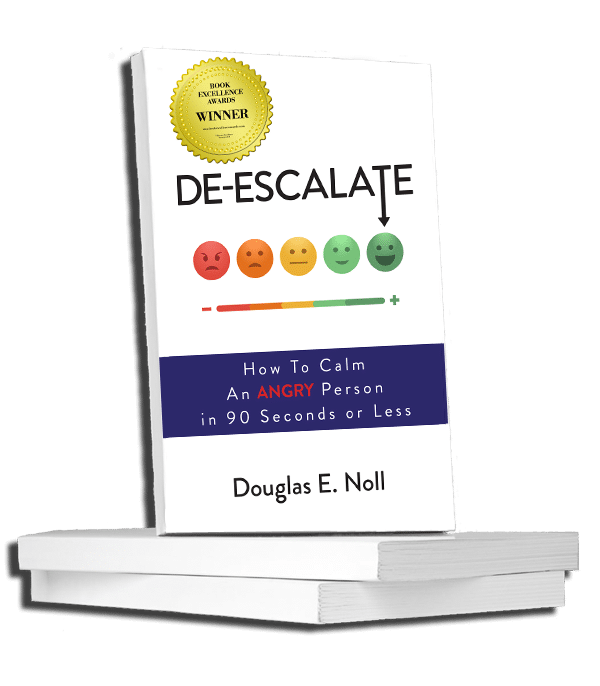
At the forefront of this shift is Doug Noll, an acclaimed mediator, bestselling author, and innovator behind the Noll Method™, a scientifically grounded de-escalation strategy that diffuses volatile moments in mere 90 seconds. Dubbed the “90-Second Power Move,” it employs targeted emotional articulation to pivot from chaos to clarity. Drawing from more than four decades of expertise, which includes instructing maximum-security prison inmates on curbing violence, Noll uniquely offers these teachings with an assurance: practitioners will master halting disputes and altercations. His work spans executive guidance, motivational addresses, workshops, and mediations, yielding tangible outcomes in diverse settings from corporate suites to family dynamics and even penitentiaries.
Emotional competency, often intertwined with emotional intelligence (EI), equips individuals to navigate interpersonal dynamics with finesse. It encompasses self-awareness, self-regulation, motivation, empathy, and social skills. In corporate contexts, this translates to better decision-making, enhanced teamwork, and reduced stress levels. As workplaces grapple with hybrid models and diverse teams, the need for such proficiencies has never been more pressing.
Emerging Trends in Conflict Resolution
Throughout North America, enterprises are increasingly recognizing the value of emotional intelligence and de-escalation education. Market insights reveal that the conflict resolution solutions market is set to expand from US$ 10.99 billion in 2025 to US$ 17.76 billion by 2032, achieving a compound annual growth rate of 7.1% over the period. This encompasses diverse approaches like mediation, arbitration, negotiation, coaching for conflicts, and digital dispute settlement, all essential for organizational and communal harmony. Factors propelling this include surging office disagreements, heightened public sector needs, and a tilt toward cost-effective alternative dispute resolutions.
Another perspective indicates that the conflict resolution solutions market attained $8.79 billion in 2024, driven by responses to mounting workplace frictions. These encompass methods to foster dialogue, comprehension, and joint efforts for amicable settlements, with mediation featuring a neutral facilitator aiding consensus. Delivery modes span online, in-person, and blended formats.
Zooming in regionally, the North America workplace conflict management solution market stands at an estimated USD 3.56 billion in 2025, projected to climb to USD 7.40 billion by 2032 at an 11% CAGR. Mediation commands a leading 33.2% share in 2025, while services hold 59.7%, and large firms dominate with 67.1%. Trends highlight uptake of sophisticated digital and AI-based tools for instantaneous dispute oversight and resolution, alongside heavy investments in tailored programs tackling remote-hybrid hurdles, emphasizing teamwork and stress alleviation.
This surge mirrors a wider movement where firms emphasize emotional control and compassion training to avert issues. The overarching corporate training market, pegged at $361.5 billion in 2023, is forecasted to hit $805.6 billion by 2035 with a 7% CAGR from 2024 onward. Known as workplace learning, it boosts employee output, drive, efficacy, and loyalty, aiding business objectives via virtual or face-to-face methods. The FMCG sector leads among industries.
These developments underscore a paradigm shift: from reactive fixes to proactive emotional skill-building, integrating AI for real-time insights and customizing for post-pandemic work realities.
Real-World Examples and Case Studies
Organizations adopting these strategies reap substantial benefits. Consider a US healthcare entity that rolled out EI training for surgeons and nurses. This initiative curbed communication lapses and medical mishaps while elevating job satisfaction by 20%. Such outcomes highlight how emotional skills directly enhance operational safety and staff morale.
In Ontario, Canada, a firm battling low engagement and productivity tensions implemented a bespoke EI program. Through group sessions, individual coaching, and monthly workshops on core EI pillars self-awareness, self-management, social awareness, and relationship management communication evolved from strained to empathetic. Relationships strengthened with trust, productivity surged as stress waned, and the workplace became more cohesive and resilient.
Practical scenarios further illustrate EI’s potency. In a marketing team deadlock over campaign directions, a department head used empathetic listening to validate views and steer toward unified goals, yielding a hybrid strategy that boosted performance by 27%. Similarly, a product development squad’s resource squabble was quelled by a manager’s self-regulation, prompting a pause and refocus on impacts, birthing an innovative sharing model.
Leadership clashes, like differing styles causing confusion, were resolved via social awareness and transparent alliances, hiking satisfaction scores by 32%. Budget blame games between finance and operations uncovered process flaws through active listening forums, fostering joint fixes.
Remote team’s email misreads diminished by 40% with emotion check-ins during calls. A client presentation salvage turned potential loss into contract growth via emotional recognition and probing questions. Personality clashes shifted to collaboration through perspective-swapping exercises.
Other instances include poor management communication clarified by guidelines and workshops, diverse styles harmonized via hybrid plans, discrimination addressed with training and reporting, leadership disputes mediated to compromises, and ineffective mechanisms streamlined with empathy-focused systems. These align with Noll’s de-escalation, emphasizing accurate emotion labeling to convert fury into insight across varied corporate landscapes.
Key Challenges and Limitations
Implementing change faces hurdles. Executives often skepticism these method’s efficacy in aggressive cultures, deeming fights unavoidable or beneficial for innovation. Fears of emotional exploration arise, seen as vulnerability or chaos invitation.
Conventional setups prize assertiveness, rendering emotional tools alien. Common refrains: “It won’t succeed here,” “Disputes are life staples,” or apprehension toward emotional mastery. Surmounting demands executive endorsement, tying training to objectives, and showcasing swift victories. Consistency matters; sporadic efforts dissipate. Sustained drills ingrain behaviors, necessitating cultural integration and metrics tracking.
Opportunities and Business Impact
The rewards are profound. Emotional competency elevates wellness, mitigates burnout, and ignites synergy. Groups converse effectively, ideate boldly, and resolve sans theatrics.
Outlays yield dividends: elevated retention, superior output, and quantifiable returns. Research affirms trained settings see dwindled attrition, scant disputes, and productivity leaps. Amid remote paradigms and wellness priorities, these aptitudes are imperatives for vibrant cultures, bolstering innovation and resilience.
Expert Insights
Corporate strife needn’t be scripted. Cultivating emotional competency converts clashes into growth catalysts. De-escalation advocates forge milieus of validation, esteem, and agency.
With conflict markets ballooning, proactive emotional education crafts serene, elite squads. Tomorrow favors entities commanding emotions, not quelling them. For leaders eager to shatter conflict cycles, delve into validated approaches at dougnoll.com, where authentic expertise yields genuine tranquility.
Frequently Asked Questions
How can emotional competency help reduce workplace conflict?
Emotional competency involves the ability to identify, understand, and regulate emotions, which can transform workplace dynamics. By using tools like the Noll Method™, employees and leaders can quickly de-escalate conflicts and foster healthier, more collaborative environments. Companies that embrace emotional competency often see improved decision-making, teamwork, and reduced stress.
What is the Noll Method™ and how does it work in conflict resolution?
The Noll Method™ is a neuroscience-based de-escalation technique that can stop conflicts in just 90 seconds. This method focuses on emotional articulation, allowing individuals to move from conflict to clarity. It’s been successfully applied in various settings, from corporate boardrooms to maximum-security prisons, and helps transform chaos into constructive collaboration.
Why is emotional intelligence (EI) training becoming essential in today’s workplace?
Emotional intelligence (EI) training is increasingly recognized as crucial for resolving conflicts and improving workplace relationships. With the rise of hybrid and diverse teams, EI helps leaders and employees navigate interpersonal dynamics, reduce misunderstandings, and enhance productivity. Companies investing in EI training see tangible benefits like higher morale and fewer workplace disputes.
Disclaimer: The above helpful resources content contains personal opinions and experiences. The information provided is for general knowledge and does not constitute professional advice.
You may also be interested in: Building Resilient Leaders Through Emotional Regulation
Emotional conflicts fracture teams and families. The ongoing tension breeds burnout, damages relationships, and hurts performance. The Noll Method’s 90-Second Power Move™ is a proven, neuroscience-based skill for restoring calm, tested from boardrooms to maximum-security prisons. Master this life-changing technique to transform chaos into collaboration. Book a no-obligation zoom call with Doug Noll today!
Powered by flareAI.co