Quick Listen:
In the high-stakes environments of North American workplaces from bustling Toronto boardrooms to innovative Silicon Valley teams leaders confront mounting pressures. Burnout continues to rise, hybrid arrangements challenge team dynamics, and rapid AI integration stirs uncertainty about roles and futures. In this shifting landscape, emotional regulation has emerged as a pivotal leadership competency. The ability to identify, process, and channel emotions constructively while guiding others through ambiguity now shapes retention, morale, and long-term organizational strength.
Emotional regulation for leaders extends far beyond surface-level composure. It demands self-awareness to create space between stimulus and response, steady presence amid crises, and intentional actions that demonstrate reliability. What once fell into the category of soft skills now stands as a core strategic asset. Leaders who excel here cultivate cultures where innovation thrives, voices feel heard, and commitment endures despite volatility.
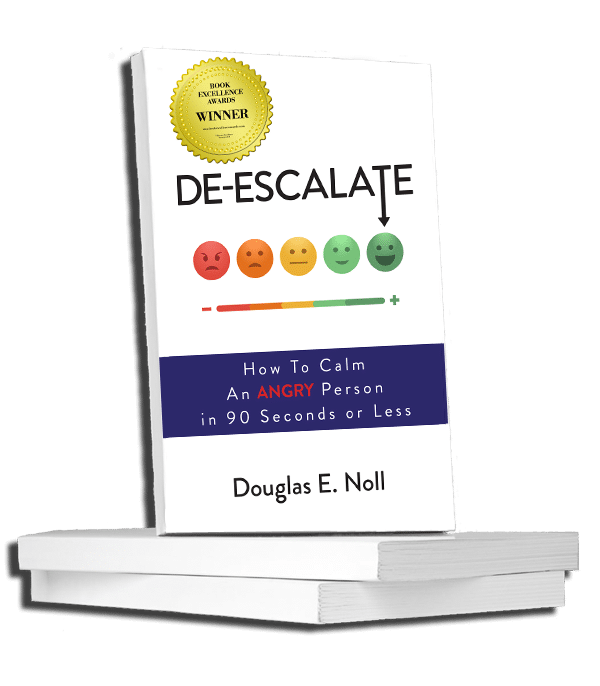
Emotional conflicts fracture teams and families. The ongoing tension breeds burnout, damages relationships, and hurts performance. The Noll Method’s 90-Second Power Move™ is a proven, neuroscience-based skill for restoring calm, tested from boardrooms to maximum-security prisons. Master this life-changing technique to transform chaos into collaboration. Book a no-obligation zoom call with Doug Noll today!
The Escalating Toll of Workplace Stress Across North America
Current data reveals persistent challenges. Gallup’s tracking shows U.S. employee engagement averaging 31.52% in 2025, holding steady from the prior year but well below the 36% peak recorded in 2020. This sustained lower level translates to millions of workers less connected to their roles and organizations. Stress compounds the issue, with nearly half of employees in the United States and Canada reporting significant daily strain according to recent Gallup insights.
In Canada, the trend mirrors these pressures. Surveys indicate around 39% of employees experienced burnout in 2025, marking an increase from previous years and highlighting the growing human cost of workplace demands. Manager conduct plays a central role impulsive reactions or emotional withdrawal from leaders amplify disengagement and erode productivity across teams.
Effective emotional regulation interrupts these patterns. Leaders who maintain balance foster trust, ease collective tension, and promote psychological safety. Studies repeatedly connect strong emotional intelligence, particularly regulation, to improved retention and performance in North American settings.
How Hybrid Models Heighten the Demand for Emotional Skill
Hybrid work offers flexibility yet introduces complications. Distributed setups generate communication hurdles, time-zone friction, and weakened informal bonds. Leaders must sustain alignment and cohesion without relying on physical proximity or spontaneous interactions.
Emotional regulation proves invaluable in these contexts. Grounded leaders detect emerging tensions promptly, clarify expectations amid uncertainty, and nurture belonging across distances. Employees in hybrid roles frequently express greater satisfaction when leadership provides consistent emotional support, reinforcing why this skill preserves trust in fragmented environments.
Navigating AI-Driven Change with Human Steadiness
AI adoption surges throughout North America, delivering productivity gains while generating widespread concern over job security and evolving responsibilities. Recent analyses suggest that current technologies hold the potential to automate substantial portions of existing work activities, fueling anxiety about displacement even as new opportunities arise.
Leaders who regulate their own responses to these shifts project confidence and direct focus toward adaptation. By managing personal uncertainty, they help teams view change as manageable rather than threatening. In an era where automation manages routine processes, irreplaceable human qualities empathy, thoughtful judgment, and calm guidance gain prominence. Emotional regulation equips leaders to steer organizations through transformation with assurance.
Embedding Emotional Regulation in North American Leadership Training
Educational institutions have responded proactively. Programs at places like the University of Toronto and University of British Columbia integrate emotional intelligence and regulation into executive development, covering areas such as conflict resolution, stress resilience, and adaptive interaction.
Corporations increasingly weave similar training into leadership pathways. Regional evaluations point to tangible benefits, including elevated team output, decreased voluntary exits, and more effective choices in high-pressure situations.
Public-sector entities also commit resources, applying leadership psychology approaches to strengthen crisis handling, employee safety, and public service effectiveness. These initiatives signal growing acknowledgment that emotional competencies deliver concrete results in demanding fields.
Persistent Obstacles in Assessing and Implementing Regulation
Advancement faces real barriers. Measuring emotional regulation remains elusive for many organizations, lacking uniform tools or benchmarks to evaluate leadership conduct objectively.
Cultural expectations add complexity. In certain North American settings, emotional restraint can appear as aloofness, whereas excessive suppression undermines genuineness. Achieving equilibrium authentic expression paired with control calls for careful judgment.
Resource disparities persist. Smaller enterprises frequently struggle to fund comprehensive development, resulting in inconsistent access to coaching and programs across sectors and geographies. Addressing these inequities requires creative, scalable solutions.
The Compelling Returns: Engagement, Judgment, and Market Edge
The advantages reward commitment. Evidence ties leaders skilled in emotional regulation to heightened engagement and reduced turnover. Teams under such guidance feel respected and secure, lowering departure intentions.
In tense moments, regulation enhances clarity. Leaders evaluate threats more accurately, manage emergencies adeptly, and sustain creative momentum free from reactive disruption.
With AI redefining talent landscapes, organizations that emphasize human-centered leadership secure lasting advantage. Prioritizing emotional regulation builds resilience and positions firms to excel amid relentless evolution.
Forward Momentum: Building Emotional Resilience as Standard
North American thought leaders increasingly regard emotional regulation as indispensable to contemporary leadership. Anticipate continued growth in targeted coaching, behavioral analytics, and skill-building investments.
Related fields illustrate the broader momentum. Demand surges for approaches that cultivate self-awareness and emotional competencies from early stages, as seen in expanding social and emotional learning initiatives. Meanwhile, emotion AI technologies advance, offering tools to monitor states, detect distress early, and support remote care particularly in healthcare demonstrating how innovation complements human emotional capabilities.
Organizations embracing emotional regulation as foundational stand poised to adapt swiftly, maintain cohesion, and outperform in turbulent times. When disruption defines the era, composure becomes the ultimate competitive strength.
Frequently Asked Questions
Why is emotional regulation considered an essential leadership skill in today’s workplace?
Emotional regulation has moved beyond “soft skill” status to become a core strategic competency because modern workplaces demand more than technical expertise. With rising burnout, hybrid team dynamics, and AI-driven uncertainty, leaders who can identify and constructively channel their emotions build psychological safety, foster trust, and sustain team performance. Research consistently links strong emotional regulation to higher employee engagement and lower turnover measurable business outcomes.
How does emotional regulation help leaders manage hybrid and remote teams more effectively?
In hybrid environments, leaders can’t rely on physical proximity or spontaneous interactions to maintain team cohesion, making emotional skill even more critical. Regulated leaders are better equipped to detect emerging tensions early, communicate expectations clearly across distances, and nurture a sense of belonging for distributed employees. Studies show that teams in hybrid settings report greater satisfaction when their leaders provide consistent, emotionally grounded support.
How can organizations train leaders to develop better emotional regulation skills?
Many leading institutions including the University of Toronto and the University of British Columbia have embedded emotional intelligence and regulation training into executive development programs, covering areas like stress resilience, conflict resolution, and adaptive communication. Corporations are increasingly incorporating similar modules into leadership pathways, with evidence pointing to tangible results such as improved team output and reduced voluntary turnover. However, smaller organizations often face resource barriers, making scalable coaching solutions and behavioral analytics increasingly important tools for closing that gap.
Disclaimer: The above helpful resources content contains personal opinions and experiences. The information provided is for general knowledge and does not constitute professional advice.
You may also be interested in: 4 Shocking Ways Emotional Contagion Can Strengthen or Destroy
Emotional conflicts fracture teams and families. The ongoing tension breeds burnout, damages relationships, and hurts performance. The Noll Method’s 90-Second Power Move™ is a proven, neuroscience-based skill for restoring calm, tested from boardrooms to maximum-security prisons. Master this life-changing technique to transform chaos into collaboration. Book a no-obligation zoom call with Doug Noll today!
Powered by flareAI.co