Quick Listen:
In an age when artificial intelligence manages complex computations and automation continues to redefine entire industries, one distinctly human strength grows ever more vital: emotional intelligence. Long dismissed as a mere “soft skill,” it now proves decisive in producing tangible results more composed negotiations, more cohesive teams, safer high-pressure encounters, and stronger personal relationships. As workplaces and daily life grow more interconnected and unpredictable, the capacity to recognize, understand, and regulate emotions has moved from optional advantage to essential life competency.
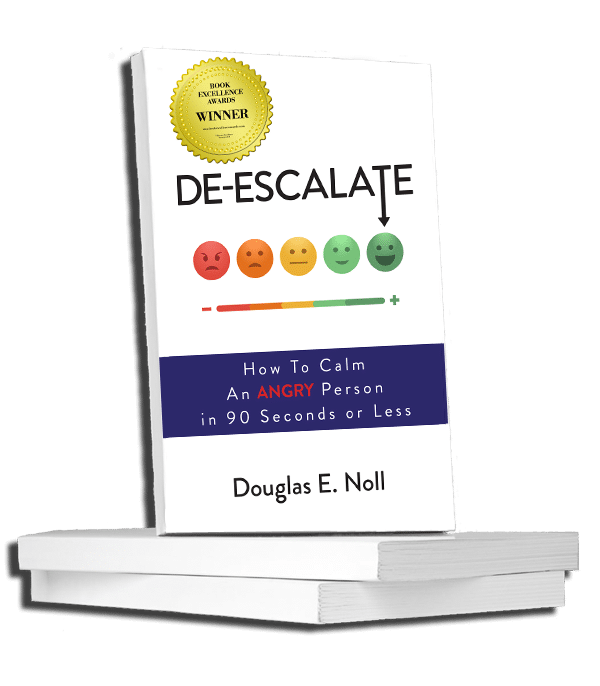
Emotional conflicts fracture teams and families. The ongoing tension breeds burnout, damages relationships, and hurts performance. The Noll Method’s 90-Second Power Move™ is a proven, neuroscience-based skill for restoring calm, tested from boardrooms to maximum-security prisons. Master this life-changing technique to transform chaos into collaboration. Book a no-obligation zoom call with Doug Noll today!
The Surge in Demand for Emotional Skills
Across the globe, organizations are investing heavily in emotional intelligence development because the evidence is clear: it delivers measurable value. The global corporate training market, already valued at $361.5 billion in 2023, is expanding steadily as companies respond to rapid technological change, the urgent need for continuous upskilling, and heightened emphasis on talent retention, regulatory compliance, remote collaboration, and diversity & inclusion efforts. Soft skills particularly those tied to emotional awareness are no longer peripheral; they sit at the center of many strategic training priorities.
Nowhere is this shift more pronounced than in high-stakes environments. Law enforcement agencies, hospitals, schools, and large corporations increasingly turn to immersive simulation-based programs to teach conflict resolution and emotional regulation under pressure. Public scrutiny, safety imperatives, and the desire to reduce liability have accelerated adoption of realistic, repeatable training that strengthens decision-making and de-escalation capabilities without real-world risk. The rapid growth of these specialized training segments reflects a broader recognition: when emotions run high, technical expertise alone is rarely enough.
Why Instinctive Responses So Often Backfire
Picture a tense exchange: voices rise, faces flush, and the natural impulse is to deploy logic or issue the classic instruction “calm down.” Yet both approaches frequently intensify rather than defuse the situation. Telling someone to calm down rarely soothes; instead, it communicates that their feelings are unwelcome or illegitimate. The brain’s ancient amygdala our rapid threat-detection system interprets the dismissal as a fresh danger, escalating the fight-or-flight response and transforming a single disagreement into two battles: one about the original issue and another about whether the person’s emotions are even allowed to exist.
Logic encounters a similar barrier. During intense emotional activation, the prefrontal cortex the region responsible for reasoned analysis, impulse control, and perspective-taking becomes temporarily less active. Facts, data, and carefully constructed explanations delivered at that moment rarely register as helpful; more often they are perceived as criticism, invalidation, or an attempt to override what the person feels. In the grip of strong emotion, the rational mind is simply not online.
The Surprising Effectiveness of Naming Feelings
What does work? One of the most reliably effective techniques is remarkably straightforward: affect labeling naming the emotion aloud in a neutral, non-judgmental way. A simple statement such as “You sound really frustrated right now” or “This feels incredibly unfair to you” can produce a noticeable shift in under two minutes.
Groundbreaking neuroimaging research published in 2007 by Matthew Lieberman and colleagues showed that putting feelings into words reduces activity in the amygdala while simultaneously engaging brain regions associated with emotional regulation. This dampening effect creates a brief window of calm in which more constructive conversation becomes possible. Methods such as the Noll Method™ build directly on this principle, using careful, non-directive acknowledgment to lower defenses, restore communication, and move interactions toward resolution rather than escalation.
Emotional Intelligence in Everyday Life
While headlines tend to focus on corporate programs and public-safety training, the same principles deliver powerful results far beyond the workplace. Couples who learn to name frustration or hurt before it spirals preserve trust and closeness. Parents who validate a toddler’s anger (“You’re really mad that we have to leave the park”) rather than demand instant composure often see tantrums subside more quickly. Friends who acknowledge disappointment or betrayal instead of jumping straight to problem-solving keep relationships resilient through conflict.
In a hyper-connected world that bombards us with change and uncertainty, the ability to read and respond to emotions both our own and those of others underpins mental health, empathy across divides, and community strength. Recent workforce analyses consistently rank emotional intelligence among the competencies most likely to remain in high demand through the end of this decade and beyond.
Clearing Up Common Misconceptions
Several widespread beliefs about de-escalation and emotional management deserve correction:
- De-escalation requires dramatic or perfectly worded interventions. In practice, small, consistent actions a steady voice, open posture, and a single accurately named emotion frequently prove more potent than elaborate speeches.
- Strong feelings must be suppressed or “fixed” before progress can occur. Attempts to shut down emotion usually backfire; genuine acknowledgment almost always moves the conversation forward.
- Logic and evidence are the fastest route out of an emotional standoff. When someone is flooded with feeling, reasoned arguments tend to entrench positions rather than resolve them. Progress begins when the emotion feels heard.
Cultivating Emotional Intelligence Over Time
Like any meaningful skill, emotional intelligence develops through deliberate, repeated practice. Begin modestly: notice your internal state during moments of tension, then experiment with quietly naming what you observe in others. Over weeks and months these small habits compound into noticeably calmer, more connected interactions.
As automation and artificial intelligence continue to handle routine cognitive tasks, distinctly human capacities empathy, self-awareness, emotional regulation become the true differentiators. They allow us to bridge differences, lead with authenticity, navigate crises with composure, and build trust when it matters most. Ultimately, the most enduring life skill in our rapidly changing world may not be the ability to master technology, but the far older art of helping ourselves and those around us feel truly understood.
Frequently Asked Questions
Why is emotional intelligence considered an essential skill in today’s workplace?
Emotional intelligence has shifted from a “soft skill” to a strategic priority as organizations recognize its measurable impact on team cohesion, conflict resolution, and talent retention. The global corporate training market valued at $361.5 billion in 2023 reflects this demand, with soft skills sitting at the center of many training programs. In high-pressure environments like healthcare, law enforcement, and large corporations, EI directly reduces risk and improves decision-making.
What is affect labeling, and why is it so effective for de-escalation?
Affect labeling is the practice of naming someone’s emotion aloud in a calm, non-judgmental way for example, saying “You sound really frustrated right now.” Neuroimaging research by Matthew Lieberman (2007) found that putting feelings into words reduces activity in the amygdala, the brain’s threat-detection center, creating a brief window of calm. This makes it one of the most reliable and accessible de-escalation techniques available, requiring no special tools or elaborate scripts.
Can emotional intelligence be learned, or is it an innate trait?
Emotional intelligence is a learnable skill that develops through deliberate, consistent practice over time. Starting with small habits like noticing your own emotional state during tense moments or naming what you observe in others can compound into significantly calmer, more connected interactions. As AI and automation continue to handle routine cognitive tasks, these distinctly human capacities like empathy and self-awareness are increasingly seen as the most durable long-term competencies.
Disclaimer: The above helpful resources content contains personal opinions and experiences. The information provided is for general knowledge and does not constitute professional advice.
You may also be interested in: De-Escalation Techniques for Healthcare Staff & Patients – Doug Noll
Emotional conflicts fracture teams and families. The ongoing tension breeds burnout, damages relationships, and hurts performance. The Noll Method’s 90-Second Power Move™ is a proven, neuroscience-based skill for restoring calm, tested from boardrooms to maximum-security prisons. Master this life-changing technique to transform chaos into collaboration. Book a no-obligation zoom call with Doug Noll today!
Powered by flareAI.co