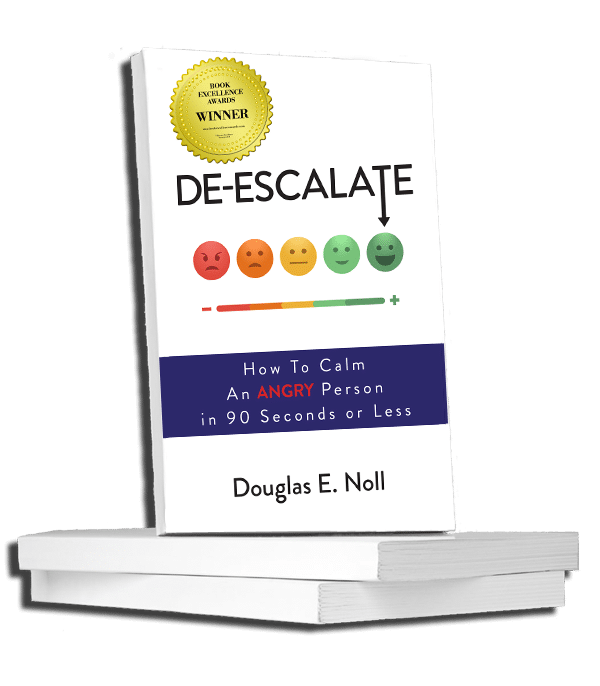
A Chicago tech startup faces a crisis: two senior managers, locked in a heated dispute over project priorities, threaten to derail a critical product launch. The room crackles with tension until one leader steps in, using a carefully crafted phrase rooted in neuroscience to shift the mood. In just 90 seconds, tempers cool, and collaboration resumes. This is no fantasy; it’s the work of Doug Noll, an award-winning mediator and creator of the Noll Method, a technique that’s reshaping how leaders handle conflict. With over 40 years of experience, Noll is proving that emotional competency isn’t just a skill it’s the key to sustainable business growth.
Emotional conflicts fracture teams and families. The ongoing tension breeds burnout, damages relationships, and hurts performance. The Noll Method’s 90-Second Power Move™ is a proven, neuroscience-based skill for restoring calm, tested from boardrooms to maximum-security prisons. Master this life-changing technique to transform chaos into collaboration. Book a no-obligation zoom call with Doug Noll today!
The Business Case for Emotional Intelligence
Emotional intelligence (EI) the capacity to recognize and manage emotions in oneself and others is now a cornerstone of effective leadership. A 2024 study reveals the global Emotional Intelligence Market was valued at $8 billion, with projections to reach $24.95 billion by 2033, growing at a 13.4% annual rate. This surge reflects a growing recognition that EI drives better decision-making, communication, and leadership. Employees with high EI earn roughly $29,000 more annually than their peers, according to emotional intelligence research, because they excel at navigating social complexities and fostering strong workplace relationships.
In North America, where businesses from Silicon Valley to Toronto are prioritizing EI, the impact is clear. From healthcare providers like Kaiser Permanente to educational institutions like Lewiston Public Schools, organizations are investing in EI to enhance productivity and reduce conflicts. These investments aren’t just trendy they’re delivering measurable results, making EI a critical asset for modern enterprises.
The Noll Method: A Neuroscience-Backed Revolution
Doug Noll’s Noll Method stands apart in the crowded field of leadership training. Unlike conventional approaches that rely on negotiation or compromise, Noll’s method uses precise emotional phrasing to de-escalate conflicts in as little as 90 seconds. Dubbed the “90-Second Power Move,” it leverages neuroscience to calm the brain’s emotional centers, enabling clear-headed dialogue. Noll, a bestselling author and seasoned mediator, offers this through executive coaching, keynote speeches, training programs, and mediation services tailored to North American organizations.
What sets Noll apart is his unmatched expertise. He’s the only one teaching these specific skills, honed over decades in settings as varied as corporate boardrooms and maximum-security prisons. His work with inmates, training them to curb violence, underscores the method’s versatility. From companies like Veterinary United to community groups like ACES Matter, Noll’s approach delivers results where traditional methods fall short.
Countering Doubts with Proven Results
Not everyone is convinced emotional competency can transform workplaces. Some argue, “It won’t work,” or insist that “conflict is just part of life.” Others shy away, admitting, “I’m afraid to confront my emotions.” Noll counters these objections with a track record spanning over four decades. His work in prisons, where he taught life inmates to defuse violence, proves his method’s efficacy in even the toughest environments. In corporate settings, he’s turned heated disputes into productive discussions, earning a bold guarantee: his training will stop fights and arguments, or it’s not done its job.
Skepticism often stems from misunderstanding EI’s impact. As one executive noted in a business case study, “I thought emotions would hinder progress we needed quick fixes, not feelings.” Yet evidence shows otherwise. Leaders with high EI don’t just manage conflicts; they prevent them, creating workplaces where innovation and trust thrive.
Applications Across North America
In North America, Noll’s services are making waves across industries. Corporate training programs at firms like Admin Concepts and Mocha Media are adopting emotional competency to strengthen team dynamics. In healthcare, organizations like AdventHealth recognize that emotionally intelligent staff improve patient care and workplace morale. Education is also embracing this shift, with institutions like Lewiston Public Schools leveraging social and emotional learning (SEL) tools. The global SEL market, valued at $0.92 billion in 2021, is expected to reach $5.21 billion by 2029, growing at a 24.5% CAGR, with North America holding a 31.52% share in 2021.
While competitors like Speaking CPR and AlchemyHC offer coaching and consulting, none match Noll’s neuroscience-backed precision. His active presence on LinkedIn, Instagram, and YouTube extends his influence, sharing actionable insights with leaders across sectors. From tech startups to family businesses like Tanfam, Noll’s method is adaptable, practical, and uniquely positioned to meet North America’s diverse needs.
Sustainability Through Emotional Mastery
Emotional competency isn’t just about resolving today’s disputes it’s about building organizations that endure. Leaders who master EI create cultures of trust, reducing turnover and fostering collaboration. The Emotional Intelligence Market report notes that EI programs are cutting workplace conflicts and strengthening client relationships, directly boosting profitability. This isn’t a passing fad; the SEL market’s projected growth to $5.21 billion by 2029 underscores its lasting value.
Companies investing in EI are preparing for the future. By equipping leaders with tools to manage emotions effectively, they’re not just solving immediate problems they’re building resilient, adaptable organizations. Noll’s work shows that emotional mastery isn’t about suppressing feelings but channeling them into smarter decisions and deeper connections, ensuring long-term success.
Leading with Confidence and Clarity
In an era of rapid change, emotional competency is no longer optional it’s essential. Doug Noll’s Noll Method offers a proven path to transform workplaces, from corporate giants to community organizations. With a guarantee to halt conflicts and a track record spanning boardrooms to prisons, Noll is redefining leadership across North America. His call is clear: embrace emotional competency to unlock sustainable growth. For businesses ready to thrive in a complex world, that’s a challenge worth meeting.
Frequently Asked Questions
What is emotional competency and why does it matter for business growth?
Emotional competency is the ability to recognize and manage emotions in yourself and others, forming the foundation of effective leadership. It drives better decision-making, communication, and workplace relationships, with research showing that employees with high emotional intelligence earn approximately $29,000 more annually than their peers. The global Emotional Intelligence Market is projected to grow from $8 billion in 2024 to $24.95 billion by 2033, reflecting its critical role in sustainable business success.
How does the Noll Method differ from traditional conflict resolution approaches?
Unlike conventional methods that rely on negotiation or compromise, the Noll Method uses neuroscience-backed emotional phrasing to de-escalate conflicts in as little as 90 seconds. Doug Noll’s “90-Second Power Move” calms the brain’s emotional centers through precise language, enabling clear-headed dialogue. With over 40 years of experience across settings from corporate boardrooms to maximum-security prisons, Noll offers a unique approach that comes with a guarantee to stop workplace fights and arguments.
Can emotional intelligence training really reduce workplace conflicts?
Yes, emotional intelligence training has proven effective at reducing workplace conflicts across diverse industries and challenging environments. Doug Noll’s track record includes successfully teaching life inmates in maximum-security prisons to defuse violence, as well as transforming heated corporate disputes into productive discussions. Organizations investing in EI programs report measurable results including decreased turnover, stronger client relationships, and improved profitability, with the Social and Emotional Learning market expected to grow from $0.92 billion to $5.21 billion by 2029.
Disclaimer: The above helpful resources content contains personal opinions and experiences. The information provided is for general knowledge and does not constitute professional advice.
You may also be interested in: 3 Powerful Keys To De-Escalation – Douglas E. Noll
Emotional conflicts fracture teams and families. The ongoing tension breeds burnout, damages relationships, and hurts performance. The Noll Method’s 90-Second Power Move™ is a proven, neuroscience-based skill for restoring calm, tested from boardrooms to maximum-security prisons. Master this life-changing technique to transform chaos into collaboration. Book a no-obligation zoom call with Doug Noll today!
Powered by flareAI.co