In the middle of a heated discussion with a spouse, a coworker, or even a longtime friend that surge of being absolutely certain can feel powerful. The evidence aligns in your favor, the reasoning seems airtight, and backing down might register as surrender. Yet the real question is whether claiming victory in the moment is worth the slow, often invisible damage it inflicts on the relationship itself.
Across North America this pattern appears constantly. A culture that prizes individual achievement, sharp-witted online debate, and decisive leadership in high-pressure environments tends to reward people who stand firm on their positions. At the same time, the cumulative cost is relational: trust frays, emotional distance grows, and once-close connections quietly weaken. Prioritizing being right over being understood carries a price that many people only recognize after significant harm has already occurred.
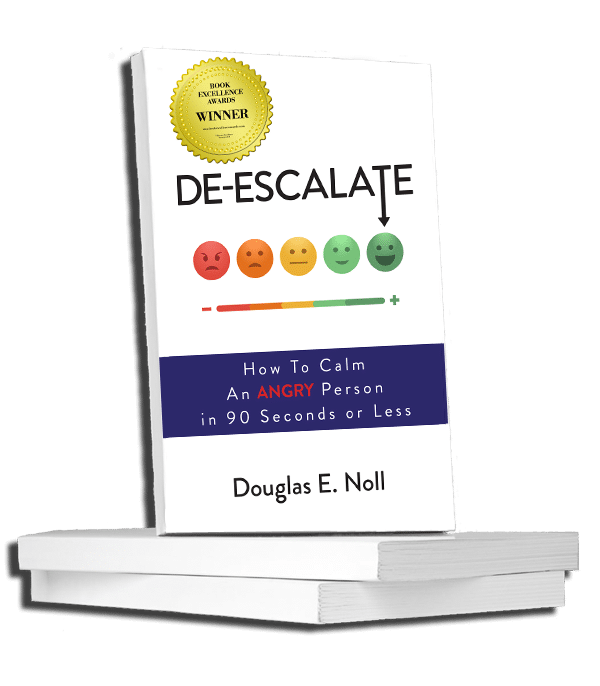
Emotional conflicts fracture teams and families. The ongoing tension breeds burnout, damages relationships, and hurts performance. The Noll Method’s 90-Second Power Move™ is a proven, neuroscience-based skill for restoring calm, tested from boardrooms to maximum-security prisons. Master this life-changing technique to transform chaos into collaboration. Book a no-obligation zoom call with Doug Noll today!
Why the Need to Be Right Feels So Compelling
Defending our views is deeply human. Cognitive shortcuts such as confirmation bias steer us toward information that supports what we already believe and away from anything that challenges it. Overconfidence, sometimes amplified by the Dunning-Kruger effect, convinces us our judgment is superior especially when the topic feels personally important. In a society that frequently equates certainty with competence, conceding a point can seem like admitting inadequacy.
Digital platforms magnify the impulse. Social media algorithms favor strong, polarizing statements and rapid-fire exchanges, transforming ordinary differences of opinion into public contests. A disagreement that begins in comments can easily carry over into face-to-face interactions, so that living rooms and conference rooms start to feel like extensions of the same argumentative arena. The outcome is predictable: more friction, less genuine listening.
How Insisting on Being Right Undermines Teams
Picture a strategy session in which one participant repeatedly corrects minor details, interrupts alternative suggestions, and frames every counterpoint as an error to be fixed. To that person the behavior may feel like necessary rigor; to everyone else it frequently registers as dismissive or controlling. When team members begin to self-censor because they anticipate being overruled, creativity suffers and collective problem-solving weakens.
In many workplaces this dynamic contributes to deteriorating morale. People who feel constantly challenged on small issues gradually disengage. Energy that should go toward shared objectives gets redirected into defending territory or avoiding confrontation. Over time the atmosphere shifts from collaborative to competitive, and the hidden price is lower innovation, reduced job satisfaction, and higher turnover.
The Quiet Damage in Close Personal Relationships
Similar patterns surface at home, often with deeper emotional consequences. A difference of opinion about money management, discipline with children, or even vacation preferences can escalate quickly when one person refuses to yield any ground. The drive to prove a point overrides any impulse to explore why the other person sees the situation differently, leaving feelings dismissed or invalidated.
Psychological research shows that an overriding focus on correctness triggers defensive physiological responses raised heart rate, elevated stress hormones that make calm, open dialogue much harder. Repeated over months or years, these small victories accumulate into larger relational distance. Partners frequently report feeling unseen or perpetually “wrong,” even in moments when the facts are ambiguous. In more serious cases the pattern becomes a contributing factor in separations where mutual understanding has eroded beyond repair.
The Deeper Emotional and Social Toll
The habit of always needing to be right extracts a significant emotional price. It erodes empathy the capacity to temporarily set aside one’s own perspective and weakens the ability to regulate intense feelings during conflict. People who rarely acknowledge being mistaken are often perceived as arrogant or inflexible, qualities that push others away over time. Friends start avoiding certain topics, family members choose silence over discussion, and professional contacts keep interactions brief and surface-level.
Social perception compounds the problem. Consistent unwillingness to concede fuels impressions of narcissism or rigidity, both of which correlate strongly with higher levels of interpersonal conflict. Trust declines incrementally: when every conversation carries the risk of becoming a debate to be won, sharing vulnerable thoughts feels dangerous. The eventual result for many is a painful combination of isolation, emotional exhaustion, and the realization that a string of argumentative “wins” has not produced deeper closeness.
Moving from Victory to Mutual Understanding
Fortunately this cycle is not inevitable. Shifting the goal from being correct to being connected changes the entire tone of an interaction. Replacing the instinct to correct with genuine curiosity “Can you tell me more about why that feels important to you?” creates space for understanding instead of defensiveness.
Developing emotional intelligence is especially powerful here. Strengthening skills such as perspective-taking, active listening, and self-awareness helps people respond to disagreement with empathy rather than rebuttal. Forward-thinking organizations increasingly incorporate these principles into leadership training and team-building, recognizing that environments that value diverse viewpoints consistently outperform those dominated by a single “right” perspective.
Evidence-based conflict resolution strategies reinforce the shift. Techniques that emphasize identifying shared interests, acknowledging emotions, and negotiating mutually acceptable solutions preserve goodwill even when complete agreement remains out of reach. Small changes in language and approach can dramatically lower tension and keep relationships intact.
Practical Ways to Release the Need to Be Right
- Pause and breathe: Before responding, ask yourself whether winning this particular point strengthens or weakens the relationship.
- Lead with questions: Swap declarative corrections for open-ended inquiries that invite the other person to elaborate.
- Admit uncertainty: When appropriate, say “I’m not entirely sure let’s look at this together.” Humility is contagious and disarming.
- Re-center on what matters most: Remind yourself (and sometimes the other person) that the connection is more valuable than any single fact.
- Search for agreement first: Begin by explicitly naming areas of common ground before moving to differences.
These steps are not about abandoning truth or critical thinking. They represent deliberate choices to protect long-term closeness without sacrificing integrity.
Choosing Connection in a World That Rewards Certainty
Being right can deliver a brief rush of satisfaction, yet it rarely builds enduring harmony. True strength appears in the willingness to set aside the need to prevail when doing so preserves something far more important: the relationship itself. By consciously choosing understanding over victory, we open the door to deeper trust, more creative collaboration, and bonds resilient enough to weather inevitable disagreements.
The next time a discussion begins to escalate, pause and listen for the quieter question underneath the argument: Do I want to be right, or do I want to stay connected? The honest answer to that question has the power to reshape relationships for years to come.
Frequently Asked Questions
How does always needing to be right damage personal relationships?
Constantly prioritizing correctness over connection causes partners and loved ones to feel dismissed, invalidated, and perpetually “wrong.” Over time, this triggers defensive stress responses that make calm dialogue harder, eroding trust and emotional closeness. Repeated small “wins” in arguments can accumulate into significant relational distance and in serious cases, become a contributing factor in breakups or estrangements.
What are the effects of a “need to be right” attitude in the workplace?
When someone consistently corrects others, interrupts alternatives, and frames every counterpoint as an error, team members begin to self-censor and disengage. This shifts the workplace atmosphere from collaborative to competitive, suppressing creativity and innovation. The long-term costs include lower morale, reduced job satisfaction, and higher employee turnover.
How can I stop needing to be right in arguments and improve my relationships?
Start by replacing the urge to correct with genuine curiosity ask open-ended questions like *”Can you tell me more about why that feels important to you?”* Practicing emotional intelligence skills such as active listening, perspective-taking, and self-awareness helps shift the goal from winning to mutual understanding. Small habits like pausing before responding, admitting uncertainty, and naming common ground first can dramatically reduce conflict and strengthen long-term connection.
Disclaimer: The above helpful resources content contains personal opinions and experiences. The information provided is for general knowledge and does not constitute professional advice.
You may also be interested in: When Someone Takes Their Anger Out On You 5 Compelling
Emotional conflicts fracture teams and families. The ongoing tension breeds burnout, damages relationships, and hurts performance. The Noll Method’s 90-Second Power Move™ is a proven, neuroscience-based skill for restoring calm, tested from boardrooms to maximum-security prisons. Master this life-changing technique to transform chaos into collaboration. Book a no-obligation zoom call with Doug Noll today!
Powered by flareAI.co