In high-stakes environments whether boardrooms, hybrid team calls, or even quiet family discussions emotions can flare without warning. A single heated exchange over priorities, resources, or differing visions can fracture relationships, stall progress, and drain energy from everyone involved. As hybrid work patterns persist and psychological safety becomes non-negotiable, forward-thinking leaders are moving beyond conventional conflict management. They are adopting precise, evidence-based de-escalation tools rooted in neuroscience that frequently restore calm and clarity in under two minutes.
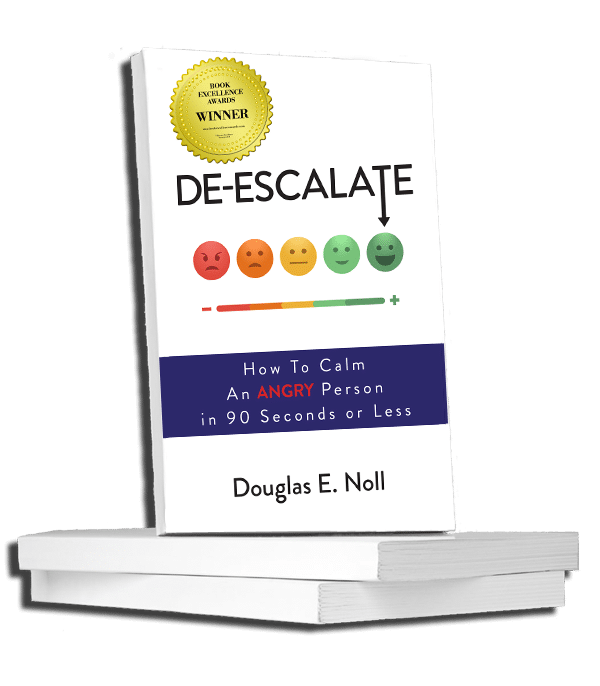
Emotional conflicts fracture teams and families. The ongoing tension breeds burnout, damages relationships, and hurts performance. The Noll Method’s 90-Second Power Move™ is a proven, neuroscience-based skill for restoring calm, tested from boardrooms to maximum-security prisons. Master this life-changing technique to transform chaos into collaboration. Book a no-obligation zoom call with Doug Noll today!
The Hidden Cost of Unchecked Emotional Escalation
Conflict itself is not the enemy; unmanaged escalation is. When frustration, anger, or fear take over, rational dialogue collapses. People stop listening, entrench their positions, or withdraw completely. The damage compounds quickly: projects lose momentum, collaboration suffers, trust erodes, and top performers quietly begin looking elsewhere.
Organizations are responding. Investment in workplace conflict management continues to rise steadily because leaders now recognize that preventing destructive escalation preserves performance far more effectively than repairing it afterward. Many are shifting toward proactive skill-building that equips people to meet intense emotion with steadiness rather than defensiveness.
Why Conventional Tactics Often Backfire
Most of us reach for familiar responses in tense moments: we explain the facts, propose solutions, or simply say, “Calm down.” These approaches usually intensify the situation. Urging someone to relax when their nervous system is screaming threat only heightens defensiveness. Standard active listening repeating back what was said or asking clarifying questions works reasonably well when stakes are low, but it frequently fails when emotion is volcanic.
Neuroscience illuminates the reason. Intense negative emotion activates the amygdala, the brain’s rapid alarm system, shifting resources away from the prefrontal cortex where reasoning and perspective live. Once that alarm is ringing, logic-based interventions struggle to get through.
Affect Labeling: Naming Emotion to Quiet the Alarm
Affect labeling offers a different path. Rather than arguing facts or coaching composure, the technique involves calmly and directly naming the emotion the other person appears to be experiencing: “You sound extremely frustrated right now,” or “This feels really overwhelming for you.” The statement is simple, unhedged, and focused purely on feeling not judgment, not solution, not minimization.
Landmark neuroimaging research, including a widely cited 2007 study led by Matthew Lieberman, showed that verbally naming an emotion reduces activity in the amygdala while simultaneously increasing activation in brain regions responsible for emotional regulation and reasoning. This shift often happens rapidly frequently within roughly 90 seconds creating an opening for constructive dialogue to resume.
How It Stands Apart from Broader Emotional Intelligence Skills
Emotional intelligence encompasses self-awareness, empathy, social skills, and relationship management. Affect labeling hones one particularly powerful micro-skill within that larger domain: the precise, tactical naming of another person’s emotional state in real time. It is not therapy, not long-term coaching, and not mediation. It is a brief, repeatable intervention designed for the heat of the moment. Leaders who integrate it report noticeably shorter recovery times after tense exchanges and far less residual tension in teams.
Practical Impact Across Leadership Roles
When leaders consistently apply this approach, measurable benefits emerge. Teams regain focus faster after friction. Collaboration deepens because people trust that disagreement will be met with presence rather than reactivity. High performers are more likely to stay in environments where they feel genuinely heard during difficult conversations.
Executives who initially question whether such a seemingly simple technique can make a difference often become its strongest advocates. They return from practice sessions with concrete examples: defusing a heated budget debate, steadying an upset direct report, or turning a spiraling team discussion back toward solutions. The method does not pretend to eliminate conflict; it dramatically reduces the collateral damage conflict causes.
Responding to Common Doubts
Skepticism is natural. “Conflict is inevitable,” many leaders say, “and emotions are part of being human.” Both statements are correct. No technique erases human nature. The realistic aim is to interrupt avoidable escalation that wastes hours, damages morale, and risks losing talent.
Another frequent concern is that naming strong emotion might validate inappropriate behavior or invite endless venting. Experience shows the reverse is true. When people feel accurately seen at the emotional level without debate or dismissal they tend to down-regulate naturally and become far more willing to engage rationally. The conversation moves forward instead of circling.
Fear of mislabeling is also common: “What if I guess the wrong feeling?” Sincerity matters more than precision. Even an approximate label delivered calmly (“You sound really angry”) usually lowers intensity more effectively than silence, argument, or unsolicited advice. Regular practice sharpens accuracy and builds confidence.
Developing Mastery Under Real Pressure
Leaders who want lasting capability invest in deliberate practice. They begin in low-stakes settings casual conversations, routine check-ins then gradually apply the skill during genuine tension. Over weeks and months, the response becomes almost reflexive. Teams notice the difference: difficult moments no longer feel like landmines. They become opportunities to strengthen relationships rather than fracture them.
As organizations continue to navigate hybrid dynamics and rising expectations around psychological safety, the leaders who stand out will not be those who avoid emotion they will be those who meet it skillfully. In the critical window when tension peaks, the simple act of naming what someone feels can de-escalate the nervous system, reopen rational channels, and preserve momentum.
Next time frustration rises or a voice tightens, resist the instinct to explain, fix, or placate. Try naming the emotion instead. The neuroscience is clear, the business case is growing stronger every year, and the potential return in time saved, trust preserved, and talent retained makes it one of the highest-leverage moves a leader can make.
Frequently Asked Questions
What is affect labeling, and how does it help de-escalate high-emotion conversations?
Affect labeling is a neuroscience-backed technique where you calmly name the emotion another person appears to be experiencing for example, “You sound really frustrated right now.” Research, including a landmark 2007 study by Matthew Lieberman, shows that verbally naming an emotion reduces activity in the brain’s amygdala (its alarm system) while activating areas responsible for reasoning and regulation. This shift can happen in as little as 90 seconds, creating an opening for productive dialogue to resume.
Why do common conflict resolution tactics like saying “calm down” or explaining the facts often make things worse?
When someone is in the grip of intense emotion, the amygdala takes over and diverts resources away from the prefrontal cortex the part of the brain responsible for logic and perspective. Telling someone to calm down or presenting rational arguments at that moment heightens defensiveness rather than reducing it, because the brain is in threat-response mode and isn’t yet accessible to reason-based interventions. Affect labeling works differently by addressing the emotional state directly, rather than bypassing it.
How can leaders build de-escalation skills for real workplace conflict situations?
Developing lasting de-escalation capability requires deliberate, graduated practice starting in low-stakes conversations like routine check-ins before applying the technique during genuine tension. Over time, the response becomes more reflexive, and leaders report shorter recovery times after conflicts, stronger team trust, and less residual tension. Organizations investing in proactive conflict management training find it far more effective at preserving performance than attempting to repair relationships after escalation has already caused damage.
Disclaimer: The above helpful resources content contains personal opinions and experiences. The information provided is for general knowledge and does not constitute professional advice.
You may also be interested in: 5 Powerful Signs Your Emotional Intelligence is Failing in Family
Emotional conflicts fracture teams and families. The ongoing tension breeds burnout, damages relationships, and hurts performance. The Noll Method’s 90-Second Power Move™ is a proven, neuroscience-based skill for restoring calm, tested from boardrooms to maximum-security prisons. Master this life-changing technique to transform chaos into collaboration. Book a no-obligation zoom call with Doug Noll today!
Powered by flareAI.co