Picture yourself caught in the thick of a fierce argument voices climbing, pulses racing and with just a few carefully chosen words, the atmosphere shifts. The other person breathes out. Tension eases from their posture. The sense of danger fades. This moment isn’t some rare gift or clever trick. It’s rooted in how the brain actually processes emotions, and the good news is that anyone can master the skill.
Arguments don’t have to spiral into resentment or silence. For years we’ve relied on phrases like “calm down” or “just relax,” only to see them backfire spectacularly. Science now explains precisely why those words so often inflame rather than soothe. When intense feelings take hold, the amygdala the brain’s rapid-response alarm center launches an “amygdala hijack.” The prefrontal cortex, which governs clear thinking and self-control, temporarily steps aside. Flooded with stress hormones, the person in front of you literally cannot access reason the way you might expect. Trying to appeal to logic in that state often feels like a challenge or dismissal. A far more effective strategy exists: speak directly to the emotional system first.
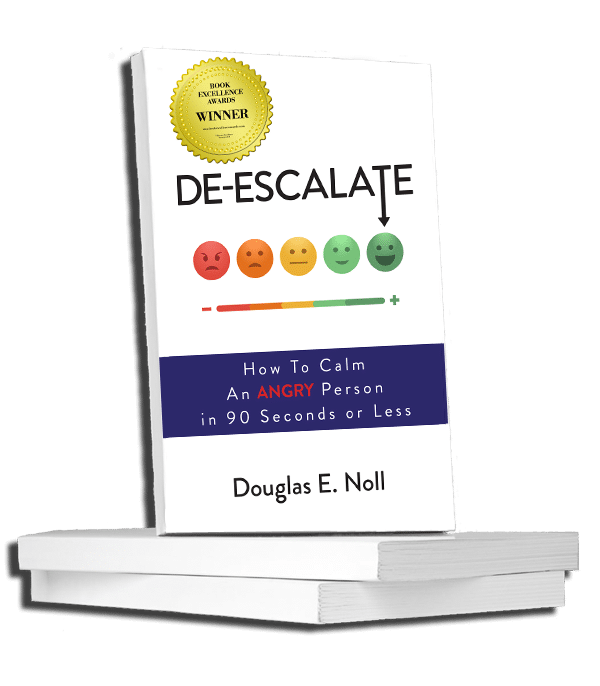
Emotional conflicts fracture teams and families. The ongoing tension breeds burnout, damages relationships, and hurts performance. The Noll Method’s 90-Second Power Move™ is a proven, neuroscience-based skill for restoring calm, tested from boardrooms to maximum-security prisons. Master this life-changing technique to transform chaos into collaboration. Book a no-obligation zoom call with Doug Noll today!
The Remarkable Effect of Affect Labeling
Among the most reliable techniques is affect labeling quietly naming the emotion you observe in the other person. “You sound extremely frustrated right now.” Or “This seems to have hurt you deeply.” Delivered calmly and without judgment, these simple observations produce rapid change.
Brain imaging research demonstrates why. When an emotion receives a clear label, amygdala activation decreases while areas linked to emotional regulation light up. The shift often begins within 90 seconds, reducing heart rate, muscle tension, and overall arousal no commands required. By acknowledging the feeling, you signal to the emotional brain that it has been seen and understood, allowing it to begin standing down naturally.
This approach belongs to no elite group. It’s straightforward human language that slices through walls of defensiveness. Whether the setting is a tense family discussion, a high-pressure meeting, or a charged public exchange, affect labeling opens a doorway to genuine dialogue that threats and instructions rarely can.
Why Telling Someone to “Calm Down” Almost Always Fails
Almost everyone has uttered or heard the phrase “just calm down.” The instinct behind it is usually kind, yet the outcome is reliably the opposite. In the grip of an amygdala hijack, the rational mind is sidelined. Cortisol and adrenaline surge. Any directive to suppress emotion registers as invalidation “Your reaction is wrong” or as a power move “I control how you feel.” Either way, the emotional brain doubles down, escalating the conflict further.
Skilled de-escalation reverses that pattern. It first honors the feeling that is present before inviting logic back into the room. Affect labeling achieves precisely this balance: it offers validation without implying agreement, recognition without excusing actions. The contrast in results is striking.
Battle-Tested in Extreme Settings
These principles are far from academic. They have proven their value in some of the most emotionally volatile environments on earth. In maximum-security prisons, training in affect labeling and related de-escalation methods has measurably reduced violent incidents among both inmates and staff. The same core mechanisms apply equally well in everyday high-stakes arenas.
Hospitals rely on them when patients or relatives become agitated. Executives use them to navigate difficult performance conversations while preserving team trust. Teachers employ them to restore focus in classrooms without resorting to punitive measures. Across these diverse contexts, the pattern holds: when the emotional brain receives acknowledgment, the rational brain returns online. Conflicts shorten. Collaboration improves. Emotional exhaustion decreases.
Overcoming the Most Common Objections
Skepticism often greets these ideas at first. Many people argue that conflict and disagreement are inevitable parts of human interaction no method can erase them completely. They are correct. The goal is never the complete elimination of conflict; it is preventing escalation from turning manageable differences into lasting damage. These tools equip people to interrupt destructive cycles and return to constructive problem-solving more quickly.
Another frequent concern is applicability: “This won’t work with my explosive colleague” or “My spouse just shuts down.” The strength of the approach lies in its foundation in universal neurological wiring. Cooperation from the other party is not required. The technique engages automatic brain processes rather than depending on conscious willingness.
At a deeper level, some hesitate because engaging these skills demands confronting one’s own emotional responses. Avoidance or suppression feels safer in the short term. Yet the rewards stronger self-mastery, steadier relationships, authentic closeness almost always prove worth the initial discomfort.
Clearing Up Frequent Misunderstandings
- It only works when the other person is already calm. In reality, it is designed for moments of highest agitation.
- Labeling means you endorse the emotion or behavior. Acknowledgment is neutral; it simply registers what exists.
- The method appears weak or overly gentle. Executed well, it requires real composure and precision under pressure.
- These skills apply only to romantic or family ties. The underlying brain science functions identically in workplaces, clinics, schools, and correctional facilities.
Integrating the Skill into Everyday Interactions
Begin modestly. The next time friction builds, pause long enough to notice the dominant feeling. Name it out loud in a steady tone: “You seem really overwhelmed by this.” Hold back from explaining, justifying, or solving. Simply offer the label and wait. In most cases the intensity drops noticeably within moments, clearing space for a more productive exchange.
Consistent practice turns the technique from deliberate effort into instinct. Disputes that previously dragged on for hours resolve in minutes. Unspoken resentments surface and receive attention instead of festering. Relationships deepen because people experience being truly understood rather than managed or dismissed.
Interest in relational and emotional well-being has grown dramatically in recent years, reflected in the expanding availability of convenient mental health support options. Growing mental health awareness and greater acceptance of remote solutions have made it easier than ever for couples and individuals to seek help before small issues become major ruptures. Skills like affect labeling complement that trend by empowering people to create calmer, more connected moments in real time.
Why This Matters Now
Modern neuroscience has revealed a remarkably effective way to influence emotional states not through dominance or persuasion, but through accurate, compassionate recognition. Affect labeling and its companion techniques provide a reliable bridge out of reactivity and toward mutual understanding. They rest on a simple truth: every strong emotion, no matter how disruptive, carries a fundamental human need to be witnessed.
Learn to use these tools well, and conflict ceases to be merely something to survive. It becomes an opportunity to build trust, clarity, and closeness. In personal lives, professional teams, and communities alike, that shift may represent one of the most meaningful advances we can make.
Frequently Asked Questions
Why does telling someone to “calm down” make things worse?
Telling someone to calm down typically backfires because it registers as either invalidation (“your reaction is wrong”) or a power move, causing the emotional brain to escalate rather than settle. During intense conflict, the amygdala triggers a “hijack” that sidelines rational thinking so commands to suppress emotion are processed as threats, not helpful instructions. Effective de-escalation works with the brain’s emotional system, not against it.
What is affect labeling, and how does it help de-escalate conflict?
Affect labeling is the practice of calmly naming the emotion you observe in someone else for example, “You seem really frustrated right now.” Brain imaging research shows that putting a feeling into words reduces amygdala activation and engages areas linked to emotional regulation, often within 90 seconds. Crucially, labeling an emotion doesn’t mean endorsing it; it simply signals to the emotional brain that it has been seen, allowing it to naturally stand down.
Can neuroscience-based de-escalation techniques work in professional settings, not just personal relationships?
Yes these techniques are grounded in universal neurological wiring, making them effective across virtually any high-stakes setting. Hospitals use them with agitated patients, executives apply them in difficult performance conversations, and even maximum-security prisons have seen measurable reductions in violent incidents after staff training in affect labeling. The underlying brain science operates the same way whether the conflict occurs at home, in the workplace, or in a classroom.
Disclaimer: The above helpful resources content contains personal opinions and experiences. The information provided is for general knowledge and does not constitute professional advice.
You may also be interested in: When Someone Takes Their Anger Out On You 5 Compelling
Emotional conflicts fracture teams and families. The ongoing tension breeds burnout, damages relationships, and hurts performance. The Noll Method’s 90-Second Power Move™ is a proven, neuroscience-based skill for restoring calm, tested from boardrooms to maximum-security prisons. Master this life-changing technique to transform chaos into collaboration. Book a no-obligation zoom call with Doug Noll today!
Powered by flareAI.co