Quick Listen:
The sharp ping of a Slack notification slices through the stillness of a home office. Three clipped words appear on screen: “This isn’t right.” In moments your heart rate climbs, shoulders tense, and a rush of heat floods your face. A routine discussion about task ownership has, without warning, become a heated confrontation. This pattern is painfully common in today’s workplaces and modern neuroscience offers a clear explanation for why disagreements can explode so rapidly.
Hybrid and remote environments have removed many of the subtle signals that once softened face-to-face exchanges. Without tone of voice, facial micro-expressions, or even the simple reassurance of physical presence, written messages frequently trigger defensive interpretations. A short reply or missing emoji can read as hostility because the human brain, shaped by millions of years of evolution, treats uncertain social cues as potential danger. Layer on persistent economic uncertainty, relentless performance pressure, and the after-effects of recent global disruptions, and the nervous system stays chronically alert, ready to overreact.
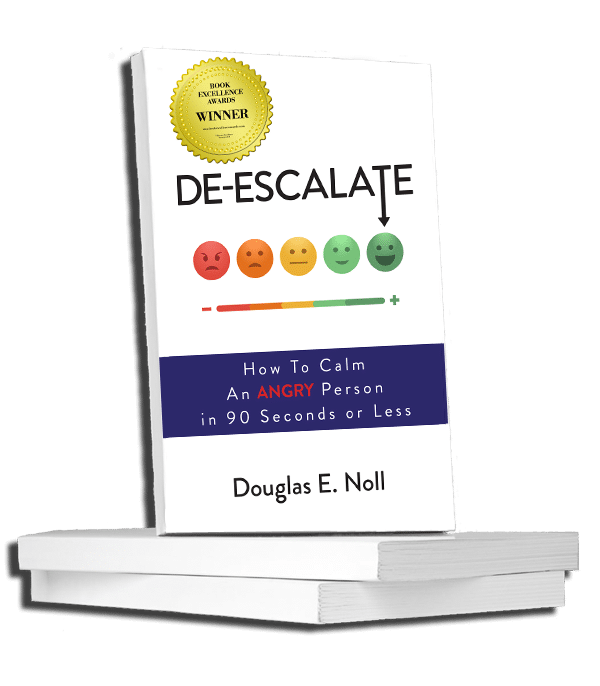
Emotional conflicts fracture teams and families. The ongoing tension breeds burnout, damages relationships, and hurts performance. The Noll Method’s 90-Second Power Move™ is a proven, neuroscience-based skill for restoring calm, tested from boardrooms to maximum-security prisons. Master this life-changing technique to transform chaos into collaboration. Book a no-obligation zoom call with Doug Noll today!
The Amygdala’s Lightning-Fast Response
At the core of these rapid escalations lies the amygdala, a small, almond-shaped cluster of neurons deep in the limbic system. It functions as the brain’s sentinel, constantly scanning for threats. When it registers a perceived slight whether a critical comment, exclusion from a decision, or an abrupt tone it initiates what researchers call an amygdala hijack. Within fractions of a second, stress hormones including adrenaline and cortisol surge through the bloodstream. Blood flow shifts away from the prefrontal cortex the seat of reasoning, perspective, and impulse control toward the more primitive regions that prepare for fight, flight, or freeze. In that narrowed state, nuance disappears and the disagreement feels intensely personal.
In virtual settings this ancient alarm system frequently misreads intent. A difference of professional opinion registers as an attack on competence or status. Generational communication styles and the relentless pace of new collaboration tools only heighten the friction. What feels like an uncontrollable spiral is often biology responding faster than conscious thought can intervene.
The Ninety-Second Window Nature Provides
Fortunately, the same nervous system that ignites conflict also contains a built-in de-escalation timer. Neuroanatomist Jill Bolte Taylor, reflecting on her personal experience with a massive stroke, popularized what is now widely called the “90-second rule.” The initial physiological wave of a strong emotion pounding heart, flushed skin, surge of anger lasts roughly ninety seconds provided no new thought keeps feeding the cycle. After that point, sustained distress comes not from chemistry alone but from the narratives we continue to rehearse internally.
Conflict resolution expert Doug Noll has turned this neuroscientific insight into a reliable, repeatable intervention he calls the 90-Second Power Move. The core technique is affect labeling: calmly naming the other person’s emotion without challenging their position or offering immediate solutions. A straightforward phrase such as “You sound really frustrated about being left out of that discussion” directly acknowledges the feeling. Research, including a well-known 2007 UCLA study led by Matthew Lieberman, demonstrates that naming an emotion reduces amygdala activation while increasing activity in brain regions responsible for regulation and reasoning. The simple act of verbalizing affect often lowers emotional intensity within that critical ninety-second window, reopening the door to constructive conversation.
Putting the 90-Second Power Move into Practice
Noll’s method follows a concise sequence that almost anyone can learn:
- Remain calm and grounded in the present moment.
- Set aside the factual content of the complaint for a beat.
- Identify the dominant underlying emotion.
- Reflect it back neutrally with a “you” statement: “It seems like you’re pretty upset about how that decision came down.”
This approach sidesteps argument over “who said what” and instead validates experience. Validation reduces defensiveness without requiring agreement. Noll has successfully applied the technique in extremely charged environments, including maximum-security correctional facilities, where he regularly sees heated anger dissipate in well under ninety seconds.
Emotional Intelligence as the First Line of Defense
Leaders who cultivate emotional intelligence learn to detect the earliest signals of tension terse messages, delayed responses, sudden formality and step in before resentment solidifies. Affect labeling becomes a habitual response rather than a last resort. When modeled consistently from the top, the practice spreads, strengthening psychological safety across teams.
Progressive organizations are now pairing human emotional-intelligence training with supportive technology. Advanced tools analyze patterns in digital communication to flag potential friction points and suggest timely de-escalation language. In parallel, the broader cultural emphasis on emotional awareness continues to grow. Social and emotional learning programs originally developed to help children build self-awareness, empathy, and healthy relationship skills have proven their value so powerfully during periods of remote schooling and heightened mental-health strain that similar principles are increasingly applied in adult professional settings.
Creating Workplaces That Resist Spirals
Prevention remains more effective than repair. Teams that establish explicit communication guidelines, schedule regular emotional-intelligence refreshers, and encourage brief pauses during tense exchanges experience fewer destructive escalations. When leaders consistently demonstrate calm naming of emotions, the behavior becomes contagious. Colleagues begin to see that acknowledging someone’s feelings does not weaken a position it creates breathing room for logic to reassert itself.
Reclaiming Agency in the Heat of the Moment
The next time a single message sets your nervous system ablaze, remember the fundamental truth neuroscience reveals: the raw chemical rush of emotion peaks and begins to fade in about ninety seconds unless we keep stoking it. Pause. Name the feeling whether it belongs to you or the person across the screen and observe how the atmosphere shifts. The very brain circuitry that can hijack us in conflict is the same circuitry that equips us to restore calm. In fast-moving, digitally mediated workplaces, learning to use that ninety-second window is no longer optional. It is one of the most practical ways we stay connected, productive, and recognizably human amid accelerating change.
Frequently Asked Questions
What happens in the brain when a conflict or argument escalates?
During a heated conflict, the amygdala the brain’s threat-detection center triggers what’s known as an “amygdala hijack,” flooding the body with stress hormones like adrenaline and cortisol within fractions of a second. This diverts blood flow away from the prefrontal cortex (responsible for reasoning and impulse control) toward more primitive survival regions, making it nearly impossible to think clearly or respond rationally. The result is that even a minor professional disagreement can feel like a deeply personal attack.
What is the 90-second rule for managing anger and emotional conflict?
The 90-second rule, popularized by neuroanatomist Jill Bolte Taylor, states that the initial physiological wave of a strong emotion racing heart, flushed skin, surge of anger naturally peaks and begins to fade within about ninety seconds, provided no new thoughts keep fueling the cycle. After that window, prolonged distress is driven by the stories we keep replaying internally, not brain chemistry alone. Recognizing this gives you a powerful opportunity to pause and interrupt an emotional spiral before it causes lasting damage to a relationship or conversation.
What is affect labeling and how does it help de-escalate workplace conflict?
Affect labeling is the practice of calmly naming another person’s emotion out loud for example, saying “You seem really frustrated about being left out of that decision” without challenging their position or jumping to solutions. A 2007 UCLA study led by Matthew Lieberman found that simply naming an emotion reduces activation in the amygdala while increasing activity in brain regions that govern regulation and rational thinking. Conflict resolution expert Doug Noll has built this technique into his “90-Second Power Move,” which has been used successfully even in maximum-security prison settings to rapidly diffuse intense anger.
Disclaimer: The above helpful resources content contains personal opinions and experiences. The information provided is for general knowledge and does not constitute professional advice.
You may also be interested in: When Someone Takes Their Anger Out On You 5 Compelling
Emotional conflicts fracture teams and families. The ongoing tension breeds burnout, damages relationships, and hurts performance. The Noll Method’s 90-Second Power Move™ is a proven, neuroscience-based skill for restoring calm, tested from boardrooms to maximum-security prisons. Master this life-changing technique to transform chaos into collaboration. Book a no-obligation zoom call with Doug Noll today!
Powered by flareAI.co