In boardrooms, classrooms, and living rooms alike, a single heated moment can spiral out of control. One sharp remark ignites another, voices climb, and what began as a simple disagreement erupts into full conflict. But what if the most effective way to interrupt that escalation had little to do with winning the argument or forcing yourself to stay calm? What if it rested on a precise, brain-based skill capable of lowering emotional intensity in roughly ninety seconds?
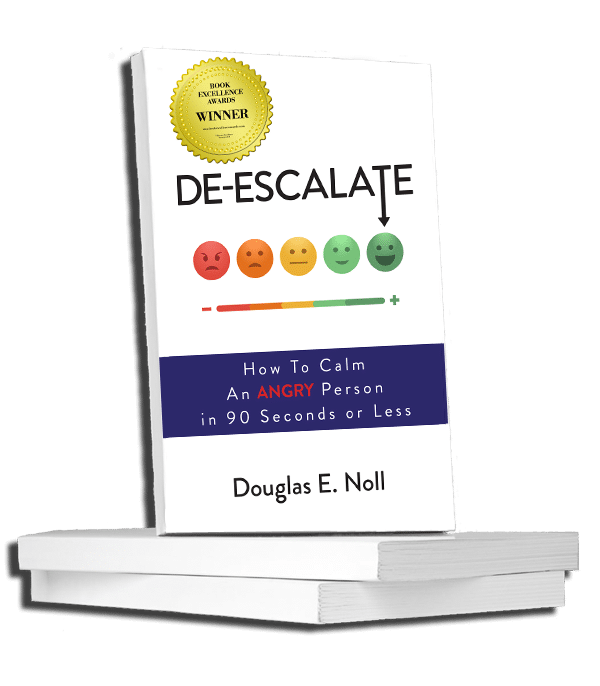
That is the realistic promise of today’s most effective de-escalation training. Rather than relying on generic advice such as “take a deep breath” or “count to ten,” leading approaches teach concrete techniques grounded in how the human brain actually processes strong emotion. Veteran mediator Doug Noll has refined one such method the Noll Method™ through decades of high-stakes practice, from maximum-security prisons to C-suite offices. At its heart lies affect labeling: the deliberate, nonjudgmental naming of another person’s emotion. When performed accurately, this single act often quiets the nervous system’s alarm response and reopens the pathway to rational dialogue far more quickly than conventional tactics.
Emotional conflicts fracture teams and families. The ongoing tension breeds burnout, damages relationships, and hurts performance. The Noll Method’s 90-Second Power Move™ is a proven, neuroscience-based skill for restoring calm, tested from boardrooms to maximum-security prisons. Master this life-changing technique to transform chaos into collaboration. Book a no-obligation zoom call with Doug Noll today!
The Real Price of Unmanaged Tension
Workplace conflict rarely stays invisible. When disputes escalate, organizations pay in multiple currencies: higher voluntary turnover, increased HR mediation hours, fractured team focus, and measurable drops in productivity. Many leadership development programs still treat the ability to handle emotional undercurrents as a soft skill rather than a hard-edged business necessity.
Market trends reflect a decisive shift in priorities. Industry analysts now value the global corporate leadership training sector in the tens of billions of dollars, with strong growth expected through the next decade as companies invest in competencies such as emotional intelligence, communication under pressure, and strategic conflict management. Parallel demand is surging in social and emotional learning programs, particularly in North America, where heightened awareness of mental well-being continues to drive adoption in both education and professional settings. These converging currents signal a clear message: leaders and organizations increasingly recognize that the capacity to navigate tension protects culture, talent, and results.
Why Traditional Tools Often Fall Short
Classic conflict-resolution training usually emphasizes active listening: paraphrasing what was said, asking clarifying questions, nodding sympathetically, and signaling “I understand your position.” These practices build rapport in calm moments. When someone is physiologically flooded heart rate elevated, amygdala in overdrive however, repeating or exploring the content of their complaint can inadvertently intensify the emotion rather than diffuse it.
Contemporary de-escalation training reverses the sequence. It trains people to set aside the literal words for a moment and attend first to the emotion itself. Affect labeling requires the listener to observe the feeling being expressed and reflect it back in plain, accurate language: “You sound extremely frustrated right now,” or “This seems to have left you feeling really overwhelmed.” No fixing, no judgment, no counter-argument just a clear name for what is present.
The Neuroscience That Makes It Work
Why does naming an emotion produce such rapid change? Research provides a compelling explanation. When an individual verbally identifies a specific feeling, activity in the brain’s threat-detection center (the amygdala) decreases while regions responsible for emotional regulation in the prefrontal cortex become more active. This shift disrupts the automatic fight-or-flight loop and restores access to higher-order thinking. Practitioners who apply affect labeling consistently report observable de-escalation often within ninety seconds provided the label matches the emotion with precision and is delivered without agenda.
Proven Across Extreme and Everyday Contexts
Doug Noll developed and pressure-tested his approach in one of the most challenging environments imaginable: teaching life-sentenced inmates to interrupt cycles of prison violence. That unforgiving laboratory eventually informed training delivered to corporate executives, schoolteachers, first responders, and couples. The same verbal move that once helped reduce gang-related confrontations behind bars now enables managers to calm angry team members, chairs to steady tense boardroom discussions, and parents to transform shouting matches into problem-solving conversations.
Everyday Situations Where the Skill Proves Decisive
- Workplace blow-ups: Rather than immediately explaining policy to a shouting employee, a leader names the feeling: “You sound incredibly angry about how this decision landed.” Volume frequently drops within seconds.
- Remote and hybrid misunderstandings: Lacking nonverbal cues, tone is easily misread. Labeling apparent frustration early rebuilds psychological safety before resentment hardens.
- Classroom disruptions: Teachers apply the technique to de-escalate emotional outbursts, restoring focus without resorting to punitive measures.
- Personal arguments: Partners shift from accusation to naming emotions, turning potential fights into constructive dialogue.
Answering the Skeptics
Skepticism is common at first. Some argue that conflict is simply part of human nature and cannot be avoided. Others worry that naming anger somehow condones unacceptable behavior. A few fear that focusing on feelings instead of facts will make them appear weak or indecisive.
Reality proves otherwise. Affect labeling does not excuse actions; it removes emotional noise so the underlying issues can be addressed clearly and productively. It requires no agreement only accurate recognition. Far from being a soft concession, the technique demands sharp observation, emotional courage, and disciplined delivery under pressure. Those who master it typically report gaining not losing authority and influence.
Why This Capability Matters More Than Ever
Distributed work arrangements, persistent economic strain, and deepening societal divides have made calm, connected communication both scarcer and more valuable. Without reliable in-person cues, misinterpretations multiply and trust erodes faster. Leaders equipped to name and navigate emotion become indispensable: they preserve collaboration, accelerate innovation, retain top talent longer, and prevent small frictions from draining organizational energy.
Investing in genuine de-escalation training is not an attempt to engineer a frictionless world. It is a pragmatic decision to arm people with tools that demonstrably work when tension spikes. In an era when emotions quietly shape far more decisions than logic alone, the individuals and teams who can accurately read, name, and regulate those emotions hold a decisive advantage. They do not merely manage conflict; they convert it into stronger alignment and better outcomes.
The next time the temperature in the room begins to rise, consider this: the most powerful intervention may not be a clever rebuttal or a strategic retreat. Sometimes it is simply listening beneath the words for the emotion and naming it aloud. Ninety seconds later, the conversation often feels entirely different.
Frequently Asked Questions
What is affect labeling and how does it help de-escalate conflict?
Affect labeling is the practice of calmly and accurately naming another person’s emotion aloud for example, saying “You sound extremely frustrated right now.” Research shows this reduces activity in the brain’s amygdala (the threat-detection center) and activates the prefrontal cortex, which governs rational thinking. The result is a measurable drop in emotional intensity, often within ninety seconds, without needing to argue, fix, or judge.
How is modern de-escalation training different from traditional conflict resolution?
Traditional conflict resolution focuses on active listening techniques like paraphrasing what someone said or asking clarifying questions approaches that work well when people are calm. Modern de-escalation training, by contrast, teaches you to address the *emotion first* before engaging with the content of a dispute. When someone is physiologically flooded, engaging with the details of their complaint can actually intensify the conflict rather than reduce it.
Where can de-escalation skills be applied, and who benefits from learning them?
De-escalation techniques are effective across a wide range of settings, including workplace disagreements, remote team misunderstandings, classroom disruptions, and personal arguments. The same methods used to reduce violence in maximum-security prisons have been successfully adapted for corporate executives, teachers, first responders, and parents. Any leader or individual who regularly navigates high-emotion situations stands to gain greater authority, stronger relationships, and better outcomes by mastering these skills.
Disclaimer: The above helpful resources content contains personal opinions and experiences. The information provided is for general knowledge and does not constitute professional advice.
You may also be interested in: De-Escalation Techniques for Healthcare Staff & Patients – Doug Noll
Emotional conflicts fracture teams and families. The ongoing tension breeds burnout, damages relationships, and hurts performance. The Noll Method’s 90-Second Power Move™ is a proven, neuroscience-based skill for restoring calm, tested from boardrooms to maximum-security prisons. Master this life-changing technique to transform chaos into collaboration. Book a no-obligation zoom call with Doug Noll today!
Powered by flareAI.co