Quick Listen:
In the middle of a sharp disagreement whether in a boardroom, on a project team, or even at home the natural impulse is to counter, explain, or fix the problem immediately. Yet experienced mediators, seasoned managers, and psychologists have long observed a counterintuitive truth: the quickest way to move past conflict is rarely to rush toward solutions. Instead, it is often to pause and demonstrate that the other person’s feelings are legitimate and understandable. Validating Emotions Proves Key in Resolving Disputes Quickly has become one of the most reliable de-escalation tools available, turning potential standoffs into productive conversations with surprising speed.
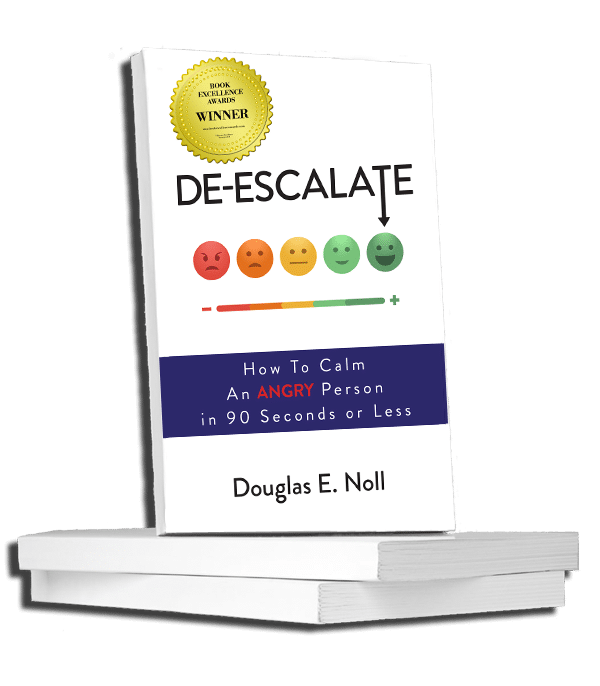
Emotional conflicts fracture teams and families. The ongoing tension breeds burnout, damages relationships, and hurts performance. The Noll Method’s 90-Second Power Move™ is a proven, neuroscience-based skill for restoring calm, tested from boardrooms to maximum-security prisons. Master this life-changing technique to transform chaos into collaboration. Book a no-obligation zoom call with Doug Noll today!
The Mechanics of Emotional Validation
At its core, validation means conveying that someone’s emotional response is reasonable given their perspective and circumstances. It is not agreement with their conclusions, nor is it an apology for something you did not do. A simple acknowledgment “I can see this situation has left you feeling overlooked and that must sting” frequently lowers physiological arousal within seconds.
When people sense that their internal experience has been accurately seen and accepted, the brain’s threat-response system down-regulates. This shift creates mental space for listening, perspective-taking, and collaborative problem-solving. Without it, conversations tend to harden into entrenched positions.
Why Dismissal Prolongs Conflict
Consider the all-too-common phrases: “You’re overreacting,” “It’s not personal,” or “Just let it go.” Each one signals that the speaker believes the emotion itself is invalid or disproportionate. The recipient typically responds by amplifying the feeling in an attempt to be heard, which in turn prompts more dismissal a classic escalation loop.
Validation interrupts that cycle. By reflecting emotion without judgment, it communicates safety rather than threat. Once safety is reestablished, both parties can lower their guard and engage more rationally. Studies of conflict resolution consistently show that this initial emotional acknowledgment shortens the overall duration of disputes and improves the quality of the eventual outcome.
Emotional Intelligence as a Core Leadership Skill
In professional environments the cost of poorly handled conflict is measured in wasted time, damaged relationships, and lost focus. Organizations have responded by investing heavily in leadership development that treats emotional intelligence not just strategic or technical competence as essential.
Contemporary corporate leadership training programs devote significant attention to competencies such as reading emotional cues, acknowledging feelings without defensiveness, and guiding teams through friction. The global market for these programs was valued at USD 37.45 billion in 2024, underscoring how seriously companies now take the link between emotionally skilled leadership and sustained performance.
Leaders who consistently validate emotions report faster resolution of team tensions, higher psychological safety scores, and greater willingness among employees to raise difficult issues early rather than letting them fester.
Validation in Action: A Workplace Scenario
Picture a marketing director and a data analyst locked in disagreement over campaign priorities. The analyst feels her rigorous analysis is being ignored; the director believes the timeline demands quicker decisions. A validating response might sound like:
“It’s clear you’ve put serious effort into building a data-backed recommendation, and having it set aside without discussion must feel frustrating and maybe even undermining. That reaction makes complete sense.”
After a brief pause to let the acknowledgment land, the director can continue: “I’m also under pressure to meet launch dates can we look together at where the numbers and the schedule can best intersect?”
The analyst, no longer needing to defend her dignity, usually becomes far more open to compromise. What could have become a multi-day email chain or a tense one-on-one often resolves within the same meeting.
Practical Phrases That Open the Door
Effective validation does not require elaborate language. A handful of straightforward constructions tend to work across cultures and contexts:
- “I can understand why this feels [emotion word] to you right now.”
- “That sounds genuinely [difficult / disappointing / unfair] given what you’ve been dealing with.”
- “It makes sense you’d be upset after investing so much in [specific detail].”
The power lies less in the exact wording than in the sincerity behind it and the willingness to stop talking long enough for the other person to feel heard.
Avoiding the Most Frequent Validation Traps
Even well-intentioned people stumble in predictable ways:
- The premature “but” pivot. Starting with validation only to immediately follow with “but you have to understand my side” cancels the benefit. The listener hears the validation as a mere preface to correction.
- Performative empathy. Empty statements “I totally get why you’re mad” delivered without real curiosity or attention usually backfire. Authentic curiosity (“Can you help me see what part hurts the most?”) produces a very different result.
- Over-identifying. Saying “I feel exactly the same way” when you do not can feel manipulative. Partial understanding (“I haven’t been in your exact position, but I can imagine how disheartening that must be”) is far more credible.
The remedy in each case is simplicity and patience: reflect first, solve second.
Cultivating an Emotionally Literate Workplace
When leaders model validation consistently, the behavior spreads. Teams begin to self-correct during tense moments. People raise concerns sooner, apologize more readily, and experiment more freely because the emotional climate feels safe rather than punitive.
This cultural shift delivers compounding returns: shorter meeting recovery times after disagreements, stronger cross-functional collaboration, and higher retention among high performers who value being treated as whole people rather than mere resources.
A Small Intervention With Outsized Impact
Mastering emotional validation requires no advanced degree, no expensive software, and no sweeping organizational overhaul. It asks only for a brief pause and genuine attention at the moment when instinct urges us to push back hardest.
Next time you feel the temperature in a conversation rising, experiment with reflecting the emotion before reaching for a solution. The results are often immediate: tighter focus, less defensiveness, and a surprising acceleration toward resolution. In an era that prizes speed and efficiency, few skills deliver more leverage per second invested than the simple, powerful act of helping another person feel truly seen.
Frequently Asked Questions
What does it mean to validate emotions during a conflict, and why does it help resolve disputes faster?
Emotional validation means acknowledging that someone’s feelings are reasonable and understandable given their situation without necessarily agreeing with their conclusions. When people feel genuinely heard, the brain’s threat-response system calms down, creating mental space for rational discussion and compromise. This simple act interrupts the escalation cycle that dismissive phrases like “you’re overreacting” tend to trigger. As a result, conflicts that might drag on for days can often be resolved within a single conversation.
How can leaders use emotional validation as a conflict resolution skill in the workplace?
Leaders can practice emotional validation by reflecting a team member’s feelings back to them before jumping to solutions for example, saying “It makes sense you’d feel frustrated after investing so much in this.” This approach, central to modern corporate leadership training and emotional intelligence development, has been shown to speed up resolution of team tensions and boost psychological safety. Organizations worldwide are investing heavily in these skills, with the leadership training market valued at over $37 billion in 2024, recognizing that emotionally skilled managers drive stronger performance and retention.
What are common mistakes to avoid when trying to validate someone’s emotions?
The most common pitfall is the “premature but pivot” offering validation and then immediately redirecting to your own perspective, which cancels out the benefit entirely. Performative empathy, such as saying “I totally get it” without genuine curiosity, can also feel hollow and may backfire. Instead, focus on sincere, specific acknowledgment and resist the urge to problem-solve until the other person truly feels heard the simple rule is: reflect first, solve second.
Disclaimer: The above helpful resources content contains personal opinions and experiences. The information provided is for general knowledge and does not constitute professional advice.
You may also be interested in: How a Proven Method Calms High-Stakes Business Disputes
Emotional conflicts fracture teams and families. The ongoing tension breeds burnout, damages relationships, and hurts performance. The Noll Method’s 90-Second Power Move™ is a proven, neuroscience-based skill for restoring calm, tested from boardrooms to maximum-security prisons. Master this life-changing technique to transform chaos into collaboration. Book a no-obligation zoom call with Doug Noll today!
Powered by flareAI.co