Quick Listen:
In the heat of a high-stakes meeting, when voices rise and shoulders tighten, a single, well-chosen sentence can change everything. “It feels like there’s growing frustration about these timelines,” someone says calmly. The room exhales. Shoulders drop. The conversation shifts from confrontation back to problem-solving. This is not magic it is affect labeling , one of the most reliably effective, research-backed techniques for regulating emotion in real time.
Decades of neuroimaging research have demonstrated that simply naming an emotion activates the prefrontal cortex the brain’s center for reasoning and impulse control while simultaneously reducing activity in the amygdala, the almond-shaped structure that triggers our fight-or-flight response. The result is measurable psychological distance: the feeling remains, but it loses some of its grip, allowing clearer thinking and less reactive behavior.
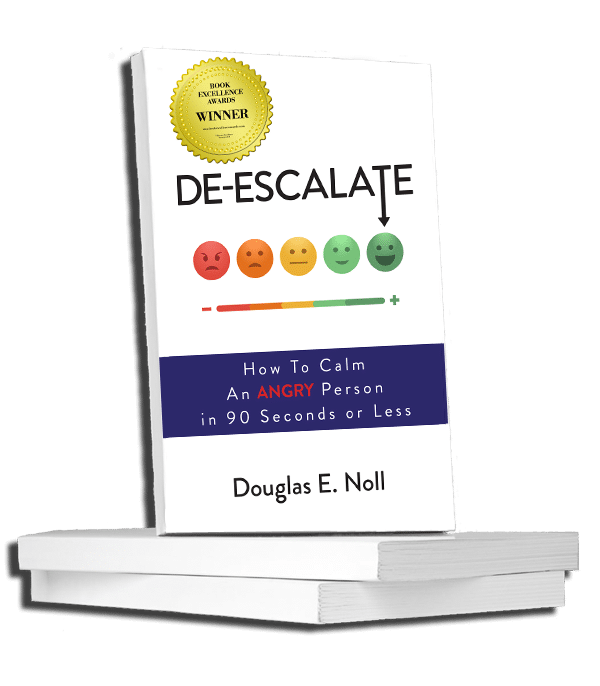
Emotional conflicts fracture teams and families. The ongoing tension breeds burnout, damages relationships, and hurts performance. The Noll Method’s 90-Second Power Move™ is a proven, neuroscience-based skill for restoring calm, tested from boardrooms to maximum-security prisons. Master this life-changing technique to transform chaos into collaboration. Book a no-obligation zoom call with Doug Noll today!
The Neuroscience of Naming What You Feel
When people label their emotions whether irritation, anxiety, disappointment, or even guarded optimism the typical brain response is remarkably consistent. Functional MRI studies show a noticeable decrease in amygdala activation paired with increased engagement of regulatory regions in the ventrolateral prefrontal cortex. This pattern appears most strongly precisely when emotions are intense and threatening to overwhelm rational discussion.
Importantly, affect labeling is not the same as suppressing emotion or forcing a positive attitude. It functions more like a circuit breaker: by articulating what is happening internally, the brain shifts resources away from pure reactivity and toward deliberate processing. Cortisol levels drop more quickly, heart-rate variability improves, and people regain access to higher-order thinking even under pressure.
Why Meetings Are Emotional Minefields
Meetings bring together competing priorities, unequal power dynamics, tight deadlines, and the fundamental vulnerability of putting ideas on display. Any of these elements can ignite low-grade tension that quickly escalates when left unaddressed. Once defensiveness sets in, productive dialogue becomes almost impossible: people stop listening and start protecting territory.
The beauty of affect labeling lies in its simplicity and immediacy. A facilitator, team leader, or even a thoughtful participant can interrupt the spiral by naming the emotion in the room without judgment or blame. “I’m sensing some hesitation around this approach perhaps a mix of caution and curiosity?” That single intervention frequently lowers the emotional temperature enough for real conversation to resume.
Four Practical Ways to Bring Naming Into Your Meetings
- Private self-labeling Before you speak, silently note your own state: “I’m feeling defensive right now.” That brief pause dramatically reduces the chance of an impulsive retort.
- Neutral group acknowledgment A leader or mediator can reflect the collective mood: “There appears to be considerable anxiety about resource constraints today.” Naming shared emotion normalizes it and reduces the sense that anyone is being singled out.
- Precision over vagueness “Upset” is a weak label. “Overwhelmed,” “discouraged,” “uncertain,” or “undervalued” carry far more diagnostic and regulatory power because they pinpoint the experience more accurately.
- Early timing The technique works best when tension is rising but has not yet erupted into open conflict. Intervening at the first signs of physiological activation tight jaws, crossed arms, clipped speech prevents escalation far more effectively than trying to repair damage afterward.
Common Objections and What the Evidence Actually Shows
Critics sometimes argue that naming emotions in a business setting feels too “soft,” risks amplifying negativity, or wastes valuable time. Experience and research point in the opposite direction: when emotional intensity is already elevated, labeling typically de-escalates rather than inflames. In low-arousal moments the effect is neutral or slightly sensitizing, which is why the technique should be reserved for situations where regulation is genuinely needed.
Another frequent concern is that affect labeling sounds like pop psychology. Yet the method has been examined in dozens of controlled studies using both self-report measures and physiological markers. The convergence of evidence from changes in brain activation patterns to faster recovery of emotional equilibrium is difficult to dismiss.
The Modern Workplace Context: Remote, Hybrid, and Emotionally Opaque
The shift toward remote and hybrid work has made emotional cues harder to read. Sarcasm disappears in text, micro-expressions vanish behind turned-off cameras, and tone is frequently misread. In these environments, explicit verbalization of feelings becomes not just helpful but often essential to prevent misunderstandings from snowballing into lasting resentment.
Organizations have responded by placing greater value on emotional intelligence and communication abilities. Investment in programs that strengthen these skills continues to grow as leaders recognize their direct impact on collaboration, innovation, and retention. Yet among the many sophisticated training approaches available, affect labeling stands out for its near-zero cost, minimal learning curve, and immediate applicability no software license, no half-day workshop required.
Companies that embed this practice report crisper decision-making, shorter recovery time after disagreements, and noticeably lower levels of chronic meeting fatigue. The return comes not from grand transformation but from dozens of small, cumulative moments in which tension is named and then released.
One Small Sentence, One Large Difference
Meetings will never be free of friction nor should they be. Disagreement is the engine of progress when it remains productive. The skill lies in keeping emotion in the passenger seat rather than behind the wheel.
Next time you feel the atmosphere thicken, experiment. Name the emotion yours or the room’s with calm precision. Watch what happens. In most cases the shift is almost immediate: tighter faces soften, breathing slows, and the conversation finds its way back to the work that actually matters.
A few carefully chosen words really can quiet the internal sirens, restore perspective, and turn a potential standoff into forward movement. In today’s demanding workplaces, that may be one of the highest-leverage moves any team can make.
Frequently Asked Questions
What is affect labeling and how does it reduce tension in meetings?
Affect labeling is the practice of naming emotions out loud either your own or those you observe in a group to reduce emotional intensity in real time. Neuroscience research shows that simply naming an emotion activates the prefrontal cortex (responsible for reasoning) while reducing activity in the amygdala (the brain’s fight-or-flight center). This creates measurable psychological distance from the feeling, allowing clearer thinking and less reactive behavior. In meetings, a calm statement like “It seems like there’s growing frustration about these timelines” can quickly shift the room from confrontation back to problem-solving.
Does naming emotions in a professional or business setting actually work, or does it seem too “soft”?
Despite concerns that affect labeling might feel out of place in business settings, dozens of controlled studies using both self-report measures and physiological markers confirm its effectiveness. When emotional intensity is already elevated, labeling typically de-escalates rather than inflames the situation. Organizations that embed this practice report faster recovery after disagreements, crisper decision-making, and lower levels of chronic meeting fatigue all measurable business outcomes, not just feel-good results.
How can remote and hybrid teams use emotion naming to improve communication?
Remote and hybrid work environments strip away many natural emotional cues micro-expressions disappear behind turned-off cameras, tone is easily misread in text, and sarcasm often vanishes entirely. This makes explicit verbalization of emotions not just helpful but essential to prevent misunderstandings from escalating into lasting resentment. Teams can adopt simple practices like a leader acknowledging collective anxiety at the start of a tense call, or individuals pausing to privately label their own emotional state before responding both are low-cost, immediately applicable techniques that require no special tools or training.
Disclaimer: The above helpful resources content contains personal opinions and experiences. The information provided is for general knowledge and does not constitute professional advice.
You may also be interested in: How to Overcome Resistance to Emotional Intelligence Training
Emotional conflicts fracture teams and families. The ongoing tension breeds burnout, damages relationships, and hurts performance. The Noll Method’s 90-Second Power Move™ is a proven, neuroscience-based skill for restoring calm, tested from boardrooms to maximum-security prisons. Master this life-changing technique to transform chaos into collaboration. Book a no-obligation zoom call with Doug Noll today!
Powered by flareAI.co