Quick Listen:
Imagine stepping into a boardroom where tensions simmer just below the surface, words fly like sparks, and the air feels thick with unspoken frustrations. Across offices in the United States and Canada, scenes like this unfold daily, amplified by the ongoing strains of hybrid work models, persistent burnout, and eroded lines of communication that once kept teams cohesive.
In this landscape, the emotional intelligence market is experiencing rapid expansion, reflecting a broader shift toward addressing these challenges head-on.
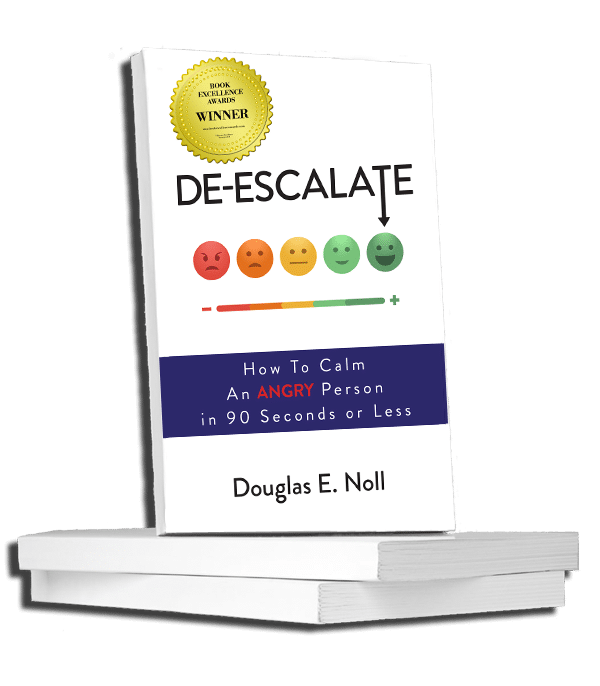
Emotional conflicts fracture teams and families. The ongoing tension breeds burnout, damages relationships, and hurts performance. The Noll Method’s 90-Second Power Move™ is a proven, neuroscience-based skill for restoring calm, tested from boardrooms to maximum-security prisons. Master this life-changing technique to transform chaos into collaboration. Book a no-obligation zoom call with Doug Noll today!
The Role of Emotional Intelligence in Dealing With Difficult Employees
Why North American organizations are turning to emotional intelligence frameworks to reduce workplace conflict, improve performance, and protect leadership credibility.
Workplace discord has always existed, but its edge has grown sharper amid recent upheavals. The pivot to remote and hybrid environments has stripped away the informal chats that often defused minor issues before they escalated. Exhaustion from prolonged stress has shortened fuses, making outbursts more frequent. Behaviors once dismissed as merely “challenging” like stubborn defensiveness, unpredictable mood swings, or quiet withdrawal are now recognized as symptoms of deeper emotional undercurrents, influenced by both personal pressures and organizational flaws.
This realization is prompting a reevaluation among leaders. Rather than defaulting to formal reprimands or policy enforcement, a growing number are embracing emotional intelligence (EI): the skill set for identifying, comprehending, and steering emotions in oneself and colleagues. This approach is emerging as a more subtle yet potent strategy for fostering harmony and driving results.
As North American companies grapple with these dynamics, EI is no longer a peripheral nice-to-have but a foundational element of effective management. It equips leaders to navigate the human side of business, turning potential flashpoints into opportunities for growth and collaboration.
What Emotional Intelligence Really Means in Tense Interactions
Stripping it down, emotional intelligence in professional settings revolves around key abilities that can transform high-stakes encounters. Self-awareness acts as the starting point, enabling a leader to detect their rising irritation before it colors their judgment. From there, emotional regulation ensures responses remain measured, even when provocations mount.
Empathy steps in next, fostering the capacity to see situations through another’s lens, which is crucial when dealing with someone who’s visibly agitated. Finally, social awareness facilitates mending frayed connections, rebuilding trust after a clash.
This pivot from rote behavior policing to genuine emotional de-escalation carries real weight. Traditional punitive tactics often amplify resistance, creating cycles of resentment. In contrast, acknowledging emotions through simple validation can diffuse intensity swiftly. Backed by neuroscience, this works because articulating feelings known as affect labeling dampens the amygdala’s alarm signals, restoring calm almost immediately.
Practical tools like affect labeling sidestep accusatory language, zeroing in on the emotion at play: “It seems like this is really frustrating for you.” Originating in intense mediation contexts, such as prison negotiations, these methods have seamlessly transitioned to corporate boardrooms, converting adversarial standoffs into productive dialogues.
Beyond basics, EI encourages proactive listening, where leaders probe gently for root causes rather than surface symptoms. This not only resolves immediate issues but cultivates a culture where employees feel seen and valued, reducing the likelihood of future flare-ups.
Shifts Happening Across North American Workplaces
The momentum behind EI adoption is building steadily in the U.S. and Canada. Businesses are embedding these principles into core programs, from supervisory development to high-level executive guidance and diversity, equity, and inclusion efforts focused on fostering safe psychological spaces.
Methods informed by brain science are rising in prominence, prioritizing healthy emotional processing over mere bottling up. The outdated emphasis on isolated performance fixes is yielding to holistic relationship mending and containment of emotional spillover. Particularly in stress-laden fields like healthcare and education, these strategies are proving instrumental in mitigating exhaustion and hostility.
Progressive firms are reclassifying de-escalation as an essential leadership pillar, far removed from optional fluff. This evolution aligns with broader market trends: the global emotional intelligence sector is on track for robust expansion, valued at USD 10.29 billion in 2026 and anticipated to climb to USD 32.08 billion by 2035, with a compound annual growth rate of 13.4%. North America stands out as a frontrunner, propelled by strong demand in corporate training, healthcare, education, and mental health arenas. This surge stems from heightened appreciation for EI’s role in enhancing decision-making, communication, and leadership, alongside escalating needs for soft skills, mental health support, and refined interpersonal dynamics.
In the U.S., tech giants and financial institutions are leading the charge, integrating AI-enhanced EI tools for real-time feedback. Canadian organizations, meanwhile, are leveraging government-backed wellness initiatives to roll out widespread training, emphasizing cultural nuances in multicultural workforces.
The Evidence from North America
The proof is mounting. Research from esteemed bodies like Harvard Business School underscores how leaders with strong EI foster elevated engagement, superior team output, and robust organizational achievements. Similarly, the Center for Creative Leadership highlights EI’s direct tie to building trust and boosting involvement.
The price of ignoring conflict is steep. Historical U.S. figures estimated yearly drains of $359 billion in compensated hours, translating to workers squandering almost three hours weekly on disputes. More current assessments, such as SHRM’s 2024 Civility Index, peg daily losses from incivility-driven productivity dips and absences at over $2.7 billion potentially exceeding a trillion annually when extrapolated.
In Canada, recent polls reveal employees mired in conflict forfeit an average of 55 productive days annually, amplifying turnover, complaints, and litigation hazards.
Conversely, EI investments yield dividends. Firms prioritizing such training see diminished escalations, enhanced loyalty, and tighter value synchronization. For instance, studies indicate teams under emotionally attuned leaders enjoy up to 34% reduced voluntary attrition. These metrics affirm EI’s tangible ROI in fortifying workplace resilience.
How It Plays Out in Real Situations
Envision a supervisor contending with chronic resistance from a staffer over timelines. Opting against ultimatums, the leader takes a breath, mirrors the evident exasperation, and solicits the core worry. The exchange pivots; concealed pressures emerge; viable fixes materialize.
Similarly, in arbitration scenarios, validators employ EI to erode barriers, carving out room for authentic settlements. Coaches assist executives in pinpointing personal hotspots, pivoting from knee-jerk to deliberate replies.
These distilled vignettes from advisory and resolution realms echo a consistent theme: mastering emotions unlocks pathways that coercion seals shut. In one corporate case, a tech firm implemented EI workshops amid merger tensions, resulting in a 25% drop in internal grievances within six months. Another education district in Canada used de-escalation drills to halve staff burnout reports, illustrating EI’s versatility across sectors.
The Limits and Why They Matter
Yet EI isn’t a panacea. Persistent myths label it as intangible or overly lenient, conflating compassion with laxity. Superficial rollouts falter without embedding lasting habits.
Leaders aren’t clinicians; burdening them with profound psychological matters overwhelms structures. Pressing schedules, absent top-tier endorsement, and ingrained aversion to vulnerability discussions pose enduring hurdles in North American settings.
Confronting these realities anchors ambitions realistically, ensuring EI initiatives are tailored, supported, and integrated thoughtfully to avoid backlash or inefficacy.
The Strategic Upside
Executed adeptly, benefits crystallize: curtailed complaints, fortified executive faith, expedited settlements, and superior retention. Providers of data-backed coaching and calming services secure a competitive foothold, appealing to talent averse to dysfunctional climates.
At its essence, EI reframes as astute hazard aversion and output amplifier, aligning human elements with business imperatives for sustained advantage.
What This Means for the Profession
Coaches, arbitrators, and educators face surging calls for brain-science-backed approaches yielding quantifiable gains. Framing these as preemptive shields against lawsuits or sanctions unlocks fresh prospects.
The field is advancing toward paradigms viewing “problematic” conduct as frequently symptomatic of overlooked requirements or institutional lapses, rather than isolated defects. This humane lens promises more equitable, effective interventions.
Toward Resilient Workplaces
Emotional intelligence is fast establishing itself as indispensable for North American stewardship. As entities discern that most rifts arise from affective misalignments, not insurmountable divides, emphasis intensifies on aversion and restoration.
Looking ahead, anticipate amplified fusion: sophisticated arbitration rooted in neurology, ubiquitous calming drills, and environments where mental security is standard fare. Amid ceaseless flux, these competencies transcend mere dispute handling they forge enduring, adaptable organizations poised for tomorrow’s trials.
Frequently Asked Questions
What is emotional intelligence and how does it help manage difficult employees?
Emotional intelligence (EI) is the ability to identify, understand, and manage emotions in yourself and others. In workplace settings, EI helps leaders navigate tense interactions through self-awareness, emotional regulation, empathy, and social awareness, transforming potential conflicts into opportunities for growth. Rather than relying on punitive measures that amplify resistance, emotionally intelligent leaders use techniques like affect labeling to de-escalate situations and address root causes of challenging behavior.
How much does workplace conflict cost North American businesses?
Workplace conflict carries a steep financial toll for North American organizations. According to SHRM’s 2024 Civility Index, daily losses from incivility-driven productivity drops and absences exceed $2.7 billion, potentially surpassing a trillion dollars annually. In Canada, employees dealing with conflict lose an average of 55 productive days per year, while U.S. workers historically waste nearly three hours weekly on disputes, amplifying turnover, complaints, and litigation risks.
Why are companies in the US and Canada investing in emotional intelligence training?
North American organizations are prioritizing EI training because it delivers measurable returns on investment, including reduced workplace escalations, enhanced employee loyalty, and lower turnover rates studies show teams under emotionally attuned leaders experience up to 34% less voluntary attrition. The global emotional intelligence market is projected to grow from $10.29 billion in 2026 to $32.08 billion by 2035, with North America leading adoption due to increasing demand for soft skills, mental health support, and improved leadership capabilities in hybrid work environments.
Disclaimer: The above helpful resources content contains personal opinions and experiences. The information provided is for general knowledge and does not constitute professional advice.
You may also be interested in: 5 Powerful Signs Your Emotional Intelligence is Failing in Family
Emotional conflicts fracture teams and families. The ongoing tension breeds burnout, damages relationships, and hurts performance. The Noll Method’s 90-Second Power Move™ is a proven, neuroscience-based skill for restoring calm, tested from boardrooms to maximum-security prisons. Master this life-changing technique to transform chaos into collaboration. Book a no-obligation zoom call with Doug Noll today!
Powered by flareAI.co