The feeling lands like a quiet slap: you’re sharing something that matters at work, with a partner, or even a close friend and the other person interrupts with a brisk “Yeah, but…” or simply pivots to a new topic. Your thought vanishes mid-sentence. What remains is the sharp, lingering sting of being dismissed. That small, everyday moment can send ripples of defensiveness, resentment, and a quiet doubt about whether your perspective even registers.
Being dismissed is rarely dramatic, yet its psychological weight is considerable. When someone invalidates our ideas, feelings, or experiences through minimization, interruption, or outright disregard it attacks a core human need: to be seen, heard, and taken seriously. Over time, repeated experiences of this kind can fuel emotional distress, chip away at self-worth, and heighten vulnerability to anxiety. In professional settings, where critical discussions about performance, strategy, and conflict occur constantly, the consequences accumulate rapidly and affect both individuals and team dynamics.
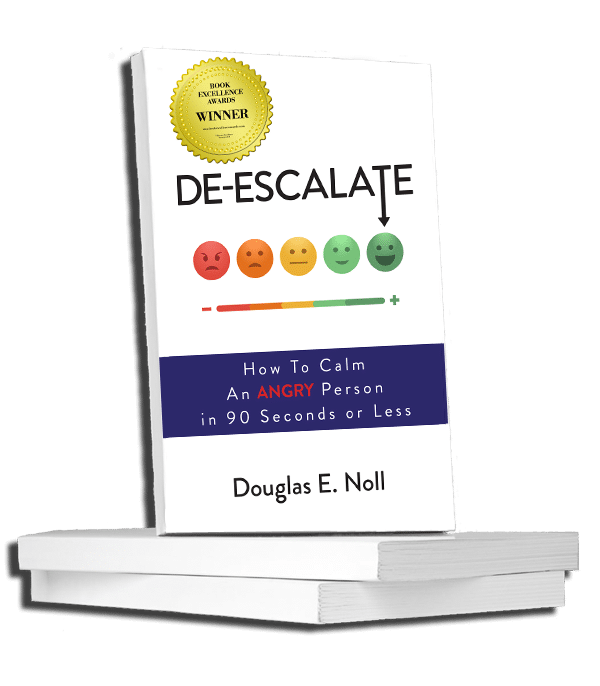
Emotional conflicts fracture teams and families. The ongoing tension breeds burnout, damages relationships, and hurts performance. The Noll Method’s 90-Second Power Move™ is a proven, neuroscience-based skill for restoring calm, tested from boardrooms to maximum-security prisons. Master this life-changing technique to transform chaos into collaboration. Book a no-obligation zoom call with Doug Noll today!
The Neural Alarm That Turns Conversations Hostile
At the root of the reaction lies biology older than language. The brain’s amygdala, an ancient threat detector, responds to social rejection or exclusion with almost the same urgency it brings to physical danger. When a contribution is brushed aside, the amygdala interprets the moment as a threat to status or belonging. Stress hormones surge, the fight-or-flight system activates, and the prefrontal cortex the region responsible for reasoned judgment temporarily loses influence.
The physiological fallout is immediate and visible: clipped sentences, rising pitch, folded arms, or sudden silence. Observers often label the behavior “defensive” or “over-sensitive,” but the reality is more mechanical. The nervous system is simply doing what it evolved to do protecting the individual from perceived harm. In high-stakes exchanges this automatic response frequently explains why calm discussions derail so quickly, even when neither party wants a fight.
Why Modern Workplaces Make Dismissal More Frequent and Costly
Remote and hybrid environment have stripped away much of the nonverbal information that once buffered misunderstandings. Without micro-expressions, posture shifts, or tonal nuance, a neutral “Got it” in chat or a brief email reply can easily read as curt or indifferent. The resulting ambiguity keeps the sympathetic nervous system on low-grade alert, transforming ordinary interactions into subtle conflict triggers.
Forward-thinking organizations have recognized the pattern. Demand for programs that strengthen emotional intelligence and communication skills has grown steadily as leaders seek practical ways to reduce miscommunication and maintain trust across distributed teams. Rather than viewing these capabilities as optional soft skills, many now treat them as essential infrastructure for collaboration and retention in today’s working world.
Emotional Intelligence: The Pause That Prevents Escalation
Emotional intelligence functions as a kind of internal circuit breaker. It does not eliminate stress, but it allows people to notice early physiological signals quickened pulse, shallow breaths, clenched jaw before the amygdala fully takes over. Once aware, individuals can deploy simple, research-supported techniques: slow diaphragmatic breathing to activate the calming parasympathetic system, verbalizing the emotion (“I notice I’m feeling dismissed right now”), or reframing statements with “I” language that expresses impact without assigning blame.
These small interventions create breathing room for clarity and empathy to re-enter the dialogue. In tense workplace conversations, shifting the frame from personal critique to shared objectives often lowers defenses. Compare “Your updates are consistently late” with “We both want this project to succeed what obstacles are making timely delivery difficult?” The second version preserves connection while still addressing the problem directly.
Remote & Hybrid Dynamics: Turning Obstacles into Opportunities
The absence of rich in-person cues in virtual settings means misinterpretations have become the baseline rather than the exception. A manager’s efficient one-word acknowledgment can unintentionally signal disinterest; a delayed emoji reaction can feel like rejection. Chronic low-level activation of the stress response in these environments helps explain the uptick in investment in leadership development focused on active listening, perspective-taking, and deliberate clarity.
Effective training in these areas equips managers to rebuild the social signals that technology removes. When leaders consistently model curiosity and validation “Help me understand what I might be missing here” they help transform remote channels from potential minefields back into spaces where genuine collaboration can thrive.
Recognizing the Most Common Forms of Dismissal and How to Counter Them
Dismissal usually arises from habit, mismatched expectations, or simple distraction rather than malice. Three patterns appear especially often:
- The interrupter: Cutting in before a speaker finishes, conveying intentionally or not that the rest of the thought is unimportant.
- The minimizer: Responses such as “It’s not that serious” or “You’re reading too much into it” that invalidate the emotion rather than engage with it.
- The subject-switcher: Changing topics without acknowledgment, effectively erasing the concern from the conversation.
When you feel the sting, the instinct is to push back harder or withdraw completely. A more effective move is to pause, name the experience to yourself, then respond with gentle curiosity: “I may not have explained myself clearly would you mind if I tried again?” That single sentence often reopens the door without escalating tension.
Left unaddressed, chronic dismissal erodes psychological safety. People begin to second-guess their perceptions, mute their contributions, or disengage emotionally. Over months or years the damage shows up as resentment, reduced innovation, and fractured working relationships.
Cultivating Resilience and Cultures That Value Every Voice
Awareness is the turning point. Once you recognize dismissal as a predictable nervous-system response rather than a personal shortcoming, its grip loosens. Start by offering yourself the validation you seek from others: quietly affirm that your experience is legitimate even when it is not immediately received.
Within teams, leaders set the standard. When they consistently demonstrate empathy, ask clarifying questions, and resist the urge to jump to solutions before people feel heard, they create environments where psychological safety becomes the norm. The growing emphasis on emotional competence across industries reflects a broader understanding: organizations that prioritize being heard outperform those that do not.
Ultimately, the desire to be truly listened to may be the most universal human longing in any conversation. When that longing is met even imperfectly discussions remain constructive, trust deepens, and collaboration strengthens. When it is routinely overlooked, the quiet harm builds steadily. Next time a dialogue begins to slip sideways, a deliberate moment of acknowledgment can often bring it back on track. The gesture requires little effort yet delivers outsized returns. In both work and life, few investments pay dividends as reliably.
Frequently Asked Questions
What are the psychological effects of feeling dismissed or invalidated?
Feeling dismissed attacks a core human need to be seen, heard, and taken seriously. When someone minimizes or disregards your feelings and ideas, it can trigger defensiveness, erode self-worth, and increase vulnerability to anxiety. Over time, repeated dismissal leads to emotional distress, disengagement, and a tendency to second-guess your own perceptions.
Why do people react so strongly to being dismissed in conversations?
The reaction is rooted in biology the brain’s amygdala interprets social rejection with nearly the same urgency as a physical threat. When a contribution is brushed aside, stress hormones surge and the fight-or-flight response activates, temporarily overriding the rational prefrontal cortex. This explains why calm conversations can escalate quickly, even when neither person wants conflict.
How can emotional intelligence help when you feel dismissed at work?
Emotional intelligence acts as an internal circuit breaker, helping you notice early stress signals like a quickened pulse or a clenched jaw before they take over. Techniques such as slow diaphragmatic breathing, labeling your emotions out loud, and reframing concerns with “I” language can keep dialogue constructive. Shifting the conversation from personal critique to shared goals (“What obstacles are making this difficult?”) also lowers defenses and preserves trust.
Disclaimer: The above helpful resources content contains personal opinions and experiences. The information provided is for general knowledge and does not constitute professional advice.
You may also be interested in: Instantly Defuse Defensive Prospects With These 4 Powerful De
Emotional conflicts fracture teams and families. The ongoing tension breeds burnout, damages relationships, and hurts performance. The Noll Method’s 90-Second Power Move™ is a proven, neuroscience-based skill for restoring calm, tested from boardrooms to maximum-security prisons. Master this life-changing technique to transform chaos into collaboration. Book a no-obligation zoom call with Doug Noll today!
Powered by flareAI.co