Quick Listen:
Imagine a conversation that begins calmly a colleague questions a decision, a partner raises a concern at home, or a friend offers feedback. Within seconds, tension spikes, words sharpen, and meaningful exchange vanishes. Voices overlap, points get lost, and both sides retreat into defensiveness or silence. Most people have experienced this derailment, and neuroscience reveals why it occurs with such consistency. When intense emotions such as anger or fear surge, the brain shifts into a protective mode that values immediate safety over careful listening. The outcome is emotional shutdown: genuine dialogue halts as the mind prioritizes self-preservation. Grasping this biological process does more than explain the frustration it equips us with concrete strategies to regain clarity and connection.
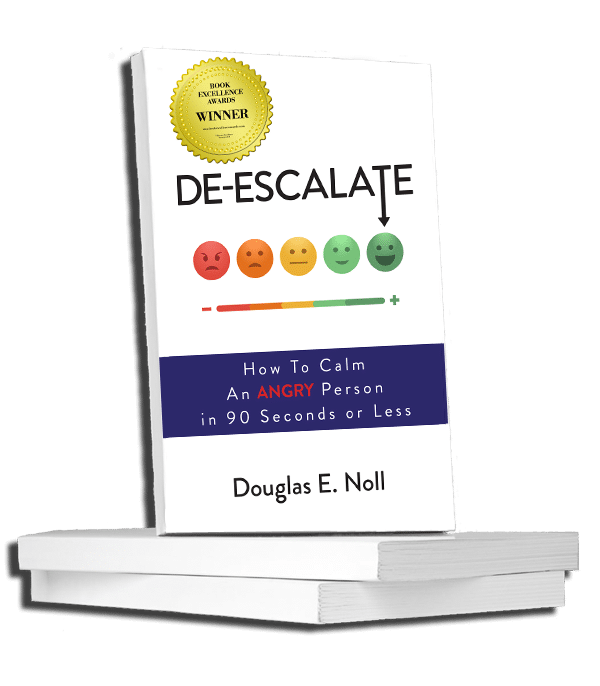
Emotional conflicts fracture teams and families. The ongoing tension breeds burnout, damages relationships, and hurts performance. The Noll Method’s 90-Second Power Move™ is a proven, neuroscience-based skill for restoring calm, tested from boardrooms to maximum-security prisons. Master this life-changing technique to transform chaos into collaboration. Book a no-obligation zoom call with Doug Noll today!
The Amygdala’s Rapid Threat Response
Deep within the limbic system lies the amygdala, a compact, almond-shaped cluster of neurons that functions as the brain’s alarm system. It continuously monitors the environment for potential danger, reacting far faster than conscious thought. When the amygdala registers a threat whether physical peril or a perceived social slight it triggers an almost instantaneous cascade, pulling resources away from the prefrontal cortex, the region responsible for reasoning, impulse control, empathy, and nuanced interpretation.
This phenomenon, popularly termed an amygdala hijack, illustrates how emotion can abruptly seize command of behavior. A neutral remark suddenly feels like criticism; a clarifying question registers as confrontation. The brain, in its effort to conserve energy for survival, temporarily sidelines higher-order thinking. Deep listening becomes secondary because, from an evolutionary standpoint, debating intent mattered less than escaping harm. What feels like stubbornness or poor communication is frequently just ancient wiring doing its job under pressure.
Why Thoughtful Dialogue Vanishes So Quickly
Once the amygdala dominates, the narrow window for balanced discussion closes rapidly. Physiological changes reinforce the shift: heart rate accelerates, breathing becomes shallow, peripheral vision narrows, and muscles prepare for action. In this heightened state the brain filters incoming information through a threat lens, making it difficult to process subtleties or assume good faith.
The response appears across contexts professional negotiations, family discussions, even casual disagreements. Intensity varies: slight annoyance may only reduce concentration, whereas pronounced anger or fear can nearly eliminate reflective capacity. Early recognition of bodily cues proves essential. That abrupt clench in the stomach, the impulse to cut someone off, or the conviction that the other person is deliberately misunderstanding these signals indicate the amygdala has assumed control. Spotting them early creates a brief opportunity to intervene before full shutdown sets in.
Affect Labeling: The Brain’s Natural De-escalation Tool
The same nervous system that generates the storm also provides an effective countermeasure. Affect labeling calmly naming the emotion present can interrupt escalation and restore access to rational thought. Rather than offering advice, defending a position, or escalating, a simple statement such as “It seems you’re feeling really frustrated by how this unfolded” often proves more powerful.
Neuroimaging research conducted at UCLA, led by Matthew Lieberman and colleagues, explains the mechanism. Labeling an emotion reduces activity in the amygdala while simultaneously increasing engagement in areas of the prefrontal cortex, notably the right ventrolateral region. Naming the feeling creates psychological distance, transforming an overpowering internal state into an observable object. The result is lower emotional arousal and renewed capacity for perspective and problem-solving. Remarkably, the technique works whether the label applies to one’s own feelings or someone else’s, making it valuable in both self-regulation and interpersonal repair.
Practical Ways to Use Affect Labeling Effectively
- Keep the language neutral and accurate choose words like “frustrated,” “overwhelmed,” “hurt,” or “anxious” rather than interpretive or judgmental terms.
- Introduce the label early, ideally before irritation hardens into anger.
- Follow with genuine curiosity an open-ended question that invites elaboration rather than forcing agreement.
- Practice internally first; silently naming your own rising emotion helps restore calm before you speak.
Repeated use strengthens relational trust, reducing the frequency and severity of future hijacks.
The Added Strain of Remote and Hybrid Environments
Modern work arrangements magnify these neural vulnerabilities. Traditional offices provided countless micro-interactions impromptu hallway conversations, shared laughter during breaks, quick clarifications over coffee that naturally dissipated tension and prevented minor misunderstandings from growing.
Remote and hybrid settings largely eliminate those informal pressure valves. Much communication now flows through text-based channels or video calls, where tone disappears and intent frequently gets misread. Constant notifications erode attention reserves, while endless virtual meetings generate cumulative fatigue. Without spontaneous human contact, ambiguity festers: a delayed reply morphs into perceived disrespect, a concise message feels curt or hostile. Missing nonverbal signals heighten the risk of threat misinterpretation, so the amygdala activates more readily and de-escalation requires greater effort.
Strengthening Resilience in Everyday Interactions
Knowledge of these patterns empowers proactive change. Cultivate self-awareness by noticing early signs of emotional activation and inserting a deliberate pause before responding. Internal affect labeling quietly acknowledging your own state frequently restores enough balance to choose a constructive reply.
In group settings, especially virtual ones, over-communicate positive intent: preface potentially sensitive comments with context or goodwill statements that reduce room for misreading. Leaders set the tone by openly naming emotions during tense moments and fostering environments where feelings can be expressed safely.
Practical adjustments also help: schedule shorter meetings with intentional breaks, follow video discussions with clear written summaries, and create structured opportunities for casual connection. These small shifts replenish emotional bandwidth and make shutdown less likely.
Turning Awareness into Lasting Connection
Anger and fear evolved as adaptive signals, not flaws to eradicate. Problems emerge only when they override the understanding required to navigate conflict. By understanding the amygdala’s swift protective response, the calming power of affect labeling, and the unique pressures of distributed work, we acquire practical leverage over automatic reactions.
The next time listening collapses and emotions dominate, recall that the breakdown reflects human biology under strain rather than personal defect. Pause, name the feeling yours or theirs and breathe. That modest intervention often proves sufficient to quiet the inner alarm, reopen dialogue, and preserve the possibility of genuine understanding amid inevitable friction.
Frequently Asked Questions
What is an amygdala hijack and how does it affect communication?
An amygdala hijack occurs when intense emotions like anger or fear trigger the brain’s alarm system the amygdala causing it to pull resources away from the prefrontal cortex, which handles reasoning, empathy, and impulse control. During a hijack, neutral remarks can feel like attacks and clarifying questions register as confrontation. This makes thoughtful, open dialogue nearly impossible, as the brain is prioritizing self-preservation over careful listening.
What is affect labeling, and can it really reduce emotional escalation?
Affect labeling is the practice of calmly naming the emotion present in a conversation for example, saying “It seems like you’re feeling really frustrated by how this unfolded.” Neuroimaging research from UCLA shows that simply labeling an emotion reduces amygdala activity while re-engaging the prefrontal cortex, restoring the capacity for rational thought and perspective. The technique is effective both for managing your own emotions and for de-escalating tension with others.
Why do remote and hybrid work environments make emotional conflict harder to manage?
Remote and hybrid settings eliminate the informal micro-interactions hallway chats, shared breaks, quick coffee-side clarifications that naturally diffuse tension in traditional offices. Without these outlets, text-based communication strips away tone and nonverbal cues, making misinterpretation far more likely. A delayed reply can feel like disrespect, and a brief message can read as hostility, causing the amygdala to activate more readily and making de-escalation a greater conscious effort.
Disclaimer: The above helpful resources content contains personal opinions and experiences. The information provided is for general knowledge and does not constitute professional advice.
You may also be interested in: When Someone Takes Their Anger Out On You-4 Effective
Emotional conflicts fracture teams and families. The ongoing tension breeds burnout, damages relationships, and hurts performance. The Noll Method’s 90-Second Power Move™ is a proven, neuroscience-based skill for restoring calm, tested from boardrooms to maximum-security prisons. Master this life-changing technique to transform chaos into collaboration. Book a no-obligation zoom call with Doug Noll today!
Powered by flareAI.co