Picture this: A high-stakes strategy session derails when a disagreement escalates into heated exchanges. Voices overlap, defensiveness takes over, and the team’s focus evaporates. These moments aren’t rare they’re costly. Yet emerging insights reveal that fostering **emotional safety** can transform such disruptions into opportunities for deeper collaboration, directly elevating employee engagement and organizational performance.
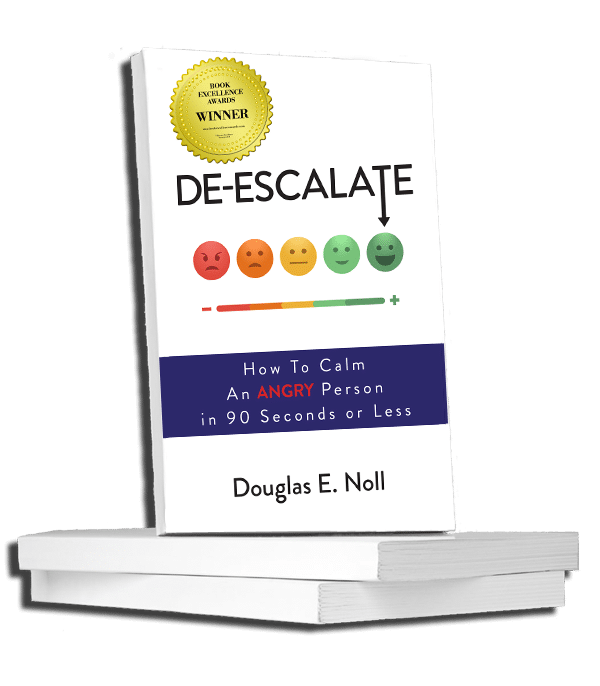
Emotional conflicts fracture teams and families. The ongoing tension breeds burnout, damages relationships, and hurts performance. The Noll Method’s 90-Second Power Move™ is a proven, neuroscience-based skill for restoring calm, tested from boardrooms to maximum-security prisons. Master this life-changing technique to transform chaos into collaboration. Book a no-obligation zoom call with Doug Noll today!
The Critical Role of Emotional Safety in Driving Engagement
In an era of hybrid workforces and rapid organizational shifts, employee engagement stands as a cornerstone of success. Companies with highly engaged teams outperform competitors in profitability, retention, and innovation. However, leaders often miss a foundational element: emotional safety. This environment allows individuals to voice ideas, acknowledge errors, or raise difficult issues without fear of backlash or humiliation.
When emotional safety exists, teams unlock their potential. Members contribute boldly, collaborate effectively, and demonstrate greater commitment. Psychological safety, its core component, creates conditions where people feel secure taking interpersonal risks. Research confirms this dynamic: teams with high psychological safety exhibit superior performance, reduced conflicts, enhanced learning behaviors, stronger collective efficacy, and higher productivity. Employees engage in open dialogue, share knowledge freely, experiment without hesitation, and learn from setbacks driving innovation and efficiency.
Conversely, its absence breeds silence, stifled creativity, and disengagement. Even skilled professionals hold back, fearing judgment, which erodes trust and hampers results.
The Corporate Wellness Boom: Evidence of Prioritization
Forward-thinking organizations increasingly recognize emotional well-being’s impact, fueling explosive growth in corporate wellness initiatives. As of 2025, the global corporate wellness market reaches an estimated USD 66.16 billion, with projections to USD 91.23 billion by 2030 at a compound annual growth rate (CAGR) of 6.12%.
Other analyses align closely: one report values the market at USD 65.25 billion in 2024, forecasting growth to USD 68.41 billion in 2025 and USD 102.56 billion by 2032 (6.0% CAGR), while another pegs 2024 at USD 70.65 billion, anticipating USD 128.18 billion by 2033 (6.14% CAGR from 2025-2033).
This expansion stems from mounting pressures: soaring employer healthcare expenses, the rise of lifestyle-related chronic conditions, and heightened executive emphasis on holistic employee health. Preventive programs shift from optional benefits to essential strategies for cost control and productivity gains, validated by studies showing strong returns on investment.
Hybrid models blend onsite and virtual delivery, incorporating advanced tools like AI-powered analytics, wearable devices for real-time monitoring, and tailored mental health support. These address stress, absenteeism, and morale while promoting preventive care. North America maintains dominance, but Asia Pacific shows the fastest acceleration as global awareness grows.
The broader wellness economy amplifies this trend. Reaching a record $6.3 trillion in 2023 nearly four times the pharmaceutical sector’s size it climbed to nearly $6.8 trillion in 2024 and approaches $7.3 trillion in 2025, on track for $9 trillion by 2028.
Post-pandemic priorities have solidified: emotional security enables employees to perform at their best, turning well-being investments into competitive advantages.
Proven Skills from Extreme Environments to Everyday Workplaces
Creating emotional safety demands more than policy statements it requires practical, teachable skills. One standout approach, refined over more than 40 years, centers on neuroscience-informed emotional de-escalation through advanced listening techniques.
This method originated in maximum-security prisons, where an expert trained life-sentenced inmates to mediate volatile conflicts and prevent violence. Results were profound: trained individuals de-escalated rage rapidly by accurately reflecting core emotions, ignoring inflammatory words, and labeling feelings with precision. Facilities saw dramatic reductions in incidents no reported violence linked to those skilled in the technique.
These same principles apply seamlessly to professional settings. In boardrooms, virtual meetings, or team huddles, calmly validating emotions shifts neurology from defensiveness to connection. Threats dissolve into trust, arguments halt, and constructive dialogue emerges.
What sets this apart? It’s the only system that guarantees mastery: participants gain reliable ability to stop fights, quell disputes, and restore calm. Unlike broad emotional intelligence frameworks, it delivers targeted, predictable outcomes without suppressing feelings instead, it processes them efficiently and empathetically.
Addressing Common Reservations Head-On
Skepticism persists, and understandably so. Some question efficacy: “Will this truly hold in intense, real-world pressure?” Others accept conflict as inevitable: “Arguments are human nature they’ll never fully disappear.” A deeper concern for many involves vulnerability: mastering emotions means confronting them, which can feel intimidating.
Evidence counters these doubts decisively. From prison yards arguably the most hostile environments to corporate leadership teams, the approach consistently proves effective. Leaders who adopt it signal safety, encouraging openness. Teams respond with heightened listening, reduced friction, and elevated contribution. Retention improves as people feel valued; innovation flourishes in risk-tolerant cultures; engagement soars organically. Conflicts don’t vanish entirely, but their intensity and duration plummet. Emotional mastery transforms potential breakdowns into breakthroughs.
The Strategic Imperative for Lasting Engagement
Astute leaders elevate emotional safety from nice-to-have to mission-critical. Equipping teams with these battle-tested de-escalation skills learnable in hours, applicable immediately cultivates thriving cultures.
The returns are tangible: diminished turnover, amplified output, unbreakable loyalty. In demanding times, emotional safety emerges as the subtle yet powerful differentiator, forging resilient, high-performing organizations.
With the wellness economy surging toward $9 trillion and companies competing fiercely for talent, ignoring this edge risks falling behind. Those who act building psychologically safe, emotionally intelligent teams position themselves for sustained success. To implement these guaranteed skills and elevate your organization’s engagement, discover the transformative training at dougnoll.com.
Frequently Asked Questions
How does emotional safety improve employee engagement in the workplace?
Emotional safety creates an environment where employees feel secure voicing ideas, acknowledging mistakes, and raising concerns without fear of judgment or retaliation. This psychological safety leads to higher engagement levels, with team members contributing more boldly, collaborating effectively, and demonstrating stronger commitment. Research shows that teams with high emotional safety exhibit superior performance, reduced conflicts, and increased productivity as employees freely share knowledge and learn from setbacks.
What is the ROI of investing in corporate wellness programs that prioritize emotional well-being?
The global corporate wellness market reached $66.16 billion in 2025 and is projected to grow to $91.23 billion by 2030, reflecting strong returns on investment. Companies investing in emotional well-being initiatives see tangible benefits including diminished employee turnover, amplified productivity, reduced healthcare costs, and improved retention. Studies validate that preventive wellness programs have shifted from optional benefits to essential strategies, with the broader wellness economy approaching $7.3 trillion in 2025 and expected to reach $9 trillion by 2028.
What are proven techniques for creating emotional safety and de-escalating workplace conflicts?
The most effective approach involves neuroscience-informed emotional de-escalation through advanced listening techniques that focus on accurately reflecting and labeling core emotions rather than addressing inflammatory words. Originally developed in maximum-security prisons where it successfully prevented violence, this method works by validating emotions to shift brain responses from defensiveness to connection. When applied in professional settings like boardrooms and team meetings, it reliably stops arguments, restores calm, and transforms potential breakdowns into constructive dialogue within moments.
Disclaimer: The above helpful resources content contains personal opinions and experiences. The information provided is for general knowledge and does not constitute professional advice.
You may also be interested in: The 5 Non-Negotiables of Effective Leadership – Douglas E. Noll
Emotional conflicts fracture teams and families. The ongoing tension breeds burnout, damages relationships, and hurts performance. The Noll Method’s 90-Second Power Move™ is a proven, neuroscience-based skill for restoring calm, tested from boardrooms to maximum-security prisons. Master this life-changing technique to transform chaos into collaboration. Book a no-obligation zoom call with Doug Noll today!
Powered by flareAI.co