The subtle art of managing emotions during conflicts can make all the difference between a thriving team and a fractured one. Far from being just another buzzword, emotional regulation stands as a cornerstone for fostering resilient relationships and boosting overall performance in any organization.
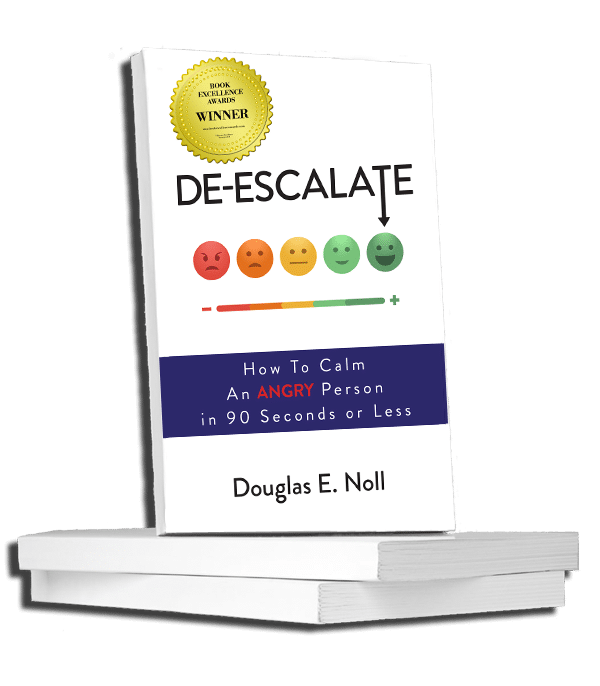
Emotional conflicts fracture teams and families. The ongoing tension breeds burnout, damages relationships, and hurts performance. The Noll Method’s 90-Second Power Move™ is a proven, neuroscience-based skill for restoring calm, tested from boardrooms to maximum-security prisons. Master this life-changing technique to transform chaos into collaboration. Book a no-obligation zoom call with Doug Noll today!
The Hidden Benefits of Conflict Management: How Emotional Regulation Transforms Workplace Relationships
Imagine stepping into a high-stakes meeting where tempers flare over differing visions for a project. Instead of letting the situation spiral into chaos, one participant pauses, acknowledges the underlying frustrations, and redirects the conversation toward common ground. This shift doesn’t happen by accident it’s the result of honed emotional regulation skills that can de-escalate tensions in moments. Rooted in solid neuroscience, this approach not only prevents escalation but also paves the way for innovative solutions and deeper team bonds, proving that mastering one’s emotions is a game-changer in professional settings.
Workplace conflicts arise from various sources, such as clashing personalities, resource shortages, or strategic disagreements, and they’re as common as daily stand-ups in most offices. However, the true damage stems from unmanaged emotional responses that prolong discord, diminish focus, and heighten stress levels. By contrast, emotional regulation defined as the conscious process of identifying, processing, and modulating feelings while empathetically addressing other’s fundamentally alters this dynamic. It empowers individuals to respond rather than react, leading to enhanced productivity, higher employee satisfaction, and a more cohesive work environment. As businesses increasingly recognize this, investments in related training are surging, reflecting a broader shift toward holistic employee development.
The Rising Tide of Emotional Intelligence in Professional Life
It’s no secret that while hard skills open doors, it’s the soft ones that propel careers forward in today’s competitive landscape. Organizations worldwide are prioritizing these competencies, fueling substantial growth in training initiatives. For instance, the global corporate training market, which stood at $361.5 billion in 2023, is on track to expand to $805.6 billion by 2035, advancing at a compound annual growth rate of 7% from 2024 onward. This expansion is propelled by swift technological progress that demands ongoing upskilling, coupled with a heightened emphasis on employee growth, adherence to regulations, and adapting to hybrid work models. Additionally, the spotlight on soft skills and inclusivity programs is amplifying the need for targeted training, creating a vibrant market ecosystem.
At the heart of this movement lies emotional intelligence, a skill set encompassing self-awareness, empathy, and effective emotion management that’s proving indispensable for personal and professional advancement. The global emotional intelligence market begins at USD 10.29 billion this year in 2026 and is forecasted to climb to USD 32.08 billion by 2035, registering a robust CAGR of 13.4%. This surge is driven by a growing appreciation for soft skills in professional settings, alongside greater attention to mental health and the demand for superior interpersonal dynamics. Key areas propelling this include corporate learning, healthcare, education, and mental wellness services, with artificial intelligence and machine learning integrations enhancing tools for emotion recognition and predictive activities.
Specialized training in emotional intelligence is also witnessing impressive traction, as companies weave it into their development strategies to cultivate better leadership and team synergy. According to recent insights, the emotional intelligence training market is valued at USD 3.8 billion in 2025 and anticipated to double to USD 7.5 billion by 2032, growing at a CAGR of 10.5% through 2031. This reflects widespread acknowledgment of emotional intelligence’s role in boosting engagement and success across industries. Trends show a pivot toward virtual and hybrid formats for accessible, tailored programs, with in-person sessions leading due to their interactive nature, while sectors like banking, IT, and healthcare dominate adoption for improved customer relations and resilience.
Parallel to this, solutions for resolving conflicts are gaining momentum as essential tools for maintaining organizational health. One analysis indicates the conflict resolution solutions market hit $8.79 billion in 2024, rising to $9.52 billion in 2025 and projected to reach $12.68 billion by 2029, with a CAGR of 7.4% extending to 2034. Factors include escalating workplace issues amid remote setups, AI influences, and diversity efforts. Another perspective pegs the market at US$ 10.99 billion in 2025, escalating to US$ 17.76 billion by 2032 at a 7.1% CAGR, highlighting rising disputes in professional and public spheres, plus a shift toward alternative resolutions like mediation and online platforms for efficiency.
Beyond emotional intelligence, the broader domain of social and emotional learning encompasses building competencies for empathy, decision-making, and relationships, extending from schools to workplaces. The social emotional learning market was USD 3.47 billion in 2024, set to grow to USD 4.32 billion in 2025 and soar to USD 27.73 billion by 2033, at an astonishing CAGR of 26.2%. This boom is spurred by digital education tools, government-backed infrastructures, and immersive tech like VR and AI, with applications spanning pre-K to corporate training for holistic development.
Underpinning these investments is compelling neuroscience evidence. During emotional peaks, the amygdala hijacks rational thought, releasing stress chemicals that impair decision-making and fuel escalations. Interventions like labeling emotions or active listening disrupt this, engaging the prefrontal cortex to restore balance and clarity. Far from theoretical, these principles form the bedrock of proven de-escalation strategies, effective even in the most intense scenarios.
From Prisons to Boardrooms: Emotional Regulation in Action
In arenas where de-escalation failures carry severe risks, the value of emotional regulation shines brightest. Take maximum-security prisons, perpetual hotbeds of tension here, seasoned mediator Doug Noll has dedicated over four decades to instructing both inmates and guards in rapid calming techniques. His proprietary Noll Method, featuring the “90-Second Power Move,” employs targeted phrasing to mirror and validate emotions, swiftly neutralizing anger. Forged in such demanding contexts, this method leverages brain science: accurately identifying feelings reassures the nervous system, dampening amygdala responses and fostering open, logical exchanges.
This efficacy extends effortlessly to corporate realms, where leaders apply similar tactics to avert minor issues from mushrooming. For example, a healthcare provider implemented emotional intelligence strategies, incorporating quick de-escalation breaks in heated discussions, yielding fewer conflicts, improved dialogue, reduced exhaustion, and stronger collaboration under pressure. Such outcomes underscore how regulation shifts reactive patterns to proactive ones, enhancing operational flow.
These successes aren’t anomalies; mediation and coaching, pivotal in the expanding resolution sector, prioritize emotional insight for enduring fixes. By opting for regulation over impulse, individuals forge trust, bolster connections, and cultivate atmospheres where divergences spark creativity rather than discord. In North America, a hub for these markets with dominant shares in corporate training and conflict solutions, adoption is particularly strong, driven by advanced tech and regulatory support.
Overcoming the Real Barriers to Emotional Mastery
Yet, achieving proficiency isn’t without hurdles. Intense situations challenge even experts, as adrenaline overrides training, reviving ingrained defenses. Skepticism abounds many question if a brief technique can genuinely halt disputes, viewing conflicts as inherent and unchangeable. Others dread the openness involved, perceiving emotional acknowledgment as a weakness in cutthroat environments.
Expanding these abilities organization-wide adds complexity, requiring sustained effort and buy-in amid potential pushback. Still, the payoffs smoother operations, lower attrition outweigh the investment. Successful implementations rely on regular drills, executive exemplars, and embedding practices into daily workflows, gradually shifting cultures toward emotional agility.
The Quiet Revolution: Stronger Teams and Better Futures
As emotional regulation embeds itself as a fundamental skill, its effects cascade positively. Groups engage more transparently, unite with deeper confidence, and pioneer ideas sans apprehension. Tension eases, mitigating mental strain that fuels departures, while adept leaders cultivate devotion and excellence, converting disarray into synergy.
Authorities like Doug Noll, boasting 40-plus years of expertise from quelling prison unrest to corporate coaching, uniquely deliver these teachings with a bold assurance: grasp them, and you’ll reliably end quarrels. Market trends affirm this trajectory, with trillions funneled into emotional and dispute competencies globally. Tomorrow favors those who evolve conflict through poised, deliberate engagement.
Eager to harness this? Engage with proven experts like Doug Noll via his publications, workshops, and guidance essential tools for immediate application. In an era prizing haste and dominance, embracing emotional regulation emerges as the ultimate strategic advantage.
Frequently Asked Questions
Why is emotional intelligence training important in the workplace?
Emotional intelligence training is crucial because it develops skills in self-awareness, empathy, and emotion management that directly impact workplace performance and relationships. The global emotional intelligence training market is projected to grow from $3.8 billion in 2025 to $7.5 billion by 2032, reflecting widespread recognition that these skills boost employee engagement, reduce conflicts, improve leadership effectiveness, and enhance team collaboration. Organizations investing in emotional intelligence see measurable benefits including reduced turnover, improved productivity, and stronger workplace culture.
How does emotional regulation prevent workplace conflicts from escalating?
Emotional regulation prevents conflict escalation by enabling individuals to respond thoughtfully rather than react impulsively during tense situations. When emotions are properly identified and processed, it disrupts the amygdala hijack that releases stress chemicals and impairs decision-making. Techniques like emotion labeling and active listening engage the prefrontal cortex, restoring balance and clarity, which allows teams to redirect conversations toward common ground and find innovative solutions rather than allowing disagreements to damage relationships and productivity.
What is the 90-Second Power Move and how does it work for conflict resolution?
The 90-Second Power Move is a neuroscience-based technique developed by Doug Noll as part of the Noll Method for de-escalating conflicts rapidly. It uses targeted phrasing to mirror and validate emotions, which calms the amygdala’s stress response and engages the prefrontal cortex for rational thinking. This method has been proven effective in high-tension environments ranging from maximum-security prisons to corporate boardrooms, enabling individuals to restore calm and shift from reactive to proactive communication.
Disclaimer: The above helpful resources content contains personal opinions and experiences. The information provided is for general knowledge and does not constitute professional advice.
You may also be interested in: A Mediator’s Approach to Stopping Arguments in Boardrooms
Emotional conflicts fracture teams and families. The ongoing tension breeds burnout, damages relationships, and hurts performance. The Noll Method’s 90-Second Power Move™ is a proven, neuroscience-based skill for restoring calm, tested from boardrooms to maximum-security prisons. Master this life-changing technique to transform chaos into collaboration. Book a no-obligation zoom call with Doug Noll today!
Powered by flareAI.co