Quick Listen:
In today’s workplaces whether open-plan offices, fully remote setups, or the increasingly common hybrid model tensions arise with startling regularity. A curt message in a group chat, a difference of opinion during a sprint review, or simply the accumulated stress of tight deadlines can quickly escalate into something more damaging. Yet a meaningful change is taking root across forward-thinking organizations: the deliberate cultivation of empathy as the cornerstone of effective conflict resolution. Far from being a soft luxury, this human-centered approach is proving to be one of the most practical tools leaders have to preserve trust, sustain productivity, and build resilient teams.
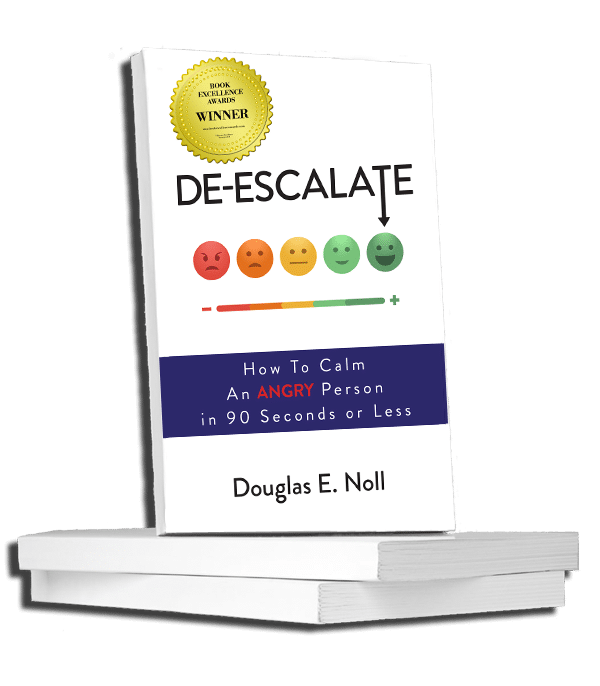
Emotional conflicts fracture teams and families. The ongoing tension breeds burnout, damages relationships, and hurts performance. The Noll Method’s 90-Second Power Move™ is a proven, neuroscience-based skill for restoring calm, tested from boardrooms to maximum-security prisons. Master this life-changing technique to transform chaos into collaboration. Book a no-obligation zoom call with Doug Noll today!
Why Workplace Conflict Is Becoming More Frequent and Costly
Modern work environments are structurally primed for misunderstanding. Cross-functional teams span time zones and cultures. Asynchronous communication replaces face-to-face nuance. Performance expectations keep rising while resources often remain flat. In this context, small frictions easily grow into larger ruptures that drain energy, erode collaboration, and when left unaddressed drive talented people out the door.
Organizations are responding. Many now view structured conflict management not as an HR checkbox but as a strategic priority. Industry observers note steady growth in demand for workplace conflict resolution services, reflecting a widespread acknowledgment that proactive intervention pays dividends in morale and performance far beyond the immediate dispute.
Redefining Empathy in a Professional Context
Empathy in the workplace is frequently misunderstood. It is not about constant agreement, suppressing one’s own viewpoint, or turning every meeting into a therapy session. At its core, professional empathy is the disciplined practice of attempting to understand another person’s experience the reasoning, the emotions, the context before formulating a response.
When someone feels genuinely understood, defensiveness drops. A manager who pauses to ask, “What outcome are you most worried won’t happen here?” often uncovers the real issue behind an apparently inflexible position. What appeared to be resistance to change may actually be anxiety about job security or workload imbalance. That moment of insight transforms an impasse into a problem that can be solved together.
How Empathy Changes the Resolution Process
Conventional conflict-resolution methods formal mediation, escalation to senior leadership, written warnings remain necessary in certain situations. Yet they frequently produce compliance rather than commitment. When empathy becomes part of the process, outcomes improve markedly.
People who experience fair listening are significantly more willing to accept solutions that fall short of their original demands. They tend to follow through on agreements with greater ownership. Teams that consistently resolve differences through understanding rather than power report reduced recurrence of similar conflicts, lower ambient stress, stronger cross-functional cooperation, and noticeably higher levels of creative output. Empathy does not dilute accountability; it makes accountability feel fair.
The Measurable Business Rationale
Savvy executives no longer treat emotional intelligence and conflict-management capabilities as peripheral “nice-to-haves.” A widely cited recent survey found that 78 percent of companies have introduced formal conflict-resolution programs specifically to support employee well-being and maintain a healthy culture. That figure alone signals how seriously leadership teams now take the issue.
The logic is straightforward. When disputes are handled constructively, voluntary turnover decreases, engagement scores rise, innovation cycles shorten, and the organization becomes more adaptable to external shocks. Investing in training that strengthens empathetic listening and perspective-taking is increasingly viewed as a high-ROI activity one that directly supports retention, performance, and long-term competitiveness.
Common Obstacles and Realistic Paths Forward
Despite the evidence, embedding empathy at scale remains challenging. Time pressure tempts people to default to quick, directive solutions. Competitive internal cultures still quietly reward “winning” arguments rather than co-creating understanding. Some senior leaders quietly worry that displaying too much empathy will be read as indecision or weakness.
These are legitimate concerns, yet they can be addressed without abandoning core business priorities. The most successful organizations treat empathy as a learnable competency rather than a personality trait. They provide practical frameworks, create safe practice environments, and critically model the behavior at the top. When the CEO listens attentively in a town hall rather than delivering a monologue, the signal is unmistakable: this matters here.
Concrete Practices That Actually Move the Needle
Building an empathetic conflict culture does not require massive overhauls. Leaders achieve outsized impact through modest, repeatable actions:
- Structured listening cycles in one-on-ones and team meetings participants restate the previous speaker’s key points before adding their own perspective.
- Perspective reversal exercises during tense project discussions: each side briefly articulates the other party’s strongest arguments.
- Emotion-focused check-ins at the start or close of critical conversations (“How are you feeling about where we are right now?” rather than jumping straight to solutions).
- Public recognition of empathetic behavior calling out moments when someone de-escalated tension or bridged a divide as prominently as celebrating revenue wins.
These habits, when repeated consistently, shift the default response from reactivity to curiosity. Over months, curiosity becomes culture.
The Long View: Empathy as a Competitive Advantage
Looking ahead, the role of empathy will only grow. Automation is steadily absorbing repetitive cognitive tasks, which means the uniquely human capacities imagination, relational trust, nuanced judgment will increasingly determine which organizations pull ahead. Teams that can convert inevitable disagreement into collective insight rather than division hold a decisive edge.
Companies that invest seriously in empathetic conflict resolution today are positioning themselves to attract the talent that values respect and psychological safety, to retain people through periods of disruption, and to adapt more fluidly when markets shift. This is no longer merely a human-resources conversation. It is a boardroom issue.
Closing Reflection
Conflict is not the enemy of high-performing organizations; unaddressed or poorly handled conflict is. People will always see the world differently, prioritize differently, feel differently. The organizations that thrive in the coming years will be those that meet those differences with disciplined curiosity rather than defensiveness or dominance.
The data pointing to increased corporate investment in conflict-management capabilities, the expanding emphasis on soft skills within workplace learning programs, and the accumulating real-world examples of teams that have transformed their dynamics all tell the same story: empathy is moving from the margins to the center. Leaders who recognize and act on this reality are not simply resolving today’s disputes more effectively they are building the kind of workplaces that talent chooses to join and stay with for the long haul.
Frequently Asked Questions
Why is empathy important in workplace conflict resolution?
Empathy is essential in workplace conflict resolution because it helps people feel genuinely understood, which reduces defensiveness and opens the door to collaborative problem-solving. When employees experience empathetic listening, they are more willing to accept solutions and follow through on agreements with greater ownership. Unlike traditional methods such as formal mediation or escalation, empathy-driven resolution builds commitment rather than mere compliance, leading to lower stress, stronger teamwork, and fewer recurring conflicts.
How can leaders practically build an empathetic conflict resolution culture at work?
Leaders can foster an empathetic workplace culture through simple, repeatable practices that don’t require major organizational overhauls. These include structured listening cycles where team members restate each other’s points before responding, perspective reversal exercises during tense discussions, and emotion-focused check-ins at the start of critical conversations. Equally important is publicly recognizing empathetic behavior treating de-escalation and bridge-building as achievements on par with hitting revenue targets.
What is the business case for investing in empathy-based conflict resolution programs?
The business case is increasingly clear: 78% of companies have introduced formal conflict resolution programs to support employee well-being and sustain a healthy culture. When disputes are handled constructively through empathetic approaches, organizations see reduced voluntary turnover, higher engagement scores, faster innovation cycles, and greater adaptability. As automation takes over routine tasks, uniquely human skills like relational trust and nuanced judgment become key competitive differentiators, making empathy training a high-ROI investment for long-term performance and talent retention.
Disclaimer: The above helpful resources content contains personal opinions and experiences. The information provided is for general knowledge and does not constitute professional advice.
You may also be interested in: How to Embrace Emotional Skills Without Fear in Leadership
Emotional conflicts fracture teams and families. The ongoing tension breeds burnout, damages relationships, and hurts performance. The Noll Method’s 90-Second Power Move™ is a proven, neuroscience-based skill for restoring calm, tested from boardrooms to maximum-security prisons. Master this life-changing technique to transform chaos into collaboration. Book a no-obligation zoom call with Doug Noll today!
Powered by flareAI.co