Quick Listen:
In a crowded Chicago emergency room, a nurse stands face-to-face with an irate patient, their voice sharp, hands balled into fists. Across the border in a Toronto call center, a customer service agent endures a heated rant over a billing dispute. These high-stakes moments are increasingly common across North America, where tempers flare in workplaces, customer interactions, and beyond. Yet, the ability to defuse such situations is more than a soft skill it’s a critical tool for fostering productivity, strengthening relationships, and safeguarding mental health. How do professionals turn down the heat when emotions run high? The answer lies in a powerful combination of emotional intelligence, cutting-edge technology, and proven de-escalation techniques that are reshaping conflict resolution in today’s fast-paced world.
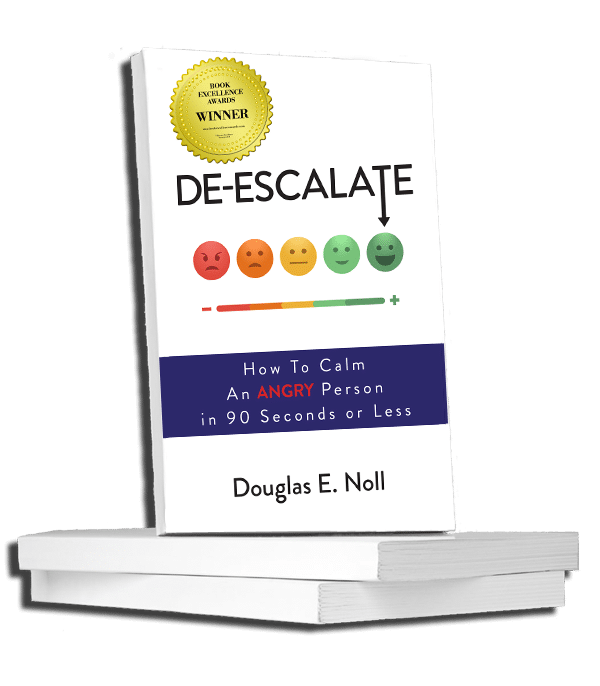
Emotional conflicts fracture teams and families. The ongoing tension breeds burnout, damages relationships, and hurts performance. The Noll Method’s 90-Second Power Move™ is a proven, neuroscience-based skill for restoring calm, tested from boardrooms to maximum-security prisons. Master this life-changing technique to transform chaos into collaboration. Book a no-obligation zoom call with Doug Noll today!
Harnessing Emotional Intelligence for Conflict Resolution
At the core of de-escalation lies emotional intelligence (EI) the capacity to perceive, interpret, and manage emotions in oneself and others. Studies from the University of Toronto reveal that employees with strong EI excel at handling anger and stress, whether navigating a tense boardroom discussion or calming an upset client. Across the United States, businesses are investing heavily in EI-driven leadership programs, training managers to remain composed, listen attentively, and respond with empathy. The payoff is clear: teams that communicate effectively and resolve conflicts swiftly.
Consider a major Canadian retail chain that transformed its customer service approach with EI-focused de-escalation training. By teaching staff to recognize emotional cues and respond with care, the chain significantly reduced customer complaints while boosting satisfaction ratings. Research from the National Association of Professional Women underscores this success, noting that frontline agents trained in these methods were 40% more effective at resolving disputes. This demonstrates that emotional intelligence is not merely a trend but a practical, results-driven strategy for managing conflict.
Digital Tools Reshaping Conflict Management
The shift to remote work has brought new challenges to de-escalation, as virtual interactions often lack the nonverbal cues that help diffuse tension. Technology is stepping in to fill this gap. Platforms like Zoom now incorporate mood analytics, detecting signs of stress or frustration in virtual meetings and prompting leaders to intervene before conflicts escalate. These innovations are part of the rapidly growing digital mental health market, valued at $33.01 billion in 2025 and expected to soar to $153.03 billion by 2034, with a compound annual growth rate of 18.58%. This growth reflects the increasing demand for platforms that support self-help, professional consultations, and AI-driven interventions.
AI chatbots are also making waves, guiding users through calming exercises or connecting them with mental health professionals to prevent stress from spiraling. Yet, technology alone isn’t enough. While it can identify emotional shifts, the human elements active listening, validation, and empathetic responses remain essential. The most effective approach blends these digital tools with traditional de-escalation strategies, creating a dynamic framework for managing conflict in both virtual and in-person settings.
De-escalation in Action: Real-World Success Stories
In high-pressure environments like healthcare, de-escalation is proving transformative. A U.S.-based healthcare system implemented structured EI training for emergency room staff, equipping them to stay calm amid chaos. The results were profound: nurses reported lower burnout rates, and patient outcomes improved, even in critical situations. The Harvard Business Review emphasizes the role of active listening a key EI component in enabling professionals to navigate these intense scenarios with clarity and compassion.
Customer service is another arena where de-escalation shines. The Canadian retail chain mentioned earlier not only reduced complaints but also cultivated a culture of empathy that resonated with customers, fostering loyalty. These cases highlight a broader reality: investing in de-escalation doesn’t just resolve immediate conflicts; it builds trust and strengthens relationships, creating lasting value for organizations and their stakeholders.
Overcoming Barriers to Effective De-escalation
Despite its proven benefits, de-escalation training faces obstacles. Some professionals doubt that emotional intelligence can be taught, resisting programs that feel abstract or disconnected from their daily work. A Yale University study offers a solution: engage employees in crafting training content to ensure it’s practical and relevant. By incorporating real-world scenarios such as defusing a heated team meeting or soothing an angry client organizations can break down resistance and foster buy-in.
Another hurdle is the reliance on standardized techniques. Conflicts are inherently personal, shaped by unique emotional triggers and personalities. Rigid scripts often fail when emotions run high. The solution lies in adaptive training that empowers individuals to assess situations and tailor their responses. As businesses refine these programs, they’re finding success by combining structured methods with personalized approaches, ensuring de-escalation feels genuine and effective.
Seizing Opportunities for Growth
The benefits of mastering de-escalation extend far beyond resolving conflicts. Gallup research shows that organizations with emotionally intelligent leaders enjoy higher employee engagement and retention. When teams feel valued and understood, collaboration flourishes, and workplaces become more resilient. Microsoft Canada provides a striking example: its leadership programs, which emphasize EI and de-escalation, resulted in a 25% increase in management effectiveness, boosting team morale and productivity.
De-escalation skills also enhance leadership across industries. Managers trained in these techniques make sounder decisions under pressure, creating environments where innovation and trust thrive. The growing mental health apps market, valued at $7.48 billion in 2024 and projected to reach $17.52 billion by 2030 with a 14.6% growth rate, is amplifying these skills by offering tools that promote well-being and productivity, particularly for professionals navigating high-stress roles.
Charting the Future of Conflict Resolution
Looking ahead, technology will play an increasingly pivotal role in conflict resolution. AI-driven tools, from mood analytics to mental health apps, are poised to redefine how we manage stress and anger. Yet, as Dr. David Caruso of Yale University emphasizes, true transformation occurs when these tools are paired with human-focused training. Emotional intelligence, refined through practice and feedback, remains the foundation of effective de-escalation.
For organizations, the way forward is clear: commit to continuous training that integrates EI with innovative technology. Encourage teams to share real-world challenges to create relatable, impactful programs. Leverage data from case studies and metrics to refine techniques and demonstrate their value. In an era where stress is ever-present, the ability to calm an angry colleague, client, or patient is more than a skill it’s a transformative force. By embracing these strategies, leaders can build workplaces and communities that are not only productive but profoundly human, turning conflicts into opportunities for connection and growth.
The path to mastering de-escalation is both a science and an art. It requires understanding the emotional undercurrents of conflict, leveraging technology to enhance human intuition, and committing to ongoing learning. As North American organizations from healthcare systems to retail giants demonstrate, the rewards are substantial: stronger teams, loyal customers, and resilient leaders. In a world where tensions can erupt in an instant, the ability to restore calm is a skill that sets exceptional professionals apart, paving the way for a more empathetic and effective future.
Frequently Asked Questions
Why is empathy important when dealing with angry people?
Empathy is crucial because it shows the angry person that their feelings are understood, which can quickly reduce hostility, as highlighted in the New York Times. By reflecting their emotions and avoiding blame, you build trust and lower defensiveness. This approach fosters a calmer environment for resolving conflicts. Practicing empathy consistently improves communication in high-stress scenarios.
How can I effectively calm someone down during a heated argument?
To calm someone during a heated argument, use active listening and validate their feelings without judgment, as suggested in the New York Times article. Maintain a calm tone and avoid escalating the situation with defensive responses. Techniques like paraphrasing their concerns and offering empathy can de-escalate tension. Practicing these strategies helps create a safe space for resolution.
What are the best de-escalation techniques for high-stress situations?
Effective de-escalation techniques include staying composed, using open body language, and acknowledging the other person’s emotions, according to the New York Times. Speak softly and slowly to reduce tension, and avoid interrupting or arguing back. Asking open-ended questions can shift the focus to problem-solving. These methods help diffuse anger and promote constructive dialogue.
Disclaimer: The above helpful resources content contains personal opinions and experiences. The information provided is for general knowledge and does not constitute professional advice.
You may also be interested in: Handling Anger with Grace-5 Strategies for Staying Cool Under
Emotional conflicts fracture teams and families. The ongoing tension breeds burnout, damages relationships, and hurts performance. The Noll Method’s 90-Second Power Move™ is a proven, neuroscience-based skill for restoring calm, tested from boardrooms to maximum-security prisons. Master this life-changing technique to transform chaos into collaboration. Book a no-obligation zoom call with Doug Noll today!
Powered by flareAI.co