Quick Listen:
In today’s high-pressure business landscape, where deadlines clash with differing priorities and remote teams amplify miscommunications, professionals are rediscovering a powerful tool once confined to crisis rooms: tactical empathy. Popularized by Chris Voss, the former FBI lead international kidnapping negotiator, in his bestselling book Never Split the Difference , this approach involves deliberately stepping into another person’s emotional perspective not to concede ground, but to understand it so thoroughly that influence becomes natural and resistance melts away.
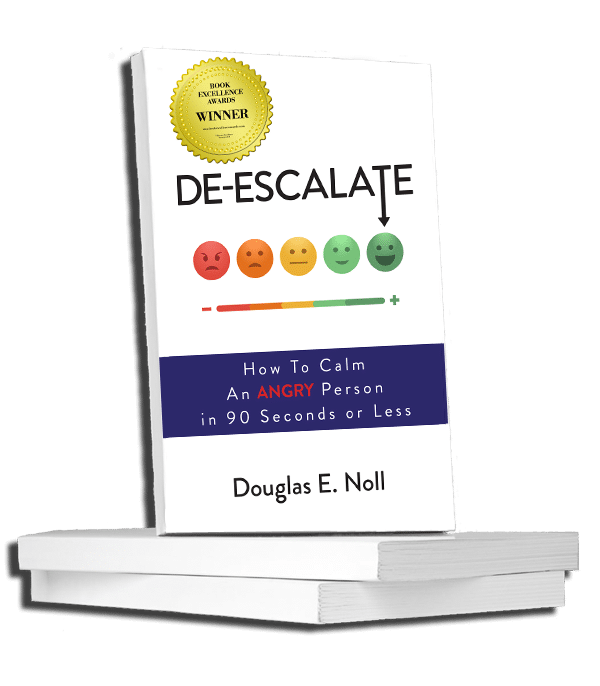
What began as a technique to save lives in hostage situations now reshapes boardroom discussions, sales conversations, and team conflicts. Doug Noll brings an exceptional dimension to this evolution. With more than four decades of experience, including successfully training life-sentenced inmates to prevent prison violence through emotional regulation and de-escalation, Noll teaches reliable methods to halt arguments and fights before they escalate. His guarantee: applied correctly, these skills deliver measurable results in even the most charged environments.
Emotional conflicts fracture teams and families. The ongoing tension breeds burnout, damages relationships, and hurts performance. The Noll Method’s 90-Second Power Move™ is a proven, neuroscience-based skill for restoring calm, tested from boardrooms to maximum-security prisons. Master this life-changing technique to transform chaos into collaboration. Book a no-obligation zoom call with Doug Noll today!
Understanding Tactical Empathy at Its Core
Tactical empathy stands apart from ordinary sympathy or kindness. It is a calculated practice of demonstrating deep comprehension of the other party’s feelings and viewpoint, even amid sharp disagreement. Voss frames it as directing attention simultaneously to emotional obstacles and openings for agreement. In professional settings, this translates to a leader validating a colleague’s stress over shifting priorities before proposing adjustments, or a consultant acknowledging a client’s underlying anxiety rather than immediately presenting solutions.
Rooted in behavioral science yet simple to deploy, the method relies on three core actions: labeling visible emotions (“It seems this change has caught you off guard”), mirroring key phrases to encourage elaboration, and posing open “how” or “what” questions that invite reflection instead of defensiveness. Together, these steps reduce tension, build psychological safety, and pave the way for constructive dialogue.
The Rising Demand in Modern Organizations
Unchecked interpersonal friction erodes morale, inflates turnover, and quietly undermines performance. As awareness grows about the heavy toll of workplace stress, forward-thinking companies prioritize tools that address conflict at its source. North America continues to lead in promoting employee well-being, propelled by a keen awareness of how healthy teams drive productivity and by the imperative to manage steadily rising healthcare expenses through prevention rather than treatment.
Broad corporate wellness efforts target physical fitness, nutrition, and general stress relief, yet they often leave a critical gap: direct skills for navigating emotional friction in real time. Tactical empathy bridges that divide, arming individuals across roles executives, salespeople, managers, mediators with precise ways to turn potential disputes into opportunities for alignment.
Practical Applications Across Business Functions
Leaders deploy tactical empathy during sensitive vendor renegotiations or partnership integrations, where surfacing unspoken worries frequently rescues deals that appeared doomed by pure analytical debate. In sales, professionals use it to move beyond rote objections and reveal the genuine concerns blocking commitment. Human resources teams apply the same principles in difficult performance reviews or mediation, converting adversarial exchanges into joint problem-solving.
A Typical High-Stakes Example
Consider a department head encountering strong resistance to a proposed restructuring. Instead of defending the plan, she begins: “It feels like this shift threatens the stability you’ve worked hard to build here.” That single, accurate label frequently unlocks a flood of context personal bandwidth limits, team dynamics, past reorganizations that went poorly allowing both sides to co-design adjustments that honor legitimate needs while advancing the goal.
Addressing the Most Frequent Doubts
- Fights and arguments are simply inevitable in any workplace. Conflict itself may be unavoidable, but its toxic, relationship-damaging versions are not. Tactical empathy reframes disagreement from battle to dialogue, lowering intensity and protecting long-term collaboration.
- I’m skeptical these techniques will produce real change. Effectiveness stems from deliberate, repeated practice. Doug Noll has refined these methods in extraordinarily volatile settings and stands behind their reliability when implemented with fidelity.
- Engaging with emotions directly feels risky or uncomfortable. The beauty of tactical empathy lies in its one-sided emotional labor: you observe and articulate the counterpart’s experience without needing to disclose your own vulnerabilities. It demands discipline, not exposure.
What Sets Doug Noll’s Approach Apart
While tactical empathy gains wider recognition, few instructors match Noll’s pedigree. His career spans high-stakes environments where missteps carried severe consequences, from correctional facilities to intense interpersonal training programs. By adapting those hard-earned lessons for corporate audiences, he delivers techniques proven under extreme pressure ensuring they hold up when stakes involve reputations, revenue, or team cohesion rather than physical safety.
Why This Shift Matters for the Future of Work
Hybrid arrangements, cross-cultural teams, and relentless change continue to multiply everyday friction points. In such conditions, the capacity to forge genuine emotional connection while advancing clear objectives emerges as a decisive edge. Tactical empathy complements data-driven strategy and analytical rigor; it enhances both by first removing the invisible emotional barriers that so often block progress.
For decision-makers weary of short-term argument victories that leave lingering resentment or transactions sealed at the expense of trust this disciplined form of understanding presents a compelling alternative. The strongest outcomes in negotiation rarely arise from overpowering the other side. They emerge when every participant feels accurately seen and respectfully heard.
Frequently Asked Questions
What is tactical empathy and how is it used in business negotiations?
Tactical empathy is the deliberate practice of deeply understanding another person’s emotional perspective not to agree with them, but to reduce resistance and build trust. Popularized by former FBI negotiator Chris Voss, it relies on techniques like labeling emotions, mirroring key phrases, and asking open-ended “how” or “what” questions. In business settings, it helps leaders, salespeople, and HR professionals turn tense exchanges into productive dialogue by addressing the emotional barriers that block progress.
How does Doug Noll’s approach to tactical empathy differ from other negotiation methods?
Doug Noll brings over four decades of experience applying de-escalation and emotional regulation techniques in some of the most high-stakes environments imaginable, including training life-sentenced inmates to prevent prison violence. His Noll Method’s 90-Second Power Move™ is grounded in neuroscience and has been tested in both correctional facilities and corporate settings. This real-world pedigree sets his approach apart, offering business professionals proven techniques that hold up under extreme pressure.
Can tactical empathy really stop workplace arguments and conflicts?
While conflict itself may be unavoidable, tactical empathy helps prevent it from becoming toxic or relationship-damaging. By accurately labeling a colleague’s emotions and creating psychological safety, the technique shifts disagreements from confrontational battles into collaborative problem-solving conversations. Practitioners don’t need to expose their own vulnerabilities the method focuses entirely on observing and articulating the other person’s experience, making it a low-risk, high-impact skill for any professional.
Disclaimer: The above helpful resources content contains personal opinions and experiences. The information provided is for general knowledge and does not constitute professional advice.
You may also be interested in: How to Overcome Resistance to Emotional Intelligence Training
Emotional conflicts fracture teams and families. The ongoing tension breeds burnout, damages relationships, and hurts performance. The Noll Method’s 90-Second Power Move™ is a proven, neuroscience-based skill for restoring calm, tested from boardrooms to maximum-security prisons. Master this life-changing technique to transform chaos into collaboration. Book a no-obligation zoom call with Doug Noll today!
Powered by flareAI.co