Quick Listen:
In a high-stakes meeting in Chicago, a CEO delivers tough feedback to a struggling team, balancing candor with empathy to preserve trust. In Vancouver, a project lead navigates a heated strategy dispute, keeping the room focused and collaborative. These moments define modern leadership, where emotional control is no longer optional it’s essential. North American workplaces face unprecedented challenges: burnout, eroding civility, and relentless change. Mastering tough conversations through emotional intelligence (EI) is now a cornerstone of effective leadership. The conflict resolution solutions market, valued at $8.79 billion in 2024, reflects a growing demand for tools that help leaders manage tension and foster resilience.
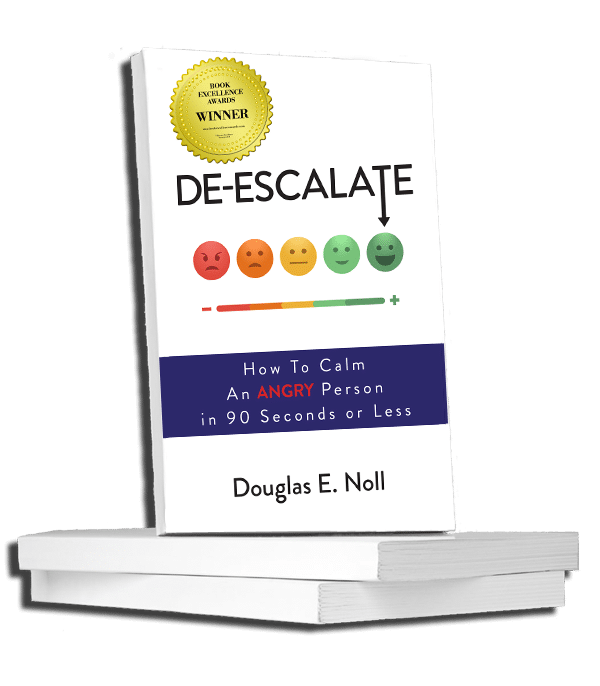
Emotional conflicts fracture teams and families. The ongoing tension breeds burnout, damages relationships, and hurts performance. The Noll Method’s 90-Second Power Move™ is a proven, neuroscience-based skill for restoring calm, tested from boardrooms to maximum-security prisons. Master this life-changing technique to transform chaos into collaboration. Book a no-obligation zoom call with Doug Noll today!
The Neuroscience of Composure
Once sidelined as a “soft skill,” emotional intelligence has become a critical driver of workplace outcomes. EI the ability to recognize, understand, and regulate emotions transforms how leaders handle high-pressure dialogues. Elite programs, like those at Yale’s Center for Emotional Intelligence and the University of Toronto’s Rotman School, integrate neuroscientific techniques such as emotion labeling and mindfulness to train executives. These tools enable leaders to pause, reflect, and respond deliberately, avoiding knee-jerk reactions. Companies like Google and Shopify are leveraging these EI frameworks to combat burnout, a pervasive issue affecting 82% of HR teams, as reported by the Lattice State of People Strategy.
The evidence is compelling. A 2023 Gallup U.S. Workplace Report shows leaders with strong emotional regulation earn 32% higher trust scores and 27% higher engagement from their teams. The global emotional intelligence market, currently at $8 billion, is projected to soar to $24.95 billion by 2033, with a 13.4% CAGR. This growth underscores a shift: EI isn’t about being likable it’s about making strategic, emotionally informed decisions under stress.
Technology Amplifies Emotional Insight
Advancements in technology are scaling EI’s impact. Platforms like BetterUp in the U.S. and EI Advantage in Canada harness behavioral analytics to customize training for tough conversations. These tools analyze vocal tones, word choice, and emotional cues, providing real-time feedback to refine communication. Deloitte’s 2024 Human Capital Trends report highlights that 42% of Fortune 500 companies now use digital EI training, reflecting its growing accessibility. Picture a manager rehearsing a sensitive layoff discussion, guided by an AI tool that flags defensive phrasing and suggests empathetic alternatives such solutions are now standard practice.
However, technology brings challenges. In Canada, strict data privacy laws like PIPEDA raise concerns about storing emotional data. Cultural differences also complicate adoption: U.S. workplaces often embrace directness, while Canadian teams favor consensus-driven dialogue, necessitating tailored EI strategies. Despite these hurdles, the conflict resolution programs market, valued at $3.7 billion, is forecasted to reach $8.2 billion by 2033, growing at a 10% CAGR, driven by innovation and rising demand.
Proven Impact in the Field
Real-world applications highlight EI’s transformative power. Microsoft’s Manager Conversations Program trains U.S. supervisors to detect emotional signals such as tense body language and use “pause-and-pivot” techniques to de-escalate performance review tensions. The outcome? A 19% reduction in voluntary turnover among teams using these methods. At Mayo Clinic, healthcare professionals undergo Compassionate Communication Training, learning to reframe criticism and validate emotions during intense patient or colleague interactions, resulting in fewer conflict-driven complaints.
In Canada, RBC integrates emotional self-awareness into its leadership labs, encouraging managers to track team member’s emotional states to strengthen relationships. These initiatives reflect a broader trend: organizations investing in EI see 20% higher productivity and 35% lower burnout, according to Harvard Business Review Analytic Services (2024). The conflict resolution market, projected to grow to $12.68 billion by 2029 at a 7.4% CAGR, underscores the measurable returns of these programs.
Overcoming Barriers to Adoption
EI adoption faces obstacles. Cultural nuances U.S. directness versus Canadian harmony demand customized approaches. Ethical concerns around AI-driven EI tools, particularly data privacy under Canada’s PIPEDA, require careful navigation. Most significantly, 48% of U.S. leaders, per Gallup (2024), resist showing vulnerability, fearing it undermines authority. This reluctance can hinder trust-building, a cornerstone of EI’s effectiveness.
Yet, the rewards are undeniable. EI training yields 5–7× ROI by reducing turnover and conflict costs, per ICF North America (2023). It also aligns with diversity and inclusion priorities, fostering psychologically safe workplaces where microaggressions are minimized a critical focus for HR across North America.
Shaping Tomorrow’s Leadership
The future of EI lies in embedding it into organizational culture. Dr. Marc Brackett of Yale advocates “emotion labeling before problem-solving,” a technique that helps leaders stay grounded by naming emotions first. Canadian expert Linda Marshall champions “compassionate accountability,” blending empathy with clear expectations. These approaches signal a shift from one-off training to sustained cultural change. By 2030, North American EI training adoption is expected to grow at an 8.6% CAGR, per IBISWorld (2024), as organizations prioritize trust and resilience.
In retail, Tractor Supply’s investment in EI training, as detailed in a Forbes article, demonstrates its value in high-pressure settings. EI-equipped leaders manage stress, enhance collaboration, and reduce burnout, with benefits extending across sectors.
From Conflict to Connection
Tough conversations will always challenge leaders, but emotional intelligence turns these moments into opportunities for growth. By mastering emotional control, executives from Seattle to Montreal are cultivating workplaces where trust flourishes and conflict drives progress, not division. This isn’t about stifling emotions it’s about channeling them with precision and humanity. For organizations ready to act, the message is clear: invest in certified EI coaching, embed structured feedback systems, and watch resilience and performance soar. In an era of constant disruption, the ability to stay composed and connected isn’t just a leadership advantage it’s a strategic necessity.
Frequently Asked Questions
How can I stay calm during difficult conversations?
To stay calm during tough conversations, practice deep breathing and active listening, as outlined in the blog. These techniques help you manage emotional triggers and maintain composure. Preparing key points in advance also allows you to stay focused and respond thoughtfully, even under pressure.
Why is emotional control important in difficult workplace conversations?
Emotional control is crucial in workplace conversations to maintain professionalism and build trust, as highlighted in the blog. It prevents misunderstandings and ensures constructive dialogue, even in high-stakes situations. By staying composed, you can address conflicts effectively and strengthen workplace relationships.
What are effective strategies for managing emotions in tough conversations?
The blog emphasizes strategies like pausing to reflect before responding and using empathetic language to de-escalate tension. Acknowledging the other person’s perspective fosters mutual understanding. Additionally, setting a clear intention for the conversation helps you stay grounded and avoid emotional outbursts.
Disclaimer: The above helpful resources content contains personal opinions and experiences. The information provided is for general knowledge and does not constitute professional advice.
You may also be interested in: Handling Anger with Grace-5 Strategies for Staying Cool Under
Emotional conflicts fracture teams and families. The ongoing tension breeds burnout, damages relationships, and hurts performance. The Noll Method’s 90-Second Power Move™ is a proven, neuroscience-based skill for restoring calm, tested from boardrooms to maximum-security prisons. Master this life-changing technique to transform chaos into collaboration. Book a no-obligation zoom call with Doug Noll today!
Powered by flareAI.co