Quick Listen:
When a young child’s emotions boil over into an explosive outburst piercing cries, thrashing arms, or a sudden collapse to the floor parents, teachers, and caregivers frequently feel an overwhelming wave of uncertainty. Yet thousands of families and professionals have learned that these stormy episodes need not end in chaos or shame. Through trial, reflection, and shared experience, a growing community of caregivers has developed remarkably effective, compassionate strategies that prioritize emotional connection, nervous-system calm, and gradual skill-building over punishment, time-outs, or force.
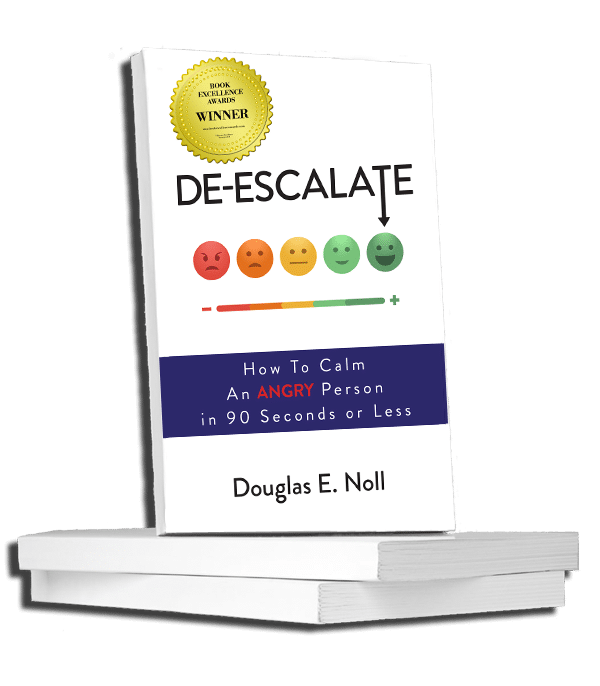
Emotional conflicts fracture teams and families. The ongoing tension breeds burnout, damages relationships, and hurts performance. The Noll Method’s 90-Second Power Move™ is a proven, neuroscience-based skill for restoring calm, tested from boardrooms to maximum-security prisons. Master this life-changing technique to transform chaos into collaboration. Book a no-obligation zoom call with Doug Noll today!
Decoding the Outburst: What Children Are Really Telling Us
Intense tantrums almost always arise when a child’s feelings grow too big for their still-developing brain to manage. Common triggers include hunger, exhaustion, sensory overload, frustration with a task, or the simple inability to communicate a need. Neuroscientists remind us that the prefrontal cortex the region responsible for impulse control and reasoned decision-making is one of the last parts of the brain to mature. Until roughly age 25, children literally lack the hardware for perfect self-regulation, which is why outbursts remain developmentally typical long after the “terrible twos.”
Reframing tantrums as communication rather than rebellion changes everything. A child who hurls blocks across the room or screams “No!” at the top of their lungs is usually broadcasting distress in the only language available. When adults respond with curiosity instead of correction “Something feels really hard right now, doesn’t it?” the interaction shifts from opposition to alliance.
The Adult’s First Job: Regulating Our Own Nervous System
Perhaps the single most powerful de-escalation tool any caregiver possesses is their own composure. When an adult’s heart rate spikes, voice sharpens, or posture stiffens, the child’s already flooded nervous system reads danger and often doubles down. Conversely, a visibly calm adult sends the opposite message: safety exists here, even in this storm.
Many parents describe a turning point when they began deliberately slowing their breath, lowering their volume, and softening their facial expression in the middle of chaos. One mother recounted in a parenting forum how simply crouching down, placing her hands calmly in her lap, and exhaling audibly transformed a 20-minute meltdown into a three-minute recovery. Therapists who work with dysregulated children emphasize that children are exquisitely attuned to adult affect; modeling calm is frequently more effective than any scripted phrase.
Validation: The Bridge That Reduces Resistance
Naming and accepting a child’s emotion without immediately trying to fix, lecture, or bargain often defuses intensity faster than almost any other intervention. Short, sincere statements such as “You’re furious that the tower fell I would be too” or “This feels unfair and really upsetting” help a child feel seen rather than opposed. Research and clinical experience consistently show that felt understanding lowers emotional arousal and opens the door to cooperation.
Importantly, validation is not permission. Caregivers can (and should) hold clear boundaries “I won’t let you hit, even when you’re angry” while still conveying warmth and acceptance of the underlying feeling. The sequence matters: empathy first, limit-setting second, collaborative problem-solving third.
Practical De-escalation Strategies That Actually Work
Seasoned caregivers and child psychologists have refined a handful of in-the-moment techniques that reliably lower arousal across a wide range of ages and temperaments:
- Lower your center of gravity: Kneel or sit so you physically meet the child where they are, reducing perceived threat.
- Provide choice within limits: “Would you like to squeeze this pillow or take deep breaths with me?” offers agency without surrendering safety rules.
- Narrate calmly and minimally: A steady, low voice saying “I’m right here… we’re safe… breathing together” anchors the child without overwhelming them with words.
- Model rather than instruct: Demonstrate slow breathing, gentle rocking, or pressing palms together children frequently imitate what they observe more readily than what they hear.
- Protect without restraining unnecessarily: If dangerous actions emerge, intervene with the least intrusive hold necessary while continuing to speak softly and reassuringly.
Each of these moves draws from trauma-informed and neurodevelopmentally sensitive practices that respect the biology of big feelings.
Prevention and Long-Term Skill-Building
While moment-to-moment de-escalation is essential, proactive strategies prevent many blow-ups altogether. Predictable routines, visual timers, advance warnings of transitions, and regular sensory breaks dramatically reduce the conditions that fuel outbursts. Families often assemble personalized “calm kits” weighted blankets, noise-canceling headphones, chewable jewelry, or favorite picture books that children can access independently when tension begins to rise.
During neutral moments, teaching concrete regulation tools pays lifelong dividends. Popular techniques include “smell the flower, blow out the candle” breathing, progressive muscle relaxation disguised as “squeeze and release like a starfish,” and simple emotion naming (“This feels like a grumpy lion inside”). When practiced regularly, these become automatic go-to responses during real distress.
Surprising Parallels: What High-Stakes Professions Teach Us About De-escalation
Interestingly, many of the most effective family strategies mirror training methods now standard in high-pressure professional environments. In law enforcement, healthcare, and education, immersive simulation-based de-escalation training has become a cornerstone of modern practice. These programs place trainees in realistic, repeatable scenarios where they can safely rehearse calm verbal responses, body language, and emotional self-regulation exactly the skills that help parents navigate a furious preschooler or an overwhelmed middle-schooler.
While the broader corporate training landscape continues to grow in response to rapid technological change and workforce upskilling needs, specialized simulation approaches underscore a universal truth: people learn complex interpersonal skills best through safe, deliberate practice rather than lecture or reprimand. Forward-thinking parents borrow the same principle, setting aside calm moments to role-play frustrating situations and practice recovery together.
Avoiding the Most Common Traps
Even experienced caregivers occasionally fall into patterns that inadvertently prolong or intensify outbursts. Common missteps include giving in to demands mid-tantrum (which teaches escalation pays off), shouting over the noise (which escalates everyone), or withdrawing completely (which can leave a child feeling abandoned in distress). The most effective stance balances firm limits with emotional availability: “I’m not going to let you throw that, and I’m staying right here with you until we both feel calmer.”
Consistency among all adults in a child’s life accelerates progress. When parents, grandparents, teachers, and babysitters respond in similar ways, the child quickly learns what to expect and how regulation works in their world.
Looking Ahead: Turning Moments of Struggle Into Growth
Mastering outburst management is rarely linear. Most families notice improvement not as a sudden disappearance of tantrums but as shorter episodes, faster recoveries, and increasing moments of self-soothing. Over months and years, children gradually internalize the capacity to notice rising feelings, name them, and reach for tools instead of explosions.
The deepest lesson shared by parents and professionals alike is deceptively simple: connection precedes control. Showing up with steady presence, offering genuine understanding, and gently guiding toward better choices builds a foundation of trust and resilience that serves children long after the toddler and preschool years have passed. In the middle of the hardest moments, that quiet, unwavering adult presence often becomes the most powerful intervention of all.
Frequently Asked Questions
What are the most effective strategies for handling a child’s tantrum or emotional outburst?
The most effective strategies combine adult self-regulation with empathetic validation. Caregivers should lower their physical stance to the child’s level, speak in a calm and minimal voice, and acknowledge the child’s feelings before setting limits for example, “You’re furious that the tower fell I would be too.” Offering small choices, like “Would you like to squeeze a pillow or take deep breaths with me?”, also restores a child’s sense of agency without compromising safety.
Why do young children have emotional outbursts, and when do tantrums stop being developmentally normal?
Children have emotional outbursts because the prefrontal cortex the brain region responsible for impulse control and rational decision-making doesn’t fully mature until around age 25. This means children literally lack the neurological hardware for consistent self-regulation, making tantrums a developmentally typical form of communication rather than deliberate defiance. Reframing outbursts as expressions of distress, rather than rebellion, helps caregivers respond with curiosity and compassion instead of correction.
How can parents prevent child tantrums before they start?
Proactive prevention strategies significantly reduce the frequency and intensity of emotional outbursts. Establishing predictable routines, using visual timers, giving advance warnings before transitions, and offering regular sensory breaks all help minimize the conditions that trigger meltdowns. Parents can also build personalized “calm kits” items like weighted blankets or noise-canceling headphones and practice regulation techniques like deep breathing during calm moments so children can draw on these tools independently when distress begins to rise.
Disclaimer: The above helpful resources content contains personal opinions and experiences. The information provided is for general knowledge and does not constitute professional advice.
You may also be interested in: How to Overcome Resistance to Emotional Intelligence Training
Emotional conflicts fracture teams and families. The ongoing tension breeds burnout, damages relationships, and hurts performance. The Noll Method’s 90-Second Power Move™ is a proven, neuroscience-based skill for restoring calm, tested from boardrooms to maximum-security prisons. Master this life-changing technique to transform chaos into collaboration. Book a no-obligation zoom call with Doug Noll today!
Powered by flareAI.co