Quick Listen:
Picture a manager in a bustling North American hospital emergency department, surrounded by exhausted staff and anxious patients. A tense confrontation looms, but rather than reacting impulsively, the manager takes a breath, recognizes the underlying emotions, and guides the exchange toward de-escalation. In the intense workplaces defining today’s economy, such poised responses are no longer optional they’re a cornerstone of effective leadership.
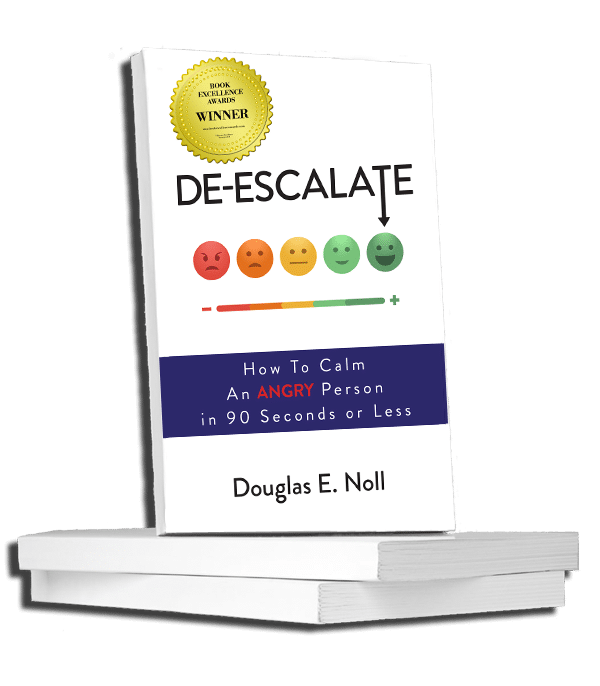
Emotional conflicts fracture teams and families. The ongoing tension breeds burnout, damages relationships, and hurts performance. The Noll Method’s 90-Second Power Move™ is a proven, neuroscience-based skill for restoring calm, tested from boardrooms to maximum-security prisons. Master this life-changing technique to transform chaos into collaboration. Book a no-obligation zoom call with Doug Noll today!
Managing Anger in High-Stress Situations: Evidence-Based Strategies for North American Managers
How emotional intelligence, neuroscience-informed techniques, and structured de-escalation training are transforming leadership in demanding North American professional environments.
Stress in North American workplaces has surged to critical levels, fueled by hybrid work arrangements, persistent labor shortages, and widespread burnout. Anger in these settings signals deeper systemic pressures, impacting productivity, employee retention, and even organizational liability. Managers increasingly act as frontline emotional regulators in fields such as healthcare, education, public safety, and corporate management.
Organizations are responding by prioritizing emotional intelligence, conflict resolution, and de-escalation training within leadership programs. This shift aligns with broader trends in mental health investment, where North America commands a dominant position. For instance, the region holds over 56.4% of the global mental health market in 2025, reflecting heightened demand for services amid rising awareness of conditions like depression, anxiety, and stress.
The Science Driving Anger Responses Under Pressure
High stress triggers the brain’s amygdala, initiating an emotional hijack that overrides rational prefrontal cortex functions and propels fight-or-flight instincts. This mechanism accounts for rapid escalations from minor irritants in pressurized settings. Chronic exposure amplifies perceived threats, impairing clear judgment.
Conventional directives to simply “calm down” fall short because they ignore the necessity of first validating emotions. Research in neuroscience and psychology underscores that acknowledgment and targeted regulation restore executive control and diminish physiological arousal more efficiently.
Emerging Trends in Emotional Regulation and Conflict Training
Once dismissed as secondary soft skills, emotional intelligence competencies now rank as essential for leadership. North American entities in corporate, healthcare, educational, and public sectors are widely implementing neuroscience-based de-escalation approaches. Meanwhile, professional coaching and mediation are pivoting toward proactive emotional skill development over mere policy adherence.
This evolution mirrors escalating investments in mental health solutions. The cognitive behavioral therapy (CBT) market, a key evidence-based modality for emotional regulation, is projected to grow from USD 9.00 billion in 2025 to USD 34.04 billion by 2034 at a CAGR of 15.96%, with North America leading dominance in recent years due to robust adoption for conditions like depression.
Similar growth patterns appear in broader mental health sectors, underscoring the urgency for workplace interventions that build resilience and prevent escalations.
Core Strategies Gaining Traction Among Managers
True anger management begins with emotional awareness rather than forced suppression. Proven methods involve explicitly labeling feelings to lessen their grip for example, stating recognition of frustration, which research shows directly tempers amygdala responses.
Deliberate pacing, modulated tone, and reflective listening create essential breathing room during conflicts. Validation techniques, staples in professional mediation, foster connection without endorsing positions or apportioning fault. Additionally, incorporating short physiological resets, such as intentional pauses, allows recovery in real-time disputes. These neuroscience-aligned practices convert potential confrontations into pathways for mutual understanding and resolution.
Applications Transforming North American Workplaces
Healthcare facilities are deploying de-escalation protocols to mitigate staff exhaustion and patient conflicts, enhancing safety amid ongoing shortages. Corporate environments weave emotional intelligence coaching into management training, yielding smoother resolutions to interpersonal tensions and reduced attrition.
In education, administrators and educators receive regulation training to navigate charged exchanges with students, families, and peers. Public-service roles likewise gain from these competencies, averting small frictions from ballooning into significant issues.
Such implementations address projected workforce challenges in mental health delivery. Recent modeling frameworks highlight unsustainable staffing trajectories post-COVID, emphasizing the need for proactive planning to meet surging demand exacerbated by the pandemic.
Potential Pitfalls and Implementation Challenges
Training initiatives do not always yield results. Some leaders resist, viewing emotional proficiency as a sign of vulnerability. Programs heavy on compliance rather than practical coaching often underperform absent sustained reinforcement and organizational alignment.
Incorrect application of methods, particularly without expert oversight, risks worsening situations. Managers must maintain clear ethical lines, recognizing their role differs from clinical therapy. Long-term efficacy hinges on commitment, repeated application, and cultural integration.
The Compelling Organizational Returns
Leaders skilled in emotional intelligence drive tangible benefits: diminished turnover, fewer formal complaints, and heightened trust amid change. Companies experience lower human resources interventions and minimized exposure to conflict-related litigation.
As expertise in mediation, emotional training, and executive coaching expands, these advantages scale to bolster overall organizational strength and adaptability.
Expanding Contributions from Professional Coaches and Mediators
In North America, coaching and mediation experts are transitioning from crisis intervention to foundational emotional capacity building. They embed neuroscience principles into leadership curricula, enabling teams to preemptively manage regulation.
This forward-looking strategy positions emotional intelligence as integral to risk mitigation. Emerging technologies further amplify reach; advances in artificial intelligence are enhancing mental health support through personalized, accessible interventions that complement human-led training. Digital platforms and AI-driven tools are reducing barriers like access and stigma, aligning with workplace needs for scalable emotional support.
Building a Future of Resilient, Emotionally Adept Leadership
Managing anger effectively has evolved into a vital strategic asset for leaders navigating contemporary demands. North American enterprises committing to these capabilities cultivate tougher, more cohesive teams and adaptive cultures.
Projections indicate accelerating convergence of neuroscience insights, emotional intelligence development, and specialized mediation. With mental health markets expanding North America anchoring substantial shares amid steady growth investment in evidence-based de-escalation frameworks, guided by seasoned professionals, provides managers a definitive advantage in fostering productive, humane workplaces.
As demand for mental well-being resources intensifies, leaders equipped with these tools will not only weather high-stress environments but thrive within them, setting standards for organizational health in the years ahead.
Frequently Asked Questions
What are the most effective anger management strategies for managers in high-stress workplaces?
The most effective strategies involve emotional awareness rather than suppression, including explicitly labeling feelings to reduce their intensity, which research shows directly tempers amygdala responses. Managers should use deliberate pacing, modulated tone, and reflective listening to create breathing room during conflicts, while validation techniques foster connection without assigning blame. Incorporating physiological resets like intentional pauses allows for real-time recovery during disputes, converting potential confrontations into pathways for mutual understanding.
How does emotional intelligence training benefit organizations and reduce workplace conflict?
Leaders skilled in emotional intelligence drive tangible organizational benefits including diminished employee turnover, fewer formal complaints, and heightened trust during periods of change. Companies experience lower human resources interventions and minimized exposure to conflict-related litigation. These competencies are particularly valuable in healthcare, corporate, educational, and public service sectors where they help prevent small frictions from escalating into significant issues while enhancing overall team cohesion and workplace safety.
Why do traditional “calm down” approaches fail in de-escalating workplace anger?
Conventional directives to simply “calm down” fall short because they ignore the brain’s stress response mechanism and the necessity of first validating emotions. When high stress triggers the amygdala, it initiates an emotional hijack that overrides rational prefrontal cortex functions, propelling fight-or-flight instincts. Research in neuroscience and psychology demonstrates that acknowledgment and targeted regulation techniques restore executive control and diminish physiological arousal more efficiently than suppression-based approaches.
Disclaimer: The above helpful resources content contains personal opinions and experiences. The information provided is for general knowledge and does not constitute professional advice.
You may also be interested in: Calm An Angry Boss Today-6 Effective Ways How – Douglas E. Noll
Emotional conflicts fracture teams and families. The ongoing tension breeds burnout, damages relationships, and hurts performance. The Noll Method’s 90-Second Power Move™ is a proven, neuroscience-based skill for restoring calm, tested from boardrooms to maximum-security prisons. Master this life-changing technique to transform chaos into collaboration. Book a no-obligation zoom call with Doug Noll today!
Powered by flareAI.co