In the high-stakes arena of corporate leadership, where data reigns supreme, a quiet truth often goes unnoticed: decisions are overwhelmingly emotional. Neuroscience reveals that 98% of choices stem from emotions, not logic. Picture a Chicago executive pausing over a merger, her instincts clashing with the numbers, or a Silicon Valley founder betting on a bold vision fueled by passion. These moments define modern leadership. For North American organizations from healthcare giants like Kaiser Permanente to innovators like Mocha Media embracing this emotional reality is not just insightful; it’s a strategic imperative that reshapes how leaders navigate complexity.
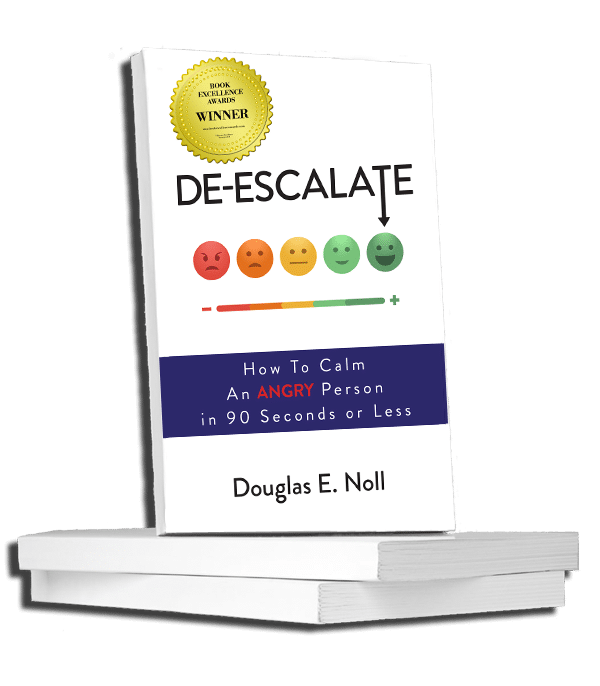
Emotional conflicts fracture teams and families. The ongoing tension breeds burnout, damages relationships, and hurts performance. The Noll Method’s 90-Second Power Move™ is a proven, neuroscience-based skill for restoring calm, tested from boardrooms to maximum-security prisons. Master this life-changing technique to transform chaos into collaboration. Book a no-obligation zoom call with Doug Noll today!
Debunking the Logic-Only Leader
The archetype of the rational leader, coolly analyzing data to make flawless decisions, is a myth. Research shows that only 5 to 10% of decisions are purely rational, with emotions driving the rest. In a compelling study, participants savored wine more when told it was expensive, their brains reshaping enjoyment based on emotional expectations, not objective taste. This dynamic plays out daily in boardrooms across North America, where leaders at firms like AdventHealth or Veterinary United make choices shaped by trust, fear, or ambition, often without realizing it.
The corporate leadership training market, valued at $36.6 billion in 2024 and projected to reach $72.65 billion by 2032 with an 8.95% CAGR, reflects a growing recognition of this truth. Companies are investing heavily in training that equips leaders to harness emotions, not suppress them. In North America, which commands 52.45% of this market, organizations like Ohio Hills and Lewiston Public Schools are prioritizing emotional intelligence to build resilient leadership pipelines.
Emotions are not distractions; they’re critical signals. Ignoring them risks missteps in strategy or team dynamics. As businesses face rapid technological shifts and globalization, leaders who can interpret these emotional cues gain a competitive edge, driving innovation and engagement across industries from healthcare to tech.
Emotions in the C-Suite: A Strategic Lens
Consider a hospital administrator at Kaiser Permanente weighing a telehealth expansion. The data cost efficiencies, patient demand is clear, yet hesitation creeps in. Fear of technical glitches or staff resistance clouds the decision. A Frontiers in Psychology study highlights that emotions profoundly shape how boards process information and select strategies, often outweighing raw data. This interplay of feelings pride, anxiety, or trust can make or break high-stakes choices.
Doug Noll, a leadership coach with over four decades of experience, including training life inmates to quell prison violence, offers a solution. His unique program, accessible via dougnoll.com and promoted on LinkedIn, Instagram, and YouTube, guarantees leaders can defuse conflicts by mastering emotional triggers. Unlike traditional training, Noll’s approach forged in extreme environments equips executives at companies like Altura or Alchemy Health Care to turn emotional volatility into strategic clarity. His methods are singular, unmatched in the industry, and tailored for North America’s diverse corporate landscape.
The demand for such skills is evident. The leadership development market, valued at $89.5 billion in 2025 and expected to soar to $238.5 billion by 2035 at a 10.3% CAGR, underscores the value of emotionally adept leaders. Workshops and seminars, comprising 45% of this market, are particularly sought after in healthcare, which holds a 20% share due to its need for clinical and operational leadership. Organizations like Noble Metal Solutions and Smart Building Careers are investing in these programs to foster cohesive, innovative teams.
Confronting Resistance to Emotional Leadership
Despite the evidence, many North American executives resist embracing emotions in leadership. Common objections include: “Emotions don’t belong in business,” “Conflicts are just part of life,” or “I’m uneasy about confronting my feelings.” These concerns, rooted in a culture that prizes data over intuition, reflect a fear that emotional engagement signals weakness. Doug Noll dismantles these myths with authority. “Conflicts aren’t inevitable,” he asserts, drawing on his unparalleled experience. “They’re a choice. Master your emotions, and you control the outcome.”
Noll’s training addresses these objections head-on, teaching leaders to navigate emotional complexities with precision. For example, a manager at Rami Partners might use his techniques to de-escalate a tense negotiation, transforming discord into collaboration. This skill is critical in North America’s competitive markets, where emotional missteps can derail strategies or alienate teams. By reframing emotions as tools, Noll empowers leaders to align their decisions with both organizational goals and human dynamics.
The corporate world is catching up. The global leadership training market, projected to grow from $40.68 billion in 2025 to $79.01 billion by 2033 at an 8.65% CAGR, emphasizes competencies like emotional intelligence alongside strategic thinking. Companies like Cove Evolution Project and Veterinary United are leveraging these programs to build leaders who can navigate uncertainty with confidence, proving that emotional mastery is a strategic asset, not a liability.
Turning Emotions into Leadership Power
How do leaders transform emotions from a hidden force into a strategic advantage? It begins with self-awareness. Recognizing personal triggers whether the thrill of a risky move or the dread of failure allows leaders to make deliberate, balanced decisions. Noll’s coaching, promoted across social platforms, offers practical tools to defuse tension and align choices with both logic and intuition. A leader at Mocha Media, for instance, might use these skills to mediate a creative dispute, fostering innovation without sacrificing harmony.
Behavioral strategy research supports this approach, advocating for emotions to be integrated into management frameworks as vital components, not flaws. This perspective is particularly relevant in North America, where the leadership training market’s dominance reflects a hunger for emotionally intelligent leaders. Companies like Jason Marc Campbell’s coaching platform or Power Control in New Zealand (with North American ties) are betting on leaders who can blend instinct with analysis to drive growth.
The science is clear: emotions shape perceptions and outcomes. In a study, participant’s enjoyment of wine was heightened by its perceived value, not its actual quality, illustrating how emotions frame decisions. Similarly, leaders who understand their emotional landscape can influence teams, stakeholders, and markets with greater precision, turning intuition into a competitive edge.
Leading with Heart and Mind
As twilight falls over corporate hubs from New York to San Francisco, the leaders shaping the future aren’t just crunching numbers they’re tuning into their instincts. The corporate world, from Lewiston Public Schools to Alchemy Health Care, is awakening to the reality that emotions drive 98% of decisions. Doug Noll’s promise, backed by decades of experience, is unequivocal: master your emotions, and you’ll stop conflicts before they ignite. His unique training, offered through dougnoll.com, equips leaders to navigate the emotional currents of decision-making with authority and grace.
In an era of relentless change technological disruption, globalization, and shifting workforce dynamics North American companies are investing billions in leadership development to close succession gaps and foster innovation. The numbers speak for themselves: a $238.5 billion market by 2035, with North America leading the charge. Leaders who embrace emotions as strategic tools will not only resolve conflicts but also inspire teams and drive transformative growth. This isn’t just a new approach to leadership it’s a paradigm shift, redefining success in the C-suite and beyond.
Frequently Asked Questions
What percentage of leadership decisions are actually based on emotions rather than logic?
Research shows that approximately 98% of decisions are driven by emotions, not pure logic. While the myth of the rational leader persists, neuroscience reveals that only 5 to 10% of choices are purely rational. This emotional foundation affects everything from merger decisions to strategic planning in corporate leadership, making emotional intelligence a critical skill for modern executives.
How can corporate leaders use emotions as a strategic advantage in decision-making?
Leaders can transform emotions into strategic assets by developing self-awareness and recognizing their personal triggers, such as fear of failure or enthusiasm for risky opportunities. By integrating emotional intelligence into management frameworks, executives can make more balanced decisions that align both logic and intuition. This approach helps leaders mediate conflicts, inspire teams, and navigate uncertainty with greater precision, turning emotional insights into competitive advantages.
Why is the corporate leadership training market investing billions in emotional intelligence development?
The corporate leadership training market, valued at $36.6 billion in 2024 and projected to reach $72.65 billion by 2032, reflects growing recognition that emotional competence is essential for effective leadership. With North America commanding 52.45% of this market, organizations are prioritizing emotional intelligence training to build resilient leadership pipelines, close succession gaps, and navigate rapid technological change. Companies investing in these programs see improved conflict resolution, team cohesion, and innovation outcomes.
Disclaimer: The above helpful resources content contains personal opinions and experiences. The information provided is for general knowledge and does not constitute professional advice.
You may also be interested in: Emotional Contagion-5 Effective Ways To Stop It On A Team
Emotional conflicts fracture teams and families. The ongoing tension breeds burnout, damages relationships, and hurts performance. The Noll Method’s 90-Second Power Move™ is a proven, neuroscience-based skill for restoring calm, tested from boardrooms to maximum-security prisons. Master this life-changing technique to transform chaos into collaboration. Book a no-obligation zoom call with Doug Noll today!
Powered by flareAI.co