Quick Listen:
In today’s fast-paced and often polarized workplaces, leaders are discovering that technical expertise and strategic vision, while essential, fall short when human emotions ignite conflict. A growing number of executives and senior managers are prioritizing a nuanced but powerful leadership skill: the ability to genuinely validate an employee’s feelings during moments of disagreement or tension. Far from being a soft add-on, this competency deeply rooted in emotional intelligence serves as a practical de-escalation tool that preserves relationships, accelerates resolution, and strengthens organizational resilience. As companies continue to invest heavily in workplace learning to equip leaders for these interpersonal realities, training that teaches emotional validation is moving from niche to mainstream.
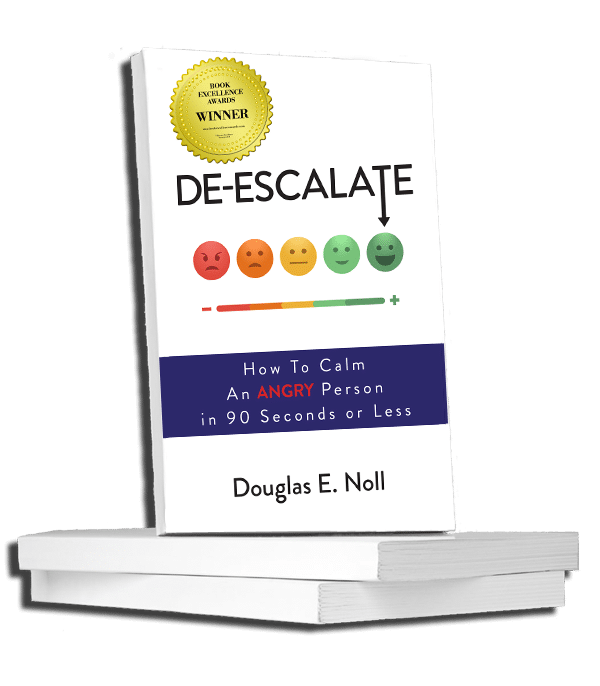
Emotional conflicts fracture teams and families. The ongoing tension breeds burnout, damages relationships, and hurts performance. The Noll Method’s 90-Second Power Move™ is a proven, neuroscience-based skill for restoring calm, tested from boardrooms to maximum-security prisons. Master this life-changing technique to transform chaos into collaboration. Book a no-obligation zoom call with Doug Noll today!
Why Emotional Validation Has Become a Leadership Imperative
Disputes rarely stay purely rational. A missed deadline, a perceived slight in a meeting, or a difference over resource allocation quickly stirs frustration, hurt, or anger. When a leader responds by brushing aside those emotions “Let’s stick to the facts” or “This isn’t personal” the other person often feels invalidated, walls go up, and the conversation deteriorates. Genuine validation does the opposite: it names and accepts the emotion without debating its legitimacy. A calm “I can hear how upsetting this situation has been for you” frequently lowers the temperature enough for constructive dialogue to resume.
This principle is not new. Mediators, hostage negotiators, and frontline healthcare workers have long relied on similar techniques to manage volatile encounters. What’s changed is the recognition that the modern corporation marked by hybrid teams, generational differences, and unrelenting performance pressure presents its own high-stakes emotional terrain. Leaders who can validate feelings early prevent routine friction from escalating into formal complaints, eroded trust, or voluntary departures.
The Corporate Investment in Human-Centered Skills
Organizations are channeling significant resources into developing these capabilities. The global corporate training market, already valued at $361.5 billion in 2023, continues to grow as companies place greater emphasis on soft skills, talent retention, and effective collaboration in distributed environments. While exact figures for emotional intelligence or conflict-related programs vary, the broader trend is unmistakable: forward-looking employers view the ability to navigate the human side of work as a competitive necessity rather than an optional nice-to-have.
Many of these initiatives borrow from immersive and interactive methodologies once reserved for law enforcement or clinical settings. Role-playing realistic scenarios, structured feedback sessions, and in some cases simulation technologies allow leaders to practice validation under pressure until the response feels instinctive. The underlying message is pragmatic: ignoring or mishandling emotional currents rarely saves time; it usually costs more in the long run.
Validation in Action: A Practical Framework
Consider a common flashpoint: a high-performing team member believes they were unfairly passed over for a key assignment. An untrained leader might immediately justify the decision or recite policy. A validation-trained manager instead slows down, reflects the emotion, and responds along the lines of, “It sounds incredibly disappointing to have worked so hard and still feel overlooked I can understand why that stings.” That single sentence often shifts the dynamic from confrontation to conversation.
Effective validation rests on several interlocking steps:
- Prioritize listening over problem-solving: Resist the urge to fix or explain until the emotion has been acknowledged.
- Name the feeling neutrally: Use clear, nonjudgmental language “frustrated,” “discouraged,” “angry” to show the emotion has been seen and accepted.
- Validate without endorsing: You can recognize the feeling as legitimate while maintaining your original stance on the facts or decision.
- Transition to collaborative next steps: Once emotional safety is restored, explore underlying interests and co-develop solutions.
These elements, distilled from decades of conflict-resolution research and practice, allow leaders to remain authoritative while signaling genuine respect.
Avoiding the Most Frequent Missteps
Even motivated leaders encounter obstacles. Some hesitate because they worry validation equals agreement or weakness. In truth, it does neither it establishes a platform for candid exchange without surrendering decision-making authority. Others deliver the words mechanically, lacking real curiosity. Employees almost always detect the difference, and hollow validation can deepen cynicism. High-quality training therefore stresses repeated, coached practice so the skill moves from intellectual understanding to authentic reflex.
Ripple Effects Across Teams and Culture
When leaders consistently demonstrate this competency, the benefits compound quickly. Psychological safety rises; people speak more freely because they trust their emotions will not be weaponized or dismissed. Morale strengthens as employees experience themselves as valued individuals rather than interchangeable resources. Innovation often follows: when differing viewpoints no longer carry the threat of emotional invalidation, creative friction becomes productive rather than destructive.
In especially intense settings emergency-response teams, trading floors during volatility, software squads racing toward launch deadlines the capacity to de-escalate emotionally can protect timelines, reputations, and even physical safety. Progressive organizations now embed these skills in leadership pipelines, treating them as foundational rather than supplementary.
Looking Forward: The Competitive Edge of Emotional Competence
The appetite for training that equips leaders to validate feelings and navigate disputes shows every sign of accelerating. Workplaces are becoming more diverse in background, perspective, and expectation; they are also more geographically dispersed and digitally mediated. In such an environment, the ability to connect with people where they are emotionally not where leaders wish they were stands out as a decisive differentiator.
This is not an invitation to avoid hard choices or turn managers into counselors. It is a recognition that sustained performance depends on trust, and trust depends on feeling understood. In a talent market where commitment is fragile and competition for capable people is fierce, the disciplined practice of emotional validation during conflict may well be one of the highest-leverage behaviors a leader can cultivate. Those who master it do far more than settle disagreements they help create environments where people choose to stay, contribute, and grow.
Frequently Asked Questions
Why is emotional validation important for leaders during workplace conflicts?
Emotional validation is a critical leadership skill because unaddressed emotions can turn routine workplace friction into formal complaints, eroded trust, or employee turnover. When leaders acknowledge feelings with phrases like “I can hear how upsetting this has been for you,” it lowers tension and opens the door to constructive dialogue. Unlike dismissing emotions with “let’s stick to the facts,” genuine validation signals respect and preserves working relationships making it a practical de-escalation tool, not just a soft skill.
What does emotional validation training for leaders actually look like?
Modern leadership training in emotional validation borrows techniques from fields like conflict mediation, hostage negotiation, and healthcare, applying them to corporate settings. Programs typically use role-playing realistic scenarios, structured feedback sessions, and simulation technologies so leaders can practice validating emotions under pressure until it becomes instinctive. The goal is to move the skill from intellectual understanding to an authentic, reliable reflex because employees can easily detect hollow or mechanical responses.
Does validating an employee’s feelings mean agreeing with them or giving up authority?
No one of the most common misconceptions is that validation equals agreement or weakness, but it does neither. A leader can fully acknowledge that an employee feels frustrated or overlooked while still maintaining their original decision or position. The four-step framework outlined by experts listening first, naming the feeling neutrally, validating without endorsing, then transitioning to collaborative next steps allows leaders to remain authoritative while demonstrating genuine respect for the people they lead.
Disclaimer: The above helpful resources content contains personal opinions and experiences. The information provided is for general knowledge and does not constitute professional advice.
You may also be interested in: A Mediator’s Approach to Stopping Arguments in Boardrooms
Emotional conflicts fracture teams and families. The ongoing tension breeds burnout, damages relationships, and hurts performance. The Noll Method’s 90-Second Power Move™ is a proven, neuroscience-based skill for restoring calm, tested from boardrooms to maximum-security prisons. Master this life-changing technique to transform chaos into collaboration. Book a no-obligation zoom call with Doug Noll today!
Powered by flareAI.co