In today’s relentless business landscape, leaders face constant pressure tight deadlines, high-stakes negotiations, volatile teams, and crises that demand instant clarity. Yet amid the chaos, a quiet shift is underway: forward-thinking executives are embracing rapid emotional regulation techniques to maintain composure and guide others through tension. These methods, once seen as soft skills, now prove essential for effective decision-making under fire.
Emotional conflicts fracture teams and families. The ongoing tension breeds burnout, damages relationships, and hurts performance. The Noll Method’s 90-Second Power Move™ is a proven, neuroscience-based skill for restoring calm, tested from boardrooms to maximum-security prisons. Master this life-changing technique to transform chaos into collaboration. Book a no-obligation zoom call with Doug Noll today!
The High-Stakes Reality of Modern Leadership
Picture a boardroom where a key deal teeters on the edge because one executive’s frustration boils over. Or a manager confronting a team member’s outburst during a critical project review. These moments aren’t rare; they’re routine in high-pressure environments. Leaders who react with anger or defensiveness risk derailing progress, eroding trust, and amplifying conflict. Those who can quickly restore calm, however, turn potential disasters into opportunities for stronger collaboration.
North America leads globally in corporate wellness initiatives, with a particular emphasis on stress management as organizations recognize emotional strain’s toll on performance and retention. When leaders master rapid ways to dial down emotional heat, they protect productivity and foster resilience across their teams.
Why Traditional Approaches Fall Short
Conventional wisdom often pushes deep breathing, counting to ten, or “just staying calm.” While these tactics help in mild situations, they falter when emotions surge rapidly. Telling someone to relax during an argument rarely works it can feel dismissive. Active listening, though valuable, sometimes prolongs escalation if the other person feels unheard at the emotional level. In intense settings, leaders need tools that work faster and more reliably, addressing the brain’s hardwired stress response rather than overriding it through willpower alone.
Prison-Tested Techniques Meet the Boardroom
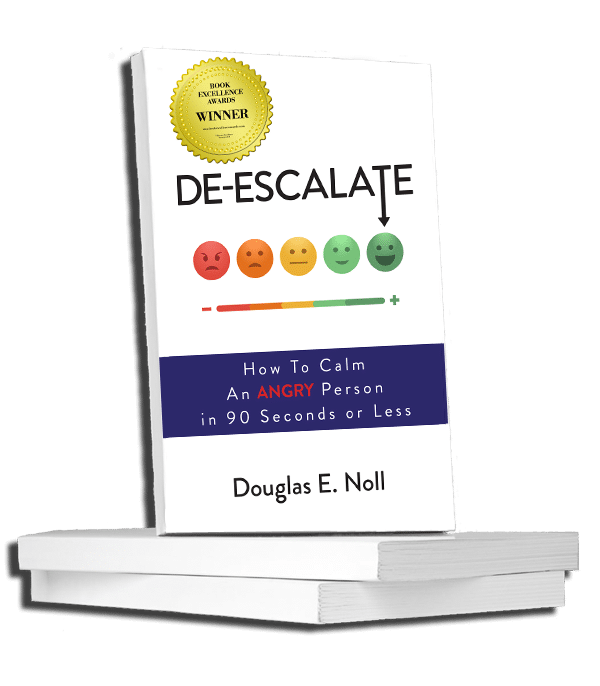
Some of the most effective methods for defusing extreme conflict emerged not from executive retreats but from maximum-security prisons. Doug Noll, with over four decades of experience as a mediator and peacemaker, developed techniques while training life-sentenced inmates to halt prison violence. These same skills now refined through real-world application translate powerfully to corporate settings.
What sets these approaches apart is their foundation in neuroscience and practical results. Noll’s method focuses on affect labeling: calmly naming the other person’s underlying emotion with simple, accurate statements. Research shows this activates the prefrontal cortex (reasoning center) while quieting the amygdala (alarm center), often restoring calm in about 90 seconds. Leaders who adopt this find they can de-escalate heated exchanges without confrontation, building trust even in charged moments.
How Rapid Emotional Regulation Works
The core technique is straightforward yet profound. Instead of debating facts or offering solutions prematurely, the leader observes and reflects the emotion:
- Ignore the surface words and tune into the feeling beneath.
- Name it neutrally: “You sound really frustrated right now,” or “It seems like you’re feeling overwhelmed and dismissed.”
- Deliver the label with genuine curiosity and no judgment.
This “90-Second Power Move” interrupts the escalation cycle. The person feels truly seen, reducing defensiveness and opening space for rational dialogue. In practice, leaders report visible shifts shoulders drop, voices soften, focus returns often within moments. The method requires no special equipment, just precise emotional awareness and a few well-chosen words.
Neuroscience Backing the Speed
Affect labeling draws from studies showing that verbalizing emotions reduces their intensity by engaging higher brain functions. Applied in high-pressure contexts, it prevents small tensions from snowballing into major disruptions, preserving time, energy, and relationships.
Overcoming Common Doubts
Skeptics often wonder if such techniques truly work in real life. Many assume conflicts are inevitable and must run their course. Others hesitate to engage deeply with emotions, fearing vulnerability or loss of control. Yet experience shows the opposite: leaders who learn these skills gain more influence, not less. The prison origins provide compelling evidence techniques that calmed violent offenders in volatile environments succeed even more readily in professional settings where people retain some self-regulation.
The confidence comes from repeatable results. Practitioners find arguments de-escalate reliably, not through force or avoidance, but through precise emotional connection. What begins as doubt often transforms into reliance on a dependable toolset.
Real-World Impact in Corporate Settings
Executives using these methods report sharper focus during crises, fewer lingering resentments after tough conversations, and teams that recover faster from setbacks. In one scenario, a CEO facing a heated investor call applied affect labeling to acknowledge frustration; the tone shifted, opening productive negotiation. Teams trained in these skills waste less time on interpersonal friction, channeling energy toward goals instead.
Beyond immediate relief, the approach strengthens long-term culture. Leaders model composure, encouraging others to adopt similar habits. Over time, organizations become more adaptable, with reduced burnout and higher engagement outcomes increasingly valued in demanding industries.
Getting Started with These Methods
Begin small. Practice affect labeling in low-stakes moments: notice a colleague’s irritation during a meeting and reflect it back calmly. Observe the response. Build familiarity through repetition, then apply in higher-pressure situations.
- Train your emotional radar to detect subtle cues of rising tension.
- Shift from problem-solving mode to emotion-reflecting mode first.
- Refine phrasing for authenticity forced labels backfire.
- Seek feedback or structured training to accelerate mastery.
Resources like specialized online programs or books on the topic offer guided practice, helping leaders integrate the skill systematically.
Looking Ahead: A Calmer, More Effective Future
As workplaces grow more complex and pressures mount, the ability to regulate emotions rapidly separates exceptional leaders from the rest. These techniques proven in the harshest conditions and adaptable to boardrooms equip executives to navigate volatility with clarity and grace. The result isn’t just surviving high-stakes moments; it’s transforming them into demonstrations of true leadership. In an era craving steady hands at the helm, mastering rapid emotional regulation may be the most strategic advantage available today.
Frequently Asked Questions
What are rapid emotional regulation techniques and why are leaders using them?
Rapid emotional regulation techniques are science-backed methods that help leaders quickly defuse emotional tension in high-pressure situations. Unlike traditional advice like “count to ten,” these approaches work with the brain’s stress response rather than trying to override it through willpower. Leaders are adopting them because they produce fast, reliable results reducing conflict, preserving trust, and keeping teams focused during critical moments.
What is affect labeling and how does it help de-escalate workplace conflict?
Affect labeling is the practice of calmly naming another person’s underlying emotion for example, saying “You sound really frustrated right now” rather than immediately jumping to facts or solutions. Neuroscience research shows this technique activates the brain’s reasoning center (prefrontal cortex) while quieting its alarm center (amygdala), often restoring calm within about 90 seconds. In workplace settings, it helps the other person feel genuinely heard, which reduces defensiveness and opens the door to productive dialogue.
Where did the 90-Second Power Move originate and is it proven to work in professional settings?
The 90-Second Power Move was developed by mediator Doug Noll through decades of work, including training life-sentenced inmates to de-escalate violence in maximum-security prisons. The fact that it succeeded in such extreme environments is strong evidence for its effectiveness if it can calm volatile situations there, it translates readily to boardrooms and team meetings. Executives who have applied the method report faster conflict resolution, fewer lingering resentments, and stronger long-term team culture.
Disclaimer: The above helpful resources content contains personal opinions and experiences. The information provided is for general knowledge and does not constitute professional advice.
You may also be interested in: How to Embrace Emotional Skills Without Fear in Leadership
Emotional conflicts fracture teams and families. The ongoing tension breeds burnout, damages relationships, and hurts performance. The Noll Method’s 90-Second Power Move™ is a proven, neuroscience-based skill for restoring calm, tested from boardrooms to maximum-security prisons. Master this life-changing technique to transform chaos into collaboration. Book a no-obligation zoom call with Doug Noll today!
Powered by flareAI.co