The sharp crack of a raised voice can slice through a room like a knife, turning a minor disagreement into a full-blown battle. We’ve all been there in the heat of an argument with a partner, words escalate, volume rises, and suddenly yelling feels inevitable. But what if stopping that cycle wasn’t about sheer willpower alone, but about harnessing how our brains actually respond under emotional pressure?
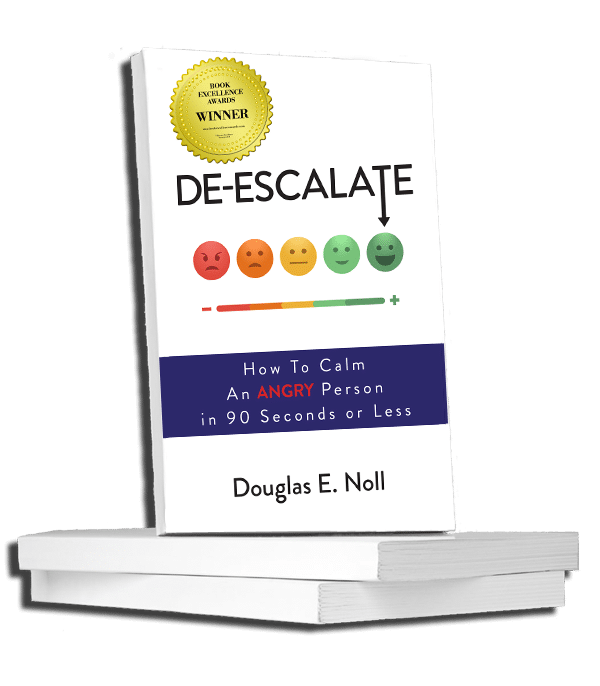
Enter Doug Noll, a former trial lawyer who, after more than two decades in the courtroom, left to become a full-time mediator and peacemaker. His work, deeply rooted in neuroscience and rigorously tested in extreme settings including maximum-security prisons offers practical tools to calm intense anger in 90 seconds or less. This approach, laid out in his widely acclaimed book De-Escalate: How to Calm an Angry Person in 90 Seconds or Less, flips the script: instead of struggling to suppress your own outbursts, focus on skillfully de-escalating the other person’s emotions.
Emotional conflicts fracture teams and families. The ongoing tension breeds burnout, damages relationships, and hurts performance. The Noll Method’s 90-Second Power Move™ is a proven, neuroscience-based skill for restoring calm, tested from boardrooms to maximum-security prisons. Master this life-changing technique to transform chaos into collaboration. Book a no-obligation zoom call with Doug Noll today!
The Hidden Toll of Yelling and the Brain Science Behind It
Yelling in close relationships seldom resolves conflicts; more often, it deepens wounds, chips away at trust, and leaves both partners feeling dismissed and isolated. When emotions spike, the brain’s amygdala the primitive threat-detection center hijacks the prefrontal cortex, the region responsible for clear thinking and measured responses. We shift from thoughtful dialogue to knee-jerk reaction, feeding a vicious cycle of defensiveness and louder escalation.
Noll’s transformation as a peacemaker began during a high-conflict mediation with a divorced couple. By redirecting attention from the surface-level arguments to the raw emotions underneath, he witnessed the atmosphere shift dramatically in mere minutes. That pivotal moment gave rise to the Noll Method™, a neuroscience-backed skill set now taught to executives, educators, healthcare professionals, and even incarcerated individuals who have become effective conflict resolvers in their own communities.
Growing recognition of emotional intelligence highlights why these skills are essential today. Neuroscience research, including studies from UCLA’s Social Neuroscience Lab, demonstrates that affect labeling simply naming observed emotions engages the right ventrolateral prefrontal cortex to dampen amygdala activity, reducing emotional intensity and fostering calmer interactions. Additional findings show this technique is particularly effective during peak emotional arousal, helping individuals regain control and engage rationally.
Real-World Power of Noll’s De-Escalation Techniques
The heart of the Noll Method is a straightforward, powerful three-step process known as affect labeling.
In intimate relationships, this might mean pausing when your partner’s voice rises. Rather than countering with your own defense, try: “You’re sounding really angry and hurt right now.” Many people describe an almost immediate shift they feel truly seen, often for the first time in heated moments, transforming potential blowups into meaningful exchanges.
Beyond personal dynamics, the method delivers results across contexts. In schools, pilot programs applying Noll’s approach have reported up to a 30% reduction in disciplinary referrals within months. Healthcare teams use it to defuse agitated patients and families, while business leaders rebuild trust amid high-stakes pressure. Its strength lies in universality: it operates on biology, not personality.
Confronting the Real Obstacles to Change
Mastering emotional control is rarely straightforward. Deep-seated triggers, ongoing stress, past traumas, or long-ingrained habits can make outbursts feel automatic and uncontrollable. Many still hold the misconception that yelling is an inevitable part of who they are, or that old-school tactics counting to ten, walking away provide sufficient relief. Yet these strategies frequently falter when adrenaline surges.
Noll’s brain-based techniques overcome many limitations of traditional approaches by aligning with how the nervous system actually functions, rather than fighting against it. The primary hurdle remains consistent practice and self-awareness; without ongoing effort or external support, old patterns often resurface. Once internalized, however, these skills foster greater confidence, preempt escalation, and create lasting change.
Why This Matters Now: A Growing Demand for Emotional Solutions
The rising emphasis on mental and relational health is unmistakable. The global Couples Counseling App market reached USD 1.2 billion in 2024 and is projected to grow at a robust CAGR of 17.8% from 2025 to 2033, fueled by widespread smartphone adoption, reduced stigma around therapy, and the lingering effects of the COVID-19 pandemic that normalized remote mental health support. In the United States, the Relationship Counselling Market stands at 13.17 billion in 2025 and is expected to reach 22.63 billion by 2033, advancing at a CAGR of 9.44% during 2026–2033, driven by heightened mental health awareness, evolving societal expectations, and demand for accessible, personalized interventions.
Broader emotional counseling services reflect similar momentum: the global Emotional Counseling Service market reached $4.72 billion in 2025, with projections showing exponential growth toward $21.21 billion by 2030 at a CAGR of 35.0%, propelled by the increasing prevalence of mental health challenges. These trends signal a cultural shift people increasingly seek tools to navigate relational stress constructively rather than destructively.
Toward Calmer, Deeper Connections
Doug Noll’s work delivers a clear, evidence-supported message: true emotional control doesn’t require perfection. By learning to listen to and name emotions first in others, then in yourself you interrupt destructive patterns and open space for genuine understanding.
The payoff extends far beyond avoiding arguments. In personal life, it cultivates empathy, diminishes lingering resentment, and deepens intimacy. At work, leaders who master de-escalation promote stronger teamwork, fewer disruptions, and more effective decisions.
In an era of heightened stress and constant tension, Noll offers refreshingly actionable guidance: start small. The next time voices rise, resist the urge to match intensity. Instead, ignore the words, identify the feeling, and name it gently. You may discover how swiftly calm returns and how powerfully that quiet opens the door to real, lasting connection.
Frequently Asked Questions
How can I stop yelling at my partner during arguments?
The most effective approach is Doug Noll’s affect labeling technique, which involves ignoring the actual words being said, identifying the underlying emotion (like hurt or frustration), and calmly reflecting it back by saying something like “You sound really frustrated right now.” This neuroscience-backed method works by calming the brain’s amygdala and can de-escalate intense anger in 90 seconds or less. Rather than trying to suppress your own outburst through willpower alone, focus on skillfully acknowledging your partner’s emotions first.
What is the 90-second rule for calming an angry person?
The 90-second rule, developed by mediator Doug Noll, is a three-step process: first, ignore the angry words and treat them as background noise; second, observe and identify the core emotion beneath the anger (often hurt, shame, or fear); and third, reflect that emotion back calmly and neutrally. This technique activates calming neural pathways in the brain and soothes the amygdala, frequently resolving tension within 90 seconds by making the person feel truly seen and validated.
Why does yelling happen in relationships and how does the brain respond?
Yelling occurs when the brain’s amygdala the primitive threat-detection center hijacks the prefrontal cortex, which is responsible for clear thinking and measured responses. During emotional spikes, we shift from thoughtful dialogue to knee-jerk reactions, creating a cycle of defensiveness and escalation. Understanding this brain science is key to breaking the pattern, as traditional methods like counting to ten often fail when adrenaline surges, whereas neuroscience-based techniques work with the nervous system rather than against it.
Disclaimer: The above helpful resources content contains personal opinions and experiences. The information provided is for general knowledge and does not constitute professional advice.
You may also be interested in: How Unique Training Helps Leaders Master Emotional Challenges
Emotional conflicts fracture teams and families. The ongoing tension breeds burnout, damages relationships, and hurts performance. The Noll Method’s 90-Second Power Move™ is a proven, neuroscience-based skill for restoring calm, tested from boardrooms to maximum-security prisons. Master this life-changing technique to transform chaos into collaboration. Book a no-obligation zoom call with Doug Noll today!
Powered by flareAI.co