Imagine stepping into a discussion that starts innocently enough a difference of opinion at a family dinner or a heated debate in a team meeting. Before you know it, tones sharpen, words fly like arrows, and what could have been productive turns into a full-blown confrontation. We’ve all been there, wondering how things escalated so quickly. The key to avoiding this trap lies in understanding the subtle dynamics of emotion and communication. As explored in this in-depth look at how to prevent conversations from turning combative, the secret isn’t in suppressing feelings but in acknowledging them strategically. With roots in neuroscience and proven in high-pressure environments, these techniques offer a reliable path to calmer, more effective dialogues.
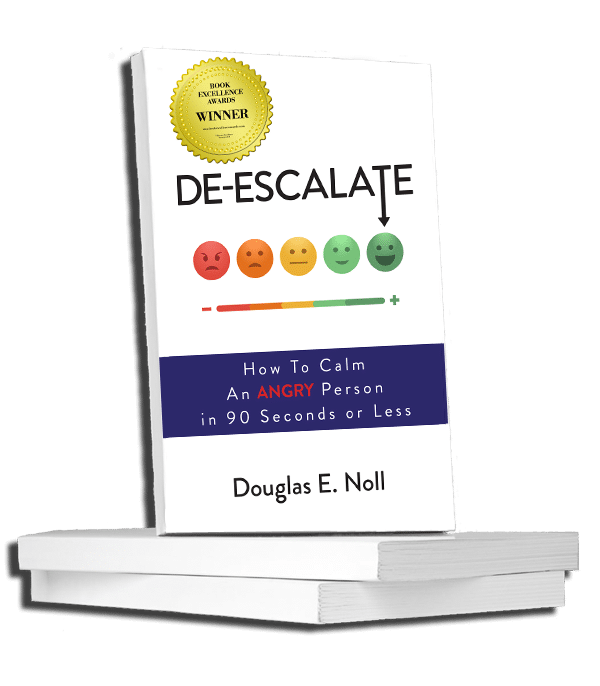
Emotional conflicts fracture teams and families. The ongoing tension breeds burnout, damages relationships, and hurts performance. The Noll Method’s 90-Second Power Move™ is a proven, neuroscience-based skill for restoring calm, tested from boardrooms to maximum-security prisons. Master this life-changing technique to transform chaos into collaboration. Book a no-obligation zoom call with Doug Noll today!
The Pitfalls of Common De-Escalation Attempts
It’s a natural reflex: when someone gets worked up, we often blurt out “calm down” in hopes of restoring peace. Yet, this phrase rarely achieves its intended effect. In fact, it frequently backfires, intensifying the very emotions it’s meant to soothe. The reason traces back to the brain’s threat detection system. During emotional arousal, the amygdala activates a survival response, interpreting commands like “calm down” as invalidation or even an additional threat. This leads to what experts describe as an emotional hijack, where logic takes a backseat to instinctual defenses.
Professionals in fields like crisis negotiation have long observed this pattern. Instead of issuing orders, they prioritize empathy and recognition. By shifting away from dismissive language, we can interrupt the cycle of escalation and foster a space where rational discussion can resume. This approach isn’t just theoretical; it’s grounded in decades of practical application across diverse settings, from correctional facilities to corporate boardrooms.
Understanding the Amygdala’s Role
The amygdala, a small almond-shaped structure in the brain, acts as our emotional sentinel. When it perceives danger real or emotional it triggers a cascade of hormones that prepare us for fight or flight. In conversations, this can manifest as raised voices or stubborn entrenchment. Commands to relax only heighten this alert state, as they imply the person’s reaction is unwarranted. Recognizing this biological underpinning empowers us to respond more effectively, turning potential conflicts into opportunities for connection.
Introducing Affect Labeling as a Core Tool
At the heart of de-escalation lies affect labeling, a technique that involves verbally identifying the emotion at play. Phrases like “You seem frustrated by this” or “It looks like this is making you anxious” serve as a mirror, reflecting the other’s internal state without judgment. This simple act has profound neurological benefits. Research using functional MRI scans reveals that naming an emotion diminishes amygdala firing while boosting activity in the prefrontal cortex, the region responsible for executive functions like decision-making and self-control.
The process can yield noticeable calming effects in under two minutes, making it a practical tool for everyday interactions. Unlike vague reassurances, affect labeling validates the experience, signaling safety and reducing the perceived threat. This validation paves the way for collaborative problem-solving, transforming adversarial exchanges into constructive ones.
A Step-by-Step Guide to Emotional Validation
To apply these principles effectively, follow a structured sequence honed by experts in conflict resolution:
- Identify and label the emotion. Observe cues like tone or body language and name the feeling accurately.
- Create a pause. Give the acknowledgment time to sink in; a brief silence allows the brain to recalibrate.
- Shift to solutions. Once calm returns, invite input with open questions like “What’s one step we can take here?”
This method respects the natural flow of emotions rather than opposing it. In environments where tensions run high, such as prisons or emergency rooms, practitioners report significant reductions in violent outbreaks. Similarly, in professional settings, it helps maintain productivity by keeping discussions focused and respectful.
Fostering Psychological Safety in Teams
Leaders who embrace emotional validation cultivate environments of psychological safety, where team members feel secure in expressing ideas without fear of ridicule. Studies, including Google’s Project Aristotle, highlight this as a cornerstone of top-performing groups. When emotions are acknowledged, trust builds, leading to enhanced collaboration and innovation.
Investing in these competencies pays dividends in engagement and retention. Businesses increasingly recognize the value, as evidenced by the rising interest in related training programs. A business intelligence report notes that the emotional intelligence training market is set to expand at a CAGR of 24.6% from 2024 to 2031, driven by competitive landscapes that demand stronger interpersonal skills. Rather than overwhelming with figures, consider the real impact: teams that communicate effectively resolve issues faster and adapt more readily to challenges.
Real-World Examples from Diverse Sectors
In healthcare, where stress is constant, validating patient or colleague emotions can prevent misunderstandings and improve outcomes. Educators use it to manage classroom dynamics, turning disruptions into teachable moments. Even in sales or customer service, acknowledging frustration can de-escalate complaints and build loyalty. These applications underscore the versatility of validation, making it indispensable for anyone in leadership or interpersonal roles.
Confronting Common Objections to De-Escalation Techniques
Skeptics often argue that conflicts are inevitable and unchangeable parts of human interaction. While disagreements may arise, their escalation isn’t predestined. By intervening early with validation, we can steer them toward resolution rather than rupture. Another concern is the fear of engaging deeply with emotions, worrying it might overwhelm or complicate matters. In truth, labeling regulates rather than amplifies feelings, providing a controlled way to navigate them.
Doubts about efficacy persist, but the track record speaks volumes. With over four decades of experience, including training incarcerated individuals to halt violence in prisons, these methods come with a bold assurance: they enable anyone to defuse arguments reliably. This isn’t commonplace advice; it’s a unique, battle-tested framework that stands apart in its proven results.
Embracing Validation for Lasting Change
Ultimately, mastering these skills reshapes how we connect, emphasizing empathy over dominance. In a society prone to division, the capacity to validate opens doors to understanding and harmony. Start small: next time friction arises, label the emotion and observe the shift. The transformation from combat to collaboration might surprise you. As we integrate these practices, conversations become bridges rather than barriers, enriching both personal and professional lives.
This approach, refined through years of rigorous application, promises not just temporary fixes but enduring relational strength. In embracing it, we unlock the quiet revolution of truly hearing one another.
Frequently Asked Questions
Why does saying “calm down” make arguments worse?
Telling someone to “calm down” often backfires because it triggers the brain’s amygdala the emotional threat-detection center which interprets the command as invalidation or an additional threat. This can cause an “emotional hijack,” where instinctual defenses override rational thinking. Instead of issuing commands, acknowledging the other person’s feelings is a far more effective way to de-escalate tension.
What is affect labeling, and how does it help prevent combative conversations?
Affect labeling is a de-escalation technique where you verbally name the emotion someone appears to be experiencing for example, “You seem frustrated by this.” Neuroscience research using fMRI scans shows that naming an emotion actually reduces amygdala activity and increases engagement in the prefrontal cortex, the part of the brain responsible for rational decision-making. This simple technique can produce noticeable calming effects in under two minutes, making it a practical tool for everyday conflicts.
How can emotional validation improve communication in the workplace?
Emotional validation helps create psychological safety an environment where team members feel comfortable expressing ideas without fear of judgment or ridicule. Research such as Google’s Project Aristotle identifies this as a key trait of high-performing teams. Leaders who consistently validate emotions build greater trust, which translates into improved collaboration, faster conflict resolution, and stronger employee retention.
Disclaimer: The above helpful resources content contains personal opinions and experiences. The information provided is for general knowledge and does not constitute professional advice.
You may also be interested in: Angry Sports Parents-5 Surprisingly Simple Techniques Coaches
Emotional conflicts fracture teams and families. The ongoing tension breeds burnout, damages relationships, and hurts performance. The Noll Method’s 90-Second Power Move™ is a proven, neuroscience-based skill for restoring calm, tested from boardrooms to maximum-security prisons. Master this life-changing technique to transform chaos into collaboration. Book a no-obligation zoom call with Doug Noll today!
Powered by flareAI.co