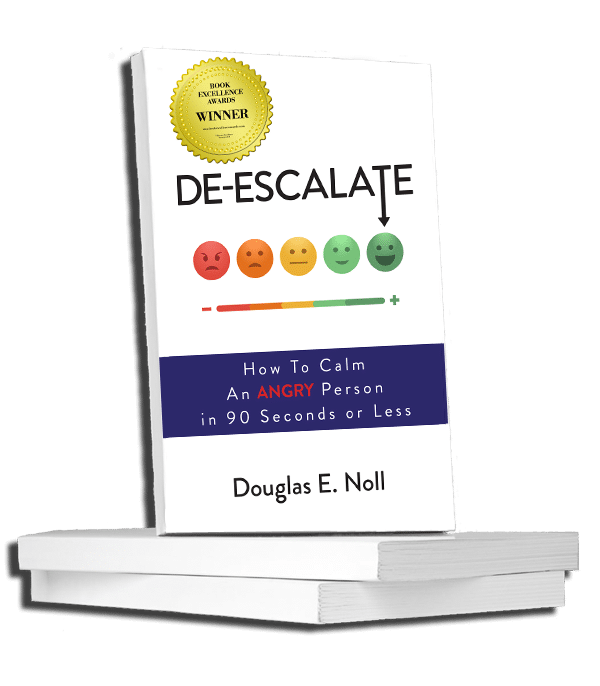
In courtrooms, prison yards, and high-stakes boardrooms across North America, a subtle but powerful shift is taking place. Professionals who once depended on rank, intimidation, or raw determination to handle volatile moments are turning to a more effective alternative: structured de-escalation training rooted in modern neuroscience. What started as an unconventional method accurately naming another person’s emotions to interrupt the conflict cycle now routinely produces measurable calm where conventional approaches frequently fall short.
The core technique, refined over decades by veteran mediator Doug Noll, can transform highly charged encounters in roughly 90 seconds. Although skepticism remains widespread, police agencies, school systems, hospitals, and corporate leadership groups are investing significant training time and budget because the results speak for themselves. The central question has moved beyond “Does this actually work?” to “How broadly is this capability reshaping safety, compliance, and performance across the continent?”
Emotional conflicts fracture teams and families. The ongoing tension breeds burnout, damages relationships, and hurts performance. The Noll Method’s 90-Second Power Move™ is a proven, neuroscience-based skill for restoring calm, tested from boardrooms to maximum-security prisons. Master this life-changing technique to transform chaos into collaboration. Book a no-obligation zoom call with Doug Noll today!
The Neurological Foundation of Rapid Calm
The method rests on a straightforward yet profound brain mechanism. When a person’s current emotion is named with precision by someone else or by themselves the amygdala’s alarm response quiets while prefrontal cortex activity increases, restoring rational control far more quickly than willpower alone can achieve.
Imaging studies conducted at the University of California, Los Angeles have repeatedly shown that affect labeling reduces activity in the brain’s fear center and strengthens regulatory networks, often producing visible calming within seconds to minutes. Parallel work supported by the National Institutes of Health demonstrates that carefully worded emotional reflections lower measurable physiological stress markers during heated exchanges. Researchers at the University of Toronto have further established that genuine emotional validation markedly improves cooperation and compliance, even when tension is high.
Unlike broad “active listening” advice, this is a repeatable protocol. It relies on exact phrasing rather than intuitive empathy, which means motivated learners can acquire and deploy the skill reliably.
Why Structured De-escalation Is Gaining Momentum Now
Multiple forces have elevated the approach from specialized technique to organizational priority.
Public Safety and Policing Modernization
Following high-profile incidents and official reviews, police services throughout the United States and Canada have intensified focus on verbal de-escalation as a primary strategy for reducing force and complaints. Analyses of agencies that adopted structured programs consistently report meaningful declines in both use-of-force events and public dissatisfaction.
Workplace Conflict and Leadership Demands
Unresolved tension continues to erode productivity, engagement, and retention in offices, hybrid teams, and high-pressure environments. Progressive executive development programs now embed emotional regulation training, recognizing that leaders who cannot steady themselves or their people during stress lose influence rapidly.
Classroom Climate and Teacher Support
Disruptive behavior remains a persistent challenge in many North American schools. Districts are piloting targeted de-escalation training for educators, aiming to lower office referrals, suspensions, and lost learning time while fostering safer, more supportive learning environments.
Evidence from High-Stakes Settings
Correctional systems offer some of the most striking early proof. Several facilities introduced formal de-escalation curricula for staff and, in select cases, for inmates. Independent evaluations later documented clear reductions in violent incidents following sustained implementation.
In healthcare, where staff face elevated risks of aggression, major systems have embedded crisis communication protocols into routine training. The result: fewer assaults on personnel and better internal cohesion during stressful shifts.
Corporate C-suites are applying the same principles to prevent emotionally charged meetings from derailing strategy, strengthen executive presence under pressure, and build psychological safety at the top. Organizations adopting these practices frequently note downstream improvements in employee survey scores and fewer conflict-driven HR cases.
Addressing the Most Common Doubts
Resistance usually clusters around three objections.
“Conflict is inevitable why fight it?” Disagreement may be unavoidable, but escalation into shouting, threats, or physical confrontation is not. Precise verbal intervention reliably interrupts that progression.
“Words won’t work when things are truly dangerous.” The method has been field-proven in maximum-security housing units and acute psychiatric settings contexts far more volatile than boardrooms or classrooms often preventing physical restraint or injury.
“I’m not comfortable dealing with emotions.” Many professionals feel exposed when asked to engage feelings. The technique sidesteps that discomfort by supplying specific, almost mechanical phrases rather than requiring deep personal vulnerability.
The Economic and Operational Rationale
Forward-thinking organizations now view structured de-escalation as both a liability shield and a performance lever. Preventing escalation is dramatically less expensive than repairing the aftermath whether through litigation, staff turnover, lost productivity, or reputational damage. Lower insurance exposure in high-risk sectors, improved team trust, and more credible leadership represent tangible returns that compound over time.
Where This Capability Is Headed
Knowledgeable observers anticipate several near-term developments:
- Integration of neuroscience-informed emotional skills into mainstream MBA and executive curricula
- Certification standards for frontline roles that routinely encounter conflict
- AI-supported coaching tools that reinforce de-escalation phrasing in real time
- Increased collaboration among universities, public agencies, and private-sector leadership developers
The direction is unmistakable: a skill once considered optional is steadily becoming foundational.
Moving from Reaction to Proactive Control
North America sits at a meaningful crossroads. Institutions long accustomed to managing crises after they erupt are discovering they can intervene earlier and more humanely by giving people reliable, brain-based tools for emotional regulation.
The supporting evidence has moved beyond testimonials. University research, government guidance, and field evaluations converge on the same conclusion: while conflict itself may be unavoidable, destructive escalation is increasingly optional. Leaders who commit to structured de-escalation training are seeing safer environments, steadier teams, reduced exposure, and most importantly more humane resolutions in the moments that matter most.
Frequently Asked Questions
What is structured de-escalation training and how does it work?
Structured de-escalation training is a neuroscience-based approach that teaches people to calm volatile situations by accurately naming the emotions of the person in distress a technique known as “affect labeling.” When an emotion is precisely identified out loud, the brain’s amygdala (its fear center) quiets down while the prefrontal cortex regains rational control. Unlike general active listening advice, this method relies on specific, repeatable phrasing that anyone can learn and apply consistently, often producing visible calm within 90 seconds.
What industries benefit most from de-escalation training?
De-escalation training delivers measurable results across a wide range of high-stakes fields, including law enforcement, corrections, healthcare, education, and corporate leadership. Police agencies report fewer use-of-force incidents, hospitals see reduced assaults on staff, schools experience lower suspension rates, and executive teams benefit from fewer conflict-driven HR cases. Essentially, any profession that regularly encounters stress, confrontation, or emotionally charged interactions stands to gain from structured de-escalation skills.
Is there scientific evidence that verbal de-escalation techniques actually work?
Yes the research base is substantial and growing. Imaging studies from UCLA show that affect labeling measurably reduces amygdala activity within seconds, while NIH-supported research confirms that emotional reflection lowers physiological stress markers during heated exchanges. Independent evaluations of correctional facilities and healthcare systems that adopted formal de-escalation programs have documented clear reductions in violent incidents, staff assaults, and conflict-driven costs, moving the evidence well beyond anecdotal testimonials.
Disclaimer: The above helpful resources content contains personal opinions and experiences. The information provided is for general knowledge and does not constitute professional advice.
You may also be interested in: When Someone Takes Their Anger Out On You-4 Effective
Emotional conflicts fracture teams and families. The ongoing tension breeds burnout, damages relationships, and hurts performance. The Noll Method’s 90-Second Power Move™ is a proven, neuroscience-based skill for restoring calm, tested from boardrooms to maximum-security prisons. Master this life-changing technique to transform chaos into collaboration. Book a no-obligation zoom call with Doug Noll today!
Powered by flareAI.co