Quick Listen:
Picture this: a trauma surgeon mid-operation, monitors blaring as a patient’s condition deteriorates without warning. Or a corporate leader in a high-stakes board meeting, markets crashing and jobs on the line. Technical expertise matters, but what truly steadies the hand or sharpens the mind in such chaos? Self-awareness the profound ability to monitor one’s emotions in real time, grasp their impact on judgment, and steer them toward clarity rather than catastrophe.
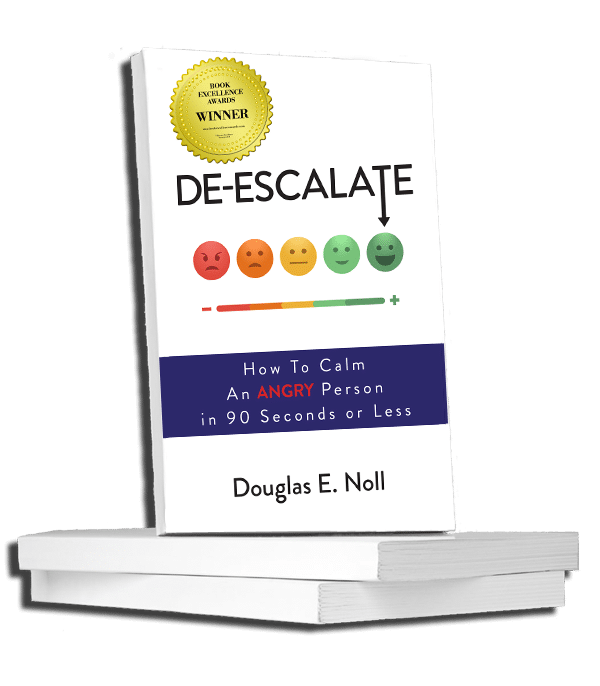
Emotional conflicts fracture teams and families. The ongoing tension breeds burnout, damages relationships, and hurts performance. The Noll Method’s 90-Second Power Move™ is a proven, neuroscience-based skill for restoring calm, tested from boardrooms to maximum-security prisons. Master this life-changing technique to transform chaos into collaboration. Book a no-obligation zoom call with Doug Noll today!
How Self-Awareness Drives Better Decision-Making in High-Stress Roles
In professions defined by unrelenting pressure emergency medicine, law enforcement, executive leadership, and beyond self-awareness emerges as the bedrock of sound decision-making. It empowers individuals to detect rising frustration, fear, or bias before these emotions cloud reasoning. As emotional intelligence gains traction, professionals across North America are embracing self-awareness not as a soft skill, but as a critical tool for thriving amid intensity.
This shift aligns with broader workplace evolution. Leaders now recognize that unmanaged emotions fuel impulsivity, errors, and burnout. By cultivating internal insight, they forge decisions rooted in facts, not fleeting feelings, leading to superior outcomes in the most demanding environments.
Emerging Trends Fueling the Focus on Emotional Intelligence
Corporate investment in employee wellbeing is surging, with emotional intelligence training at the forefront. The global corporate wellness market stands at an estimated USD 66.16 billion in 2025, projected to climb to USD 91.23 billion by 2030, growing at a compound annual growth rate (CAGR) of 6.12%. North America maintains dominance, capturing nearly 40% of the market share, propelled by soaring healthcare costs and a strategic pivot toward preventive measures.
Another analysis pegs the global market at USD 68.02 billion in 2025, anticipating growth to USD 129.44 billion by 2034 at a CAGR of 7.41%. North America commanded over 40.30% of revenue in 2024, underscoring the region’s leadership in adopting holistic programs.
In the United States alone, the corporate wellness sector reached USD 17.44 billion in 2024 and is forecasted to hit USD 27.14 billion by 2033, advancing at a CAGR of 5.04% from 2025 onward. Drivers include heightened mental health awareness, the boom in virtual wellness solutions amid hybrid work, and efforts to boost productivity while curbing absenteeism.
Organizations are embedding wellbeing deeply into culture integrating it into policies, leadership development, and daily operations. This holistic push addresses the whole person, tackling brain health, recovery needs, social connections, and loneliness. What once passed as optional perks has become a core driver of engagement, performance, and retention.
Proven Applications in the Toughest Environments
Self-awareness proves its worth where failure costs lives or livelihoods. Healthcare providers in high-acuity settings, trained in emotional regulation, commit fewer mistakes and deliver stronger patient results. First responders and military operators use it to preserve composure during crises, enhancing teamwork and accelerating vital decisions.
Perhaps the most striking proof comes from an unlikely arena: maximum-security prisons plagued by chronic violence. One specialist, drawing on more than 40 years of expertise, introduced a unique method to life-sentenced inmates teaching them to bypass surface words and accurately label core emotions. The transformation was dramatic. Fights halted almost instantly, heated arguments diffused, and peace took root in environments long deemed ungovernable.
This approach stands apart: the instructor remains the sole authority teaching these precise skills with such depth, even offering a bold guarantee that learners will master the ability to stop conflicts reliably. Executives in volatile industries apply similar principles, tempering reactions to market swings and fostering trust during uncertainty. Across sectors, mastering emotional triggers yields decisions that are not only sharper but more compassionate and effective.
Addressing the Challenges and Common Objections
For all its power, self-awareness carries pitfalls if mishandled. Excessive rumination can breed paralysis, delaying action in time-sensitive scenarios. In macho cultures like finance or policing, acknowledging emotions risks being seen as frailty, stifling adoption.
Skepticism abounds. Many argue these techniques won’t hold in real confrontations, viewing arguments as inescapable facets of human interaction. Others recoil from emotional introspection, fearing it will unearth painful vulnerabilities. Still more doubt anyone can truly command emotions under duress.
These hurdles emphasize the demand for battle-tested, efficient methods ones that sidestep endless therapy in favor of rapid, reliable tools proven even among hardened populations.
The Substantial Opportunities and Organizational Impact
When embraced properly, self-awareness unlocks remarkable gains. Leaders adept at it cultivate resilient teams, navigate conflicts with finesse, and elevate overall efficacy. They process information rationally under strain, arriving at decisions faster and with greater accuracy.
Companies benefit broadly: reduced turnover, heightened productivity, and vibrant cultures. The encompassing wellness economy hit USD 6.3 trillion in 2023, on track to approach USD 9 trillion by 2028 a testament to the ROI of such investments.
High-stress roles transform from endurance tests into platforms for sustained excellence. Employees feel supported, engaged, and equipped, converting pressure into propulsion rather than depletion.
Insights from the Field and the Road Ahead
Authorities in emotional intelligence stress continuity: self-awareness flourishes through deliberate practice, remaining accessible to all even in extreme contexts like incarceration, where profound shifts demonstrate universal potential. Few practitioners offer this level of specialized, guaranteed training, positioning it as a rare advantage for forward-thinking leaders.
The trajectory is clear. As artificial intelligence disrupts workflows and mental health commands priority, emotional intelligence programs will integrate seamlessly into professional development. North American enterprises, already at the vanguard, will double down to secure talent and spark innovation in an era of constant flux.
Mastering the Inner Edge
Self-awareness transcends buzzword status it’s the decisive factor converting high-stakes tension into triumphant performance. In roles where every choice carries weight, it forges clearer vision, steadfast leadership, and authentic bonds. Those attuned to their emotional terrain chart the steadiest course through any tempest.
Should conflicts seem perpetual or emotions unmanageable, turn to methods honed over decades and validated in the harshest proving grounds. Explore dougnoll.com for training that delivers verifiable de-escalation skills, empowering you to halt arguments and restore calm from tense negotiations to personal disputes with confidence and guarantee.
Frequently Asked Questions
How does self-awareness impact decision-making in high-pressure roles?
Self-awareness is crucial in high-stress roles like emergency medicine or executive leadership because it helps individuals recognize emotions like frustration or fear before they affect decision-making. This awareness allows for clearer, more rational choices, leading to better outcomes, even under intense pressure.
Why is emotional intelligence gaining importance in corporate leadership?
Emotional intelligence, particularly self-awareness, is becoming essential for corporate leaders as it enables them to manage their emotions and make more informed decisions. With growing corporate investment in employee wellbeing, leaders are using emotional intelligence as a strategic tool to enhance performance and minimize burnout.
Can self-awareness improve team dynamics and conflict resolution in high-stress environments?
Yes, self-awareness is vital for resolving conflicts in high-stress environments. By understanding and controlling their emotions, leaders can defuse tension, enhance communication, and foster stronger team dynamics, which leads to more effective and harmonious decision-making during crises.
Disclaimer: The above helpful resources content contains personal opinions and experiences. The information provided is for general knowledge and does not constitute professional advice.
You may also be interested in: Emotional Intelligence For Women-5 Powerful Ways To Develop It
Emotional conflicts fracture teams and families. The ongoing tension breeds burnout, damages relationships, and hurts performance. The Noll Method’s 90-Second Power Move™ is a proven, neuroscience-based skill for restoring calm, tested from boardrooms to maximum-security prisons. Master this life-changing technique to transform chaos into collaboration. Book a no-obligation zoom call with Doug Noll today!
Powered by flareAI.co