It begins innocently enough: a slightly raised tone, a pointed question, or a single phrase that hits a nerve. Within seconds your pulse quickens, your thinking narrows, and the measured reply you intended evaporates. A routine conversation has suddenly morphed into something that feels dangerously personal. Why does conflict so consistently pull us into reactions we later wish we could take back?
The explanation is rooted not in lack of character, but in the brain’s ancient survival circuitry. Fear swift, automatic, and frequently unnoticed exerts far greater influence over our responses during disagreement than most people recognize. Learning to see this mechanism at work does not erase the intensity of heated moments, but it equips us to move through them with greater intention and considerably less collateral damage.
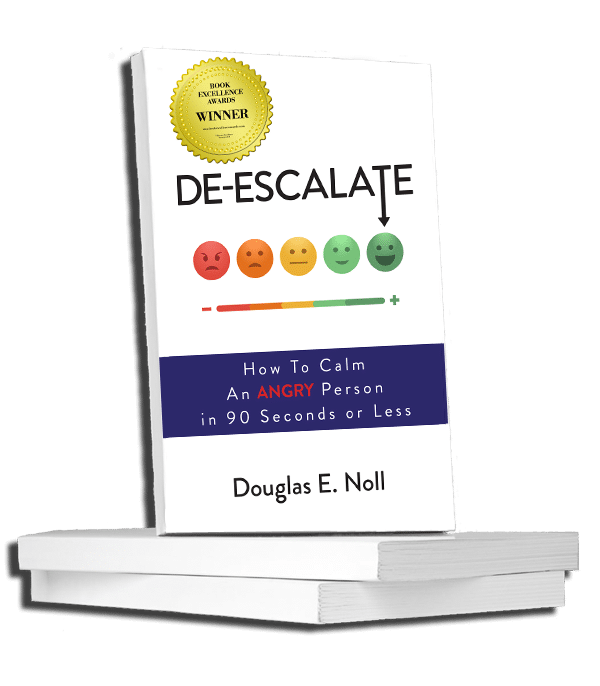
Emotional conflicts fracture teams and families. The ongoing tension breeds burnout, damages relationships, and hurts performance. The Noll Method’s 90-Second Power Move™ is a proven, neuroscience-based skill for restoring calm, tested from boardrooms to maximum-security prisons. Master this life-changing technique to transform chaos into collaboration. Book a no-obligation zoom call with Doug Noll today!
The Brain’s Rapid-Response Threat Detector
As soon as emotional tension climbs, the brain stops waiting for permission to act. It behaves as though physical safety hangs in the balance. At the center of this response sits the amygdala, a compact, almond-shaped cluster of neurons that functions as an early-warning system. It evaluates potential danger many milliseconds before the conscious mind can catch up.
This design served our ancestors well. A shadow moving in tall grass or an unfamiliar sound at night demanded instant reaction; pausing for analysis could prove fatal. In the present day the perceived “danger” is more likely to be a partner’s frustration, a manager’s critique, or a parent’s disapproval. The amygdala, however, registers emotional threat with the same urgency it once applied to predators. It does not pause to calibrate context.
When the alarm sounds, stress hormones principally adrenaline and cortisol surge through the bloodstream, mobilizing the body for action: fight, flee, or freeze. Simultaneously the prefrontal cortex the seat of reasoning, self-regulation, perspective, and long-term planning experiences a temporary reduction in influence. Clear thinking does not vanish, but it becomes muffled beneath a wave of immediate emotion. The outcome is behavior that feels automatic in the moment and frequently regrettable afterward.
How Amygdala Hijack Manifests in Everyday Exchanges
Daniel Goleman popularized the phrase “amygdala hijack” to capture this abrupt emotional commandeering of behavior. Most adults can recall vivid examples: the instant a calm discussion turns sharp, the sarcastic retort that slips out before thought intervenes, or the sudden urge to withdraw entirely and leave the room mid-sentence.
The effect intensifies in intimate relationships precisely because the emotional stakes are highest there. The individuals closest to us also possess the greatest capacity to wound. An offhand remark about household habits or communication style can register beneath conscious awareness as an assault on identity, competence, or belonging. The amygdala interprets the signal accordingly, and the takeover is underway.
Telltale markers frequently include:
- Instant defensiveness followed by counter-criticism
- A rush of thoughts so rapid that genuine listening becomes nearly impossible
- Noticeable bodily changes: shallow breathing, tight shoulders, clenched hands
- Later confusion about the original point of contention
Simply noticing these signals as they arise represents one of the most reliable paths toward regaining agency.
Why Remaining Composed Feels Counter-Intuitive
The nervous system evolved to value speed over nuance whenever threat appears imminent. In evolutionary terms, reacting first and evaluating later often meant living to see another day. Contemporary disagreements almost never carry genuine life-or-death risk; they revolve instead around unmet needs, bruised feelings, or clashing priorities. Yet the brain continues to respond with the same high-alert protocol it once reserved for mortal peril.
Bridging that gap requires deliberate, repeated practice. Each occasion on which you choose to pause rather than fire back, or to breathe through rising irritation instead of acting on it, reinforces neural connections between emotion and executive control. Over months and years the prefrontal cortex gradually reclaims more real estate during charged exchanges.
Evidence-Based Strategies to Regain Balance
Perfect composure in every conflict remains an unrealistic standard, yet modest, repeatable interventions can meaningfully alter outcomes. The following approaches draw from decades of neuroscience and clinical observation:
Name the Rising Emotion (Silently)
Affect labeling “I’m feeling defensive right now” or “This is irritation building” recruits the prefrontal cortex and dampens amygdala activation. Studies consistently demonstrate that the act of naming reduces emotional intensity within seconds.
Insert a Purposeful Pause
Even ten to thirty seconds of silence, or a simple “Give me a moment,” allows the autonomic nervous system to downshift. Direct attention toward slow breathing during that interval rather than mentally rehearsing arguments.
Engage Physiological Regulation
Extended exhalation is among the fastest ways to signal safety to the body. One effective pattern is a four-second inhale, four-second hold, and six-second exhale. This stimulates the parasympathetic branch, counteracting the sympathetic arousal driving fight-or-flight.
Adopt a Curious Stance Toward the Other Person
Internally shift focus with questions such as “What might they be protecting right now?” or “What underlying need could be driving this reaction?” Genuine curiosity about the other party’s experience often softens personal reactivity and opens space for clearer dialogue.
These tools gain potency through consistent use in routine interactions, so the reflexes are already available when conversations turn difficult.
Addressing Widespread Misunderstandings
A frequent misconception holds that calm communication requires bottling up genuine feeling or feigning agreement. On the contrary, constructive conflict depends on authentic expression including anger, sadness, and fear provided the delivery does not inflame the situation further.
Another common belief is that steady composure marks an innate gift. While temperament contributes, sustained self-regulation is overwhelmingly a cultivated capacity. Individuals who appear unruffled in tense settings have typically logged thousands of small, private moments of practice.
Perhaps the most persistent myth is that dialing down emotional volume equals conceding the argument. Experience shows the reverse: when physiological arousal recedes, arguments become more coherent, persuasive, and less likely to spiral.
Cultivating Lasting Change
Neuroplasticity persists across the lifespan. Every measured response etched in place of an impulsive one reshapes the brain’s default pathways for handling disagreement. Progress accumulates quietly through small, repeated choices rather than dramatic overnight transformation.
Begin modestly: track recurring triggers during ordinary exchanges, select one technique to experiment with, and quietly acknowledge each instance of increased self-mastery. Over time these incremental shifts compound into relationships marked by greater trust, mutual understanding, and emotional safety.
Disagreement will always exist. Yet the degree to which unexamined fear dictates our responses need not remain fixed. Through sustained awareness and intentional practice, we can begin to meet conflict not as existential danger, but as an invitation to deeper connection, clearer communication, and genuine growth.
In an era when polarization often feels inescapable, choosing regulation over reactivity may be among the most quietly powerful forms of resistance available.
Frequently Asked Questions
Why do I say things I regret during arguments?
During conflict, the brain’s amygdala its threat-detection center triggers a stress response that floods the body with adrenaline and cortisol before your conscious mind can intervene. This temporarily reduces the influence of the prefrontal cortex, the region responsible for reasoning and self-regulation. The result is reactive, impulsive behavior that often feels automatic in the moment but regrettable afterward.
What is amygdala hijack and how does it affect relationships?
Amygdala hijack a term popularized by psychologist Daniel Goleman describes the moment emotional arousal overrides rational thought during conflict. In close relationships, where emotional stakes are highest, even a minor comment can register as a threat to identity or belonging, triggering instant defensiveness, shallow breathing, or the urge to shut down. Recognizing physical and emotional warning signs as they arise is one of the most effective ways to reclaim control before the hijack takes hold.
What are the best science-backed techniques to stay calm during conflict?
Research in neuroscience and clinical psychology points to several reliable strategies: silently naming the emotion you’re feeling (affect labeling) has been shown to reduce amygdala activation within seconds; inserting a brief pause of even 10–30 seconds allows the nervous system to de-escalate; and extended exhalation such as a 4-4-6 breath pattern activates the parasympathetic nervous system to counteract the fight-or-flight response. Used consistently in everyday interactions, these techniques become accessible reflexes when conversations turn difficult.
Disclaimer: The above helpful resources content contains personal opinions and experiences. The information provided is for general knowledge and does not constitute professional advice.
You may also be interested in: 5 Powerful Signs Your Emotional Intelligence is Failing in Family
Emotional conflicts fracture teams and families. The ongoing tension breeds burnout, damages relationships, and hurts performance. The Noll Method’s 90-Second Power Move™ is a proven, neuroscience-based skill for restoring calm, tested from boardrooms to maximum-security prisons. Master this life-changing technique to transform chaos into collaboration. Book a no-obligation zoom call with Doug Noll today!
Powered by flareAI.co