Quick Listen:
In a high-stakes boardroom in Chicago, executives lock horns over a stalled merger, voices rising, tension palpable. Across the continent in Toronto, a family gathers for a strained holiday dinner, sidestepping old wounds with forced smiles. These moments, though worlds apart, share a hidden spark: raw human emotion fueling conflict. What if the tools that heal family rifts could also tame corporate chaos? Across North America, mediators are stepping into C-suites, wielding emotional intelligence to reshape leadership and proving that the boardroom can learn as much from the living room as from any business school.
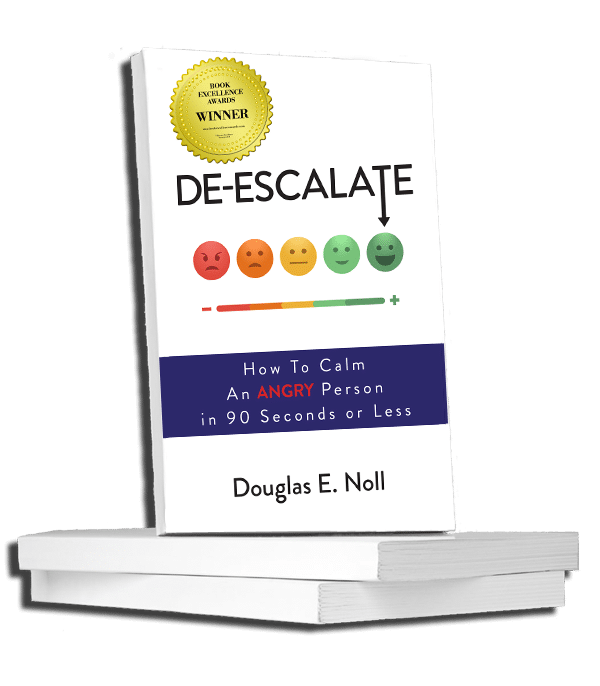
Emotional conflicts fracture teams and families. The ongoing tension breeds burnout, damages relationships, and hurts performance. The Noll Method’s 90-Second Power Move™ is a proven, neuroscience-based skill for restoring calm, tested from boardrooms to maximum-security prisons. Master this life-changing technique to transform chaos into collaboration. Book a no-obligation zoom call with Doug Noll today!
Emotions: The Invisible Force in Conflict
Conflict isn’t just a clash of ideas; it’s a tangle of emotions. Research from the University of Toronto and Stanford University reveals striking parallels between family dynamics and workplace hierarchies. Employees often mirror family roles vying for influence like siblings or avoiding confrontation like a reserved parent. A CEO’s sidestepping of tough talks can erode trust, much like a parent’s silence during a family feud. These patterns, rooted in emotional undercurrents, drive dysfunction in both settings.
A 2024 study by DDI, a global leadership firm, found that 49% of manager candidates lack effective conflict management skills, with only 12% showing strong proficiency. In North America, where remote and hybrid work amplify tensions, the American Management Association notes a sharp rise in workplace disputes. Mediators like Doug Noll, with over four decades of experience, argue that mastering emotions is the key to breaking these cycles, offering a lifeline to leaders navigating turbulent teams.
Mediators Redefining Corporate Leadership
From Florida’s AdventHealth to Michigan’s Veterinary United, North American companies are embracing mediation-based coaching to tackle workplace friction. This shift aligns with a broader trend: LinkedIn Learning reported a 30% surge in emotional intelligence (EI) course completions across the U.S. and Canada in 2024. Mediators, once confined to family disputes, are now partnering with HR to foster psychological safety and boost retention, transforming how teams function.
Doug Noll, featured on his website, brings unmatched expertise. With 40 years of mediation experience including teaching life inmates to curb prison violence he guarantees results in corporate settings. His toolkit includes affective labeling, naming emotions to defuse tension; active listening, fostering trust through reflection; and non-attachment to outcomes, prioritizing relationships over winning. These skills, tested in high-stakes environments, are now empowering executives at firms like Ohio Hills and AlchemyHC to navigate conflicts with clarity and calm.
The demand for such expertise is growing. The family business advisory market, valued at USD 9.6 billion in 2025, is projected to reach USD 16.2 billion by 2035, growing at a 5.4% CAGR. This expansion reflects a rising need for governance and conflict resolution expertise, particularly among small and medium enterprises navigating generational transitions.
Breaking Through Resistance to Emotional Intelligence
Despite the evidence, many leaders hesitate. Some dismiss EI as “soft” or fear that embracing emotions signals weakness. Doug Noll frequently hears objections like “conflict is inevitable” or “this won’t work.” Yet, the cost of ignoring emotions is steep. Gallup’s 2023 workplace report reveals that 65% of employees cite unresolved interpersonal stress as a top cause of burnout, driving turnover and sapping morale.
North American corporate culture often prizes logic over emotion, sidelining the very skills that resolve conflicts. Continuity Family Business Consulting notes that family enterprises face systemic, identity-driven conflicts patterns echoed in corporate teams that demand more than standard dispute resolution. By reframing emotional mastery as a core leadership skill, mediators are helping companies turn tension into collaboration, fostering environments where diverse voices thrive.
The Measurable Impact of Emotional Intelligence
The business case for EI is undeniable. The Society for Human Resource Management (SHRM) reports that mediation-based training slashes turnover and legal disputes, saving North American firms millions annually. The broader conflict resolution solutions market is expected to grow from USD 10.99 billion in 2025 to USD 17.76 billion by 2032, with a 7.1% CAGR, driven by rising workplace disputes and a shift toward alternative dispute resolution methods like mediation and coaching.
Social media platforms like LinkedIn and YouTube are amplifying this movement, with North American leaders championing “empathic leadership.” AI-driven conflict-assessment tools are also gaining ground in HR systems, offering data to complement mediation efforts. For organizations like RAMI Partners and Lewiston Public Schools, these tools enhance diversity, inclusion, and mental health outcomes, building stronger, more cohesive teams. Gibbons Law emphasizes that early mediation in family business disputes applicable to corporate settings prevents damaging escalations, preserving relationships and profitability.
A New Era of Emotional Competency
The World Economic Forum forecasts that by 2026, emotional intelligence will rank among the top five skills for North American managers. This shift isn’t about erasing conflict Doug Noll stresses it’s about transforming it. His approach, grounded in decades of mediation, urges leaders to prioritize relational repair over winning arguments. Companies like KP.org and Smart Building Careers are already seeing results: lower turnover, stronger teams, and a culture of collaboration.
Imagine that Chicago boardroom again. Instead of raised voices, executives pause, acknowledge their frustrations, and truly listen. The merger advances not because someone dominated, but because trust was restored. Mediators like Noll are showing that the skills to heal a family can also mend a corporation. As North American businesses face mounting pressures, from hybrid work to global competition, emotional intelligence isn’t just a nice-to-have it’s a strategic imperative. By embracing these lessons, leaders can turn conflict into opportunity, one conversation at a time.
Frequently Asked Questions
How do family dynamics relate to workplace conflict?
Research from the University of Toronto and Stanford University shows that employees often mirror family roles in the workplace competing for influence like siblings or avoiding confrontation like reserved parents. These emotional patterns, rooted in family dynamics, drive dysfunction in corporate settings just as they do at home. Mediators are now applying family conflict resolution techniques to C-suite leadership, helping executives recognize and break these cycles to build stronger, more collaborative teams.
What is affective labeling and how does it help resolve workplace conflict?
Affective labeling is a mediation technique that involves naming and acknowledging emotions to defuse tension in high-stakes situations. When leaders identify feelings like frustration or anxiety during conflicts, it creates psychological safety and opens pathways for productive dialogue. Mediators like Doug Noll, who has used this technique in environments ranging from prisons to corporate boardrooms, teach executives to prioritize emotional awareness alongside strategic thinking, transforming how teams navigate disagreements.
Why is emotional intelligence becoming essential for corporate leaders in North America?
The World Economic Forum forecasts that emotional intelligence will rank among the top five skills for North American managers by 2026, driven by rising workplace disputes in remote and hybrid environments. With 49% of manager candidates lacking effective conflict management skills according to DDI’s 2024 research, and Gallup reporting that 65% of employees cite unresolved interpersonal stress as a cause of burnout, emotional intelligence is no longer optional. Companies investing in mediation-based coaching and EI training are seeing measurable benefits, including lower turnover, reduced legal disputes, and stronger team cohesion.
Disclaimer: The above helpful resources content contains personal opinions and experiences. The information provided is for general knowledge and does not constitute professional advice.
You may also be interested in: Emotional Intelligence For Women-5 Powerful Ways To Develop It
Emotional conflicts fracture teams and families. The ongoing tension breeds burnout, damages relationships, and hurts performance. The Noll Method’s 90-Second Power Move™ is a proven, neuroscience-based skill for restoring calm, tested from boardrooms to maximum-security prisons. Master this life-changing technique to transform chaos into collaboration. Book a no-obligation zoom call with Doug Noll today!
Powered by flareAI.co