Quick Listen:
The growing interest in how the brain processes intense emotions is quietly transforming the way we handle conflict from tense boardrooms and crowded courtrooms to everyday disagreements at home or work. When disputes spiral, they consume time, money, and emotional energy. Increasingly, professionals across fields are looking beyond surface-level fixes and turning toward approaches informed by neuroscience that target the biological roots of escalation.
One clear sign of this shift is the rising reliance on alternative dispute resolution methods. Businesses, courts, and individuals are choosing faster, less combative paths such as mediation and arbitration that help preserve relationships while avoiding the drawn-out expense of traditional litigation. Strongest adoption continues in North America and Europe, where institutional support and regulatory encouragement have made these options mainstream.
In workplaces especially, structured conflict management is gaining ground. Organizations are investing in programs and tools including digital platforms that help teams address tensions early and constructively, particularly in remote and hybrid settings where misunderstandings can escalate quickly.
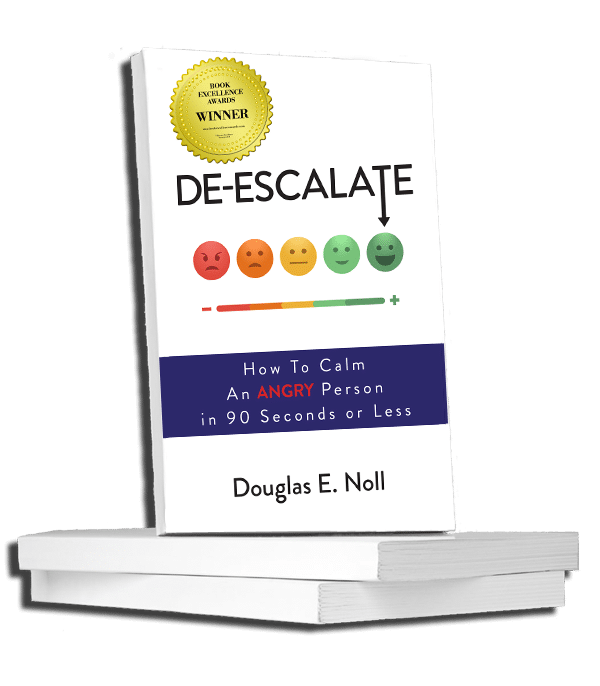
Emotional conflicts fracture teams and families. The ongoing tension breeds burnout, damages relationships, and hurts performance. The Noll Method’s 90-Second Power Move™ is a proven, neuroscience-based skill for restoring calm, tested from boardrooms to maximum-security prisons. Master this life-changing technique to transform chaos into collaboration. Book a no-obligation zoom call with Doug Noll today!
The Brain’s Ancient Alarm System
At the heart of every emotional escalation sits the amygdala, a small, almond-shaped cluster deep in the limbic system. It functions as the brain’s rapid-response threat detector, scanning for danger faster than conscious thought can keep up. When it registers a perceived threat a raised voice, a critical remark, a challenge to status it floods the body with stress hormones, hijacking control from the prefrontal cortex.
The prefrontal cortex handles reasoning, impulse regulation, empathy, and long-term perspective. Under amygdala-driven stress, that region goes temporarily offline. The classic fight-flight-freeze response takes over: attention narrows, heart rate spikes, muscles tense, and the ability to listen or compromise shrinks dramatically.
This explains a familiar scene in arguments: both sides dig in harder, repeat the same points louder, and seem incapable of hearing the other person. It is not stubbornness or bad character; it is neurobiology under pressure.
Why “Calm Down” Usually Backfires
Telling someone in the grip of strong emotion to “calm down” or “be reasonable” almost always fails and often worsens the situation. Those instructions require prefrontal engagement precisely when that circuitry is suppressed. The demand itself can feel like another threat, triggering further defensiveness.
Effective de-escalation begins with a different premise: first restore a neurobiological sense of safety, then invite rational dialogue. The brain must receive credible signals that the environment is no longer dangerous before higher-order thinking can come back online.
Evidence-Based Techniques That Work With the Brain
Several strategies have strong support from neuroscience and real-world practice. They focus on lowering amygdala activation and gently re-engaging the prefrontal cortex.
Active, Empathetic Listening
When someone feels genuinely heard without interruption, correction, or advice the nervous system registers safety. Reflective listening, where the listener mirrors back what they understand (“It sounds like this really caught you off guard”), reduces physiological arousal and creates space for de-escalation. Practitioners sometimes call this “listening someone into existence.” The phrase captures how powerful basic acknowledgment can be.
Emotion Labeling
Naming emotions out loud “You seem really frustrated right now” or “This feels unfair to you” engages language areas of the brain and reliably dampens amygdala response. Research on affect labeling shows this simple verbal act shifts a person from reactive mode toward reflective capacity in a matter of seconds.
Nonverbal Safety Cues
Body language speaks louder than words during heightened states. Maintaining an open posture, steady eye contact (without staring), a calm facial expression, and a lower, slower tone of voice all signal to the other person’s autonomic nervous system that threat is receding. Insights from polyvagal theory explain how these cues activate the social engagement system rather than the defensive one.
In mediation rooms, crisis negotiations, and even family disagreements, combining these elements often produces a co-regulation effect: one regulated nervous system helps settle another.
Real-World Impact Across Different Fields
The practical payoff is visible in multiple arenas.
In corporate settings, managers trained in brain-informed de-escalation report fewer blow-ups, quicker resolutions, and noticeably stronger team cohesion. Emotional awareness programs help remote and hybrid teams maintain trust and collaboration despite physical distance and the friction that can build through screens.
In legal and community mediation, integrating these neuroscience-backed techniques produces outcomes that feel more equitable and durable. Participants leave with relationships damaged far less than they would after conventional adversarial proceedings.
Educators and clinicians are adopting similar strategies to support students and clients in distress, moving away from punishment toward methods that strengthen long-term self-regulation and resilience.
Limitations and Realistic Expectations
No approach is universal. Trauma history, cultural background, chronic stress levels, and even neurodiversity can change how safety cues are perceived and processed. What calms one person may heighten vigilance in another.
Skillful de-escalation also demands repeated practice. Reading about the amygdala is one thing; responding instinctively in a heated moment is another. Training works best when it includes role-play, feedback, and ongoing reinforcement.
A Quiet Revolution in How We Handle Conflict
Despite those challenges, the convergence of modern neuroscience and practical conflict resolution points toward meaningful progress. Instead of treating escalation as a character flaw or a failure of willpower, we can see it for what it is: a predictable biological response that can be met with targeted, compassionate intervention.
As more professionals integrate these insights, the tools become less exotic and more ordinary part of how we manage tension at work, in court, in schools, and at home. Beneath every outburst of anger or fear is a nervous system looking for evidence that it is safe enough to stand down.
When we meet that need with patience, presence, and techniques grounded in how the brain actually works, resolution stops feeling like wishful thinking. It becomes something we can reliably create one careful, human moment at a time.
In an era when tensions seem to rise faster than ever, this quiet understanding of emotional de-escalation may turn out to be one of the most useful advances we can carry forward.
Frequently Asked Questions
What is the neuroscience behind emotional escalation during conflict?
Emotional escalation is driven by the amygdala, the brain’s threat-detection center, which floods the body with stress hormones when it perceives danger such as a raised voice or a challenge to status. This response temporarily suppresses the prefrontal cortex, the region responsible for reasoning, empathy, and impulse control. The result is the familiar pattern of digging in, repeating points louder, and being unable to truly hear the other person a neurobiological reaction, not a character flaw.
What are the most effective neuroscience-based de-escalation techniques?
Three evidence-backed strategies help lower amygdala activation and restore rational thinking: active empathetic listening (reflecting back what you hear to signal safety), emotion labeling (naming the other person’s feelings out loud to shift them from reactive to reflective mode), and nonverbal safety cues like open body language, a calm facial expression, and a slower, quieter tone of voice. Together, these techniques can create a co-regulation effect, where one calm nervous system helps settle another. They are widely used in mediation, crisis negotiation, corporate conflict management, and education.
Why does telling someone to “calm down” make conflict worse?
Telling someone to “calm down” backfires because it demands prefrontal cortex engagement at the exact moment that region is suppressed by stress. The instruction can itself register as a threat, triggering even more defensiveness. Effective de-escalation instead focuses first on restoring a neurobiological sense of safety through listening, emotional acknowledgment, and calm nonverbal signals before inviting any rational dialogue.
Disclaimer: The above helpful resources content contains personal opinions and experiences. The information provided is for general knowledge and does not constitute professional advice.
You may also be interested in: Why Emotional Mastery Is Achievable for Every Leader
Emotional conflicts fracture teams and families. The ongoing tension breeds burnout, damages relationships, and hurts performance. The Noll Method’s 90-Second Power Move™ is a proven, neuroscience-based skill for restoring calm, tested from boardrooms to maximum-security prisons. Master this life-changing technique to transform chaos into collaboration. Book a no-obligation zoom call with Doug Noll today!
Powered by flareAI.co