Picture this: You’re seated at a polished conference table, the air thick with unspoken tension. Voices sharpen, postures stiffen, and what began as a promising discussion now teeters on the edge of collapse. The instinctive response for many is to double down arm yourself with facts, raise your voice, push for dominance. Yet seasoned negotiators know a deeper truth: victory rarely comes from overpowering the other side. Often, the breakthrough arrives through something quieter, more profound genuine empathy.
In our hyper-connected, high-pressure business landscape, where deals span continents and cultures, the demand for superior negotiation abilities has never been greater. Professionals increasingly seek tools not just to win arguments, but to forge lasting agreements amid complexity. This surge is vividly illustrated by market trends: the global negotiation training market reached USD 4.2 billion in 2024, with projections indicating robust expansion at a compound annual growth rate of 8.1% from 2025 to 2033, ultimately reaching USD 8.1 billion. Driving this growth are the mounting intricacies of international transactions, the realities of cross-border trade, and the imperative to master cultural nuances, regulatory frameworks, and multifaceted stakeholder dynamics. Organizations are channeling significant resources into training that empowers teams to secure advantageous outcomes, defuse disputes, and cultivate enduring partnerships.
Emotional conflicts fracture teams and families. The ongoing tension breeds burnout, damages relationships, and hurts performance. The Noll Method’s 90-Second Power Move™ is a proven, neuroscience-based skill for restoring calm, tested from boardrooms to maximum-security prisons. Master this life-changing technique to transform chaos into collaboration. Book a no-obligation zoom call with Doug Noll today!
A Booming Field for Sharpened Skills
Complementing this picture, another analysis values the negotiation training service market at approximately USD 2.65 billion in 2024, forecasting growth to USD 4.26 billion by 2033 at a CAGR of 5.40%. These programs ranging from interactive workshops and seminars to tailored coaching equip participants with essential competencies: attentive listening, persuasive communication, creative problem-solving. Customized for varied contexts, they boost confidence, sharpen decision-making, and elevate overall conversational effectiveness. Leaders, managers, sales professionals, and frequent negotiators stand to gain the most, transforming routine interactions into opportunities for mutual success.
Yet amid this expansion, a crucial distinction often gets overlooked. Many conventional training programs prioritize cognitive perspective taking analyzing how the counterpart thinks and anticipates their moves. Valuable in strategic, competitive scenarios, this skill differs markedly from empathy. As highlighted by experts at the Program on Negotiation at Harvard Law School, perspective taking is fundamentally cognitive, involving reasoned consideration of another’s viewpoint. Empathy, however, engages the emotions: it means connecting on a feeling level, extending sympathy and genuine concern. The two are distinct; proficiency in one does not guarantee strength in the other. Perspective taking excels in high-stakes tactical exchanges, while empathy shines in trust-building, conflict mediation, and turning adversarial moments into collaborative progress.
The Extraordinary Roots of a Transformative Approach
No one bridges this emotional-cognitive divide more compellingly than Douglas E. Noll. A former trial lawyer who mediated over a thousand intense conflicts, Noll pivoted to full-time peacemaking two decades ago. His signature method emerged not from ivory-tower theorizing, but from the stark realities of California’s maximum-security prisons. In 2010, responding to a direct plea from inmates, Noll co-founded the Prison of Peace project with colleague Laurel Kaufer. What began at Valley State Prison for Women evolved into a groundbreaking initiative training individuals serving life sentences to become mediators, de-escalators, and peacemakers.
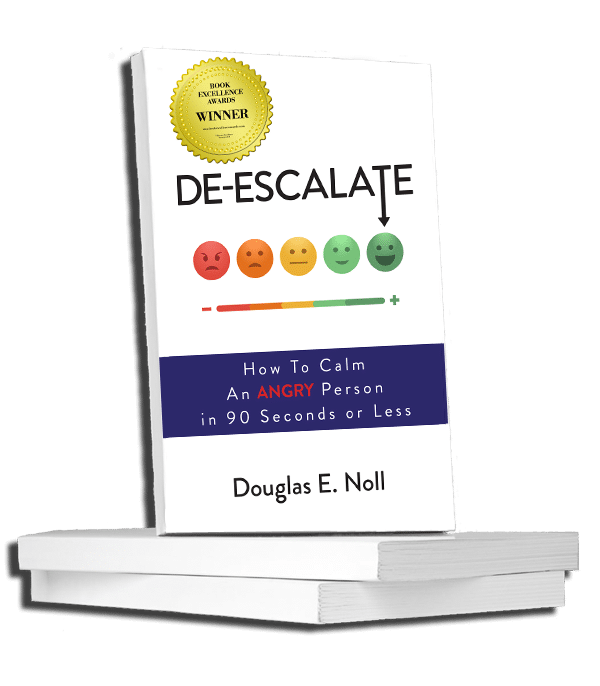
The outcomes defied expectations. In environments where violence could erupt instantly, these trained inmates learned to intervene, calm explosive situations, reduce incidents, and promote resolution. The core of Noll’s technique? Empathic or “deep” listening. Rather than debating content, practitioners tune into underlying emotions, reflect them accurately with simple “you” statements (for example, “You feel deeply disrespected right now”), and allow the speaker to feel truly heard. Grounded in neuroscience, this affect labeling process dampens the brain’s reactive centers, paving the way for rational dialogue often in under 90 seconds. Noll detailed this practical, proven system in his acclaimed book, De-Escalate: How to Calm an Angry Person in 90 Seconds or Less, drawing directly from real-world prison applications.
What sets Noll apart is unmatched breadth: more than 40 years blending legal expertise, mediation mastery, and training across extremes from corporate boardrooms and Congressional teams to maximum-security facilities. He alone has demonstrated these skill’s efficacy with life-sentenced inmates who halted prison violence, then translated them seamlessly to executive negotiations. His guarantee is unequivocal: those who master the method can reliably halt fights and arguments before they escalate.
Addressing the Skepticism Head-On
Resistance persists. Critics argue conflict is inevitable, woven into the fabric of human interaction arguments will always arise. Others hesitate at the emotional exposure, fearing vulnerability or the discomfort of confronting intense feelings, their own or others’.
Noll’s framework dismantles these barriers without illusion. It never claims to eliminate conflict; instead, it reframes how we engage with it. By addressing emotions before content, practitioners bypass the defensive cycles that fuel escalation. This demands strength, not softness the discipline to remain composed amid chaos, to listen without interrupting, to prioritize connection over conquest. The results speak volumes: salespeople secure challenging agreements because counterparts feel understood; executives navigate mergers despite underlying tensions; leaders prevent minor frictions from derailing entire initiatives. Techniques proven in prison yards now deliver measurable advantages in professional settings stronger deals, preserved relationships, sustained trust.
Empathy as the Ultimate Negotiator’s Edge
As negotiation prowess grows ever more essential, Doug Noll’s approach underscores a timeless principle: the sharpest instrument is not superior argument or unyielding logic, but the disciplined application of empathy. By focusing first on what the other person feels rather than what they say, you disarm resistance, foster genuine understanding, and convert potential opponents into partners. Backed by prison transformations, corporate successes, and rigorous research, this is no idealistic notion it’s a teachable, repeatable skill capable of shifting dynamics in moments.
The next time pressure mounts across the table, consider pausing the push. Breathe. Listen beneath the words. Reflect the emotion you detect. In that brief space of true recognition, barriers often dissolve, paths forward emerge, and deals once thought impossible begin to close not through force, but through profound human connection.
Frequently Asked Questions
How can empathy help you win in business negotiations?
Empathy in negotiations allows you to connect with the other party on an emotional level, which builds trust and disarms resistance more effectively than aggressive tactics. By using techniques like affect labeling reflecting back the emotions you detect with statements like “You feel deeply disrespected right now” you address underlying feelings before content, preventing defensive cycles that cause deals to collapse. This approach, proven in high-stakes environments from prison mediations to corporate boardrooms, transforms potential opponents into collaborative partners and leads to stronger, more sustainable agreements.
What is Doug Noll’s 90-second de-escalation technique?
Doug Noll’s 90-Second Power Move is an affect labeling technique that calms angry or emotional people by identifying and reflecting their underlying feelings back to them using simple “you” statements. Instead of engaging with the content of what someone is saying, you focus on the emotion driving it for example, “You’re feeling overwhelmed right now.” This neuroscience-backed method soothes the brain’s reactive centers, allowing rational dialogue to resume in under 90 seconds, and has been proven effective in defusing conflicts ranging from prison violence to heated business negotiations.
Why is empathy more effective than perspective-taking in negotiations?
While perspective-taking is a cognitive skill that helps you analyze how the other party thinks and anticipates their strategic moves, empathy engages emotions by creating genuine connection and concern for what the other person feels. Perspective-taking excels in competitive, tactical scenarios, but empathy is superior for building trust, mediating conflicts, and turning adversarial situations into collaborative progress. As highlighted by Harvard’s Program on Negotiation, the two skills are distinct and in complex negotiations where relationships matter, empathy often delivers the breakthrough that logic alone cannot achieve.
Disclaimer: The above helpful resources content contains personal opinions and experiences. The information provided is for general knowledge and does not constitute professional advice.
You may also be interested in: The Impact of Specialized De-escalation Skills in Business
Emotional conflicts fracture teams and families. The ongoing tension breeds burnout, damages relationships, and hurts performance. The Noll Method’s 90-Second Power Move™ is a proven, neuroscience-based skill for restoring calm, tested from boardrooms to maximum-security prisons. Master this life-changing technique to transform chaos into collaboration. Book a no-obligation zoom call with Doug Noll today!
Powered by flareAI.co