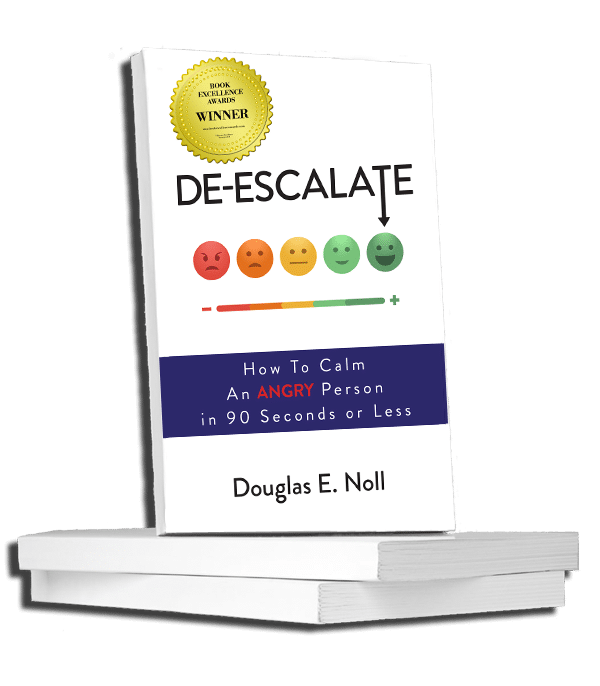
In high-stakes service roles across North America, one angry customer can unravel hours of careful work and, in moments, tarnish a reputation built over years. Many professionals still lean on familiar but often ineffective strategies: forced composure, generic apologies, or quick policy explanations. These approaches frequently intensify rather than soothe. What if the most powerful response began not with solving the problem, but with calming the person in front of you often in less than two minutes using techniques rooted in modern neuroscience?
Doug Noll, a seasoned mediator and conflict expert with more than four decades of experience, once trained individuals serving life sentences in maximum-security prisons to interrupt cycles of prison violence. Those same methods, now taught to customer-facing leaders, coaches, healthcare providers, educators, and consultants, prove remarkably effective far beyond correctional settings. The core insight remains consistent: address emotion before content, and the interaction changes direction almost immediately.
Emotional conflicts fracture teams and families. The ongoing tension breeds burnout, damages relationships, and hurts performance. The Noll Method’s 90-Second Power Move™ is a proven, neuroscience-based skill for restoring calm, tested from boardrooms to maximum-security prisons. Master this life-changing technique to transform chaos into collaboration. Book a no-obligation zoom call with Doug Noll today!
Understanding the Rapid Escalation of Customer Frustration
Today’s customers rarely arrive neutral. Lingering stress from supply-chain delays, unexpected charges, misunderstood policies, or unrelated personal pressures primes them for reactivity. When a perceived slight occurs, the brain’s threat-detection system the amygdala activates swiftly, sidelining rational dialogue. Voices rise, accusations fly, and what began as a routine exchange quickly becomes adversarial.
Conventional replies that jump straight to facts, justifications, or remedies tend to worsen the situation. They signal dismissal to an already heightened nervous system. Neuroscience reveals a more effective path: accurately naming the emotion being expressed quiets the alarm center and restores access to higher reasoning. This single shift frequently de-escalates tension before it becomes unmanageable.
From Prison Yards to Professional Front Lines
Noll’s techniques were forged in one of society’s most volatile environments. Inside California prisons, he taught incarcerated men many facing life without parole how to recognize emotional escalation in others and intervene before physical violence erupted. The outcomes were measurable: fewer assaults, calmer housing units, and a noticeable shift in group dynamics.
That framework transfers directly to modern workplaces. The biological mechanisms are identical whether the setting is a cellblock or a call center. When someone in distress experiences genuine emotional acknowledgment, cortisol levels drop, defensiveness eases, and collaborative problem-solving becomes possible. Professionals who adopt these practices consistently report shorter, less draining interactions and higher rates of voluntary resolution.
Essential De-Escalation Techniques That Deliver Results
The foundation rests on a deliberate sequence. Resist the impulse to fix the issue right away. Instead, listen intently and reflect the underlying feeling in simple, nonjudgmental language. Effective affect labeling statements include:
- “It sounds like you’re extremely frustrated with how this was handled.”
- “I can hear how disappointed and let down you’re feeling right now.”
- “You seem really upset about the lack of communication on this.”
These are observations, not agreements or apologies. They demonstrate understanding without assigning blame. Studies show that naming an emotion with precision reduces activity in the brain’s fear circuitry within roughly 90 seconds, allowing logic and perspective to return.
Once the emotional intensity decreases, transition to open questions that encourage elaboration: “What part of this has been the most upsetting?” or “How has this situation affected you?” Avoid interrogative “why” phrasing that can feel accusatory. Maintain a steady, calm tone throughout the mirror neurons in the other person’s brain will begin to match your composure.
Avoiding the Most Common Mistakes
Professionals often rush to offer solutions, inadvertently signaling that the emotion itself is unimportant. Others unintentionally escalate by matching raised volume or clipped speech. The antidote is intentional slowness: pause, breathe, and prioritize validation over resolution. With repetition, this pattern becomes second nature.
Noll’s approach carries a firm guarantee because it leverages universal neurological responses rather than depending on personality traits or situational luck. Many learners notice tangible improvement after only a few weeks of consistent practice.
Overcoming Widespread Skepticism and Hesitation
Doubt surfaces quickly. Some insist that conflict is simply inevitable in human interactions. Others question whether reflecting feelings can truly alter outcomes. A significant group admits discomfort with diving into emotional territory both their own and the customer’s.
Real-world evidence counters these concerns. Techniques proven in prisons translate reliably to everyday professional settings. While no method eradicates all disagreement, these skills measurably lower escalation frequency and severity. When individuals feel deeply heard, a surprising number soften, offer apologies, or propose constructive next steps themselves.
The reluctance to engage emotionally often stems from fear of vulnerability. Yet sidestepping that work typically produces greater long-term costs: chronic stress, repeated escalations, damaged relationships. Mastering these tools actually increases personal control and reduces helplessness in tense moments.
Extending the Value Across Teams and Industries
Organizations that train staff in de-escalation see benefits well beyond customer interactions. Internal meetings become more productive, performance feedback lands constructively, and cross-functional collaboration strengthens. In emotionally demanding fields healthcare systems, school administration, professional coaching, veterinary practices these competencies help mitigate burnout while elevating service quality.
Growing societal recognition of mental health and relational well-being fuels demand for stronger emotional-navigation skills. The expanding online couples therapy and counseling sector, driven by greater awareness of mental health’s role in overall wellness and the convenience of digital access, underscores this broader cultural shift toward valuing tools that preserve connection under pressure.
Practical First Steps Toward Mastery
No specialized background is required to begin. Start small: in casual conversations, notice emotional undertones and experiment with neutral labeling. Observe the response. Over time, apply the same approach in progressively higher-stakes situations.
Structured learning paths Noll’s workshops, books, video courses provide clear progression. The investment yields compounding returns: reduced incident volume, deeper client relationships, renewed confidence when tension appears. In an era saturated with potential triggers, the capacity to restore calm swiftly stands out as both rare and exceptionally valuable.
The next time a customer’s frustration begins to boil over, resist the urge to defend or explain. Pause. Listen beneath the words for the emotion. Name it clearly and calmly. Then watch. In the space of a minute or two, the dynamic often transforms and the path to resolution opens naturally.
Frequently Asked Questions
What are the most effective de-escalation techniques for handling angry customers?
The most effective approach is “affect labeling” naming the customer’s emotion clearly and calmly before attempting to solve any problem. Phrases like “It sounds like you’re extremely frustrated with how this was handled” signal genuine understanding and, according to neuroscience research, can reduce activity in the brain’s fear circuitry within roughly 90 seconds. Once emotional intensity drops, open-ended questions like “What part of this has been most upsetting?” help guide the conversation toward resolution.
Why do standard customer service responses like apologies and policy explanations often make things worse?
When a customer is emotionally activated, the brain’s amygdala its threat-detection center overrides rational thinking, making facts and justifications feel like dismissal rather than help. Jumping straight to solutions signals that the emotion itself doesn’t matter, which typically heightens defensiveness. Addressing the feeling first, before any content or resolution, is what calms the nervous system and reopens the door to productive dialogue.
Can de-escalation skills really be learned, and how long does it take to see results?
Yes de-escalation is a trainable skill grounded in universal neurological responses, not personality type or natural talent. Doug Noll’s methods were successfully taught to incarcerated individuals in maximum-security prisons, demonstrating that the techniques work across a wide range of people and high-stress environments. Many practitioners report noticeable improvement in customer interactions after just a few weeks of consistent practice, with compounding benefits over time including reduced stress, shorter conflicts, and stronger client relationships.
Disclaimer: The above helpful resources content contains personal opinions and experiences. The information provided is for general knowledge and does not constitute professional advice.
You may also be interested in: Why Emotional Mastery Is Achievable for Every Leader
Emotional conflicts fracture teams and families. The ongoing tension breeds burnout, damages relationships, and hurts performance. The Noll Method’s 90-Second Power Move™ is a proven, neuroscience-based skill for restoring calm, tested from boardrooms to maximum-security prisons. Master this life-changing technique to transform chaos into collaboration. Book a no-obligation zoom call with Doug Noll today!
Powered by flareAI.co