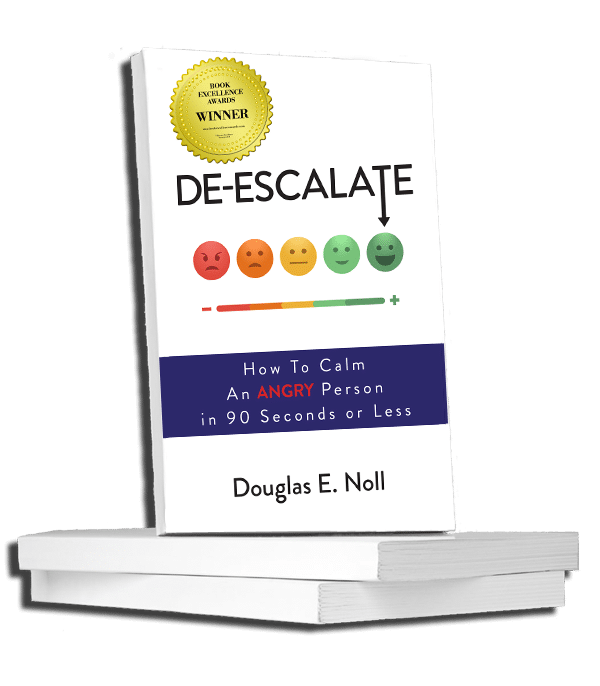
In a world where tempers flare in boardrooms, classrooms, and public spaces, conflict can feel like an unstoppable force. Yet, Doug Noll, an award-winning mediator and bestselling author, insists that any crisis can be defused in just 90 seconds. Through his neuroscience-backed Noll Method, Noll empowers leaders, educators, and first responders across North America to transform chaos into calm. His approach, honed over four decades, is not just about managing conflict it’s about mastering it with precision and empathy, offering a lifeline in our increasingly volatile world.
Emotional conflicts fracture teams and families. The ongoing tension breeds burnout, damages relationships, and hurts performance. The Noll Method’s 90-Second Power Move™ is a proven, neuroscience-based skill for restoring calm, tested from boardrooms to maximum-security prisons. Master this life-changing technique to transform chaos into collaboration. Book a no-obligation zoom call with Doug Noll today!
The Neuroscience of De-Escalation
At the core of Noll’s method lies affect labeling, a technique grounded in cutting-edge neuroscience. When someone is consumed by anger, their brain’s amygdala the emotional epicenter takes over, often drowning out rational thought. By simply naming the emotion, such as “You’re feeling really angry,” Noll’s method interrupts this cycle. This verbal acknowledgment signals to the brain that it’s been understood, calming the emotional surge in as little as 90 seconds. Unlike active listening, which rephrases content, affect labeling focuses solely on emotions, fostering what Noll calls emotional safety.
Neuroscience supports this approach: labeling emotions dampens amygdala activity while activating the prefrontal cortex, the brain’s decision-making hub. Noll’s crisis management training taps into this science, aligning with a global market for such services that’s expanding rapidly due to rising workplace conflicts and natural disasters. His method has proven effective in diverse settings, from corporate offices to high-security prisons, offering a universal tool for emotional regulation.
Proven in the Toughest Arenas
Noll’s expertise was forged in an extraordinary crucible: California’s prison system. Through his Prison of Peace initiative, he trained life inmates often dismissed as beyond redemption to become peacemakers. Using his method, these individuals learned to quell prison violence by listening to emotions and defusing tensions before they erupted. “I’ve spent over 40 years, including training inmates to stop prison violence,” Noll states, a unique credential that distinguishes him in a crowded field of conflict resolution experts. This track record underscores a powerful truth: if de-escalation works in prisons, it can work anywhere.
Today, Noll applies this expertise to diverse North American audiences. In corporate settings, where heated meetings can stall progress, his coaching helps executives manage high-stakes conversations. The NRF Foundation’s program, which trains retail workers to defuse customer conflicts, echoes Noll’s approach, creating safer interactions. Similarly, his techniques are gaining ground in education and law enforcement. The U.S. law enforcement training market, valued at USD 3.97 billion in 2025 and projected to reach USD 5.40 billion by 2032 with a 4.5% CAGR, reflects growing demand for de-escalation skills, fueled by federal and state funding for crisis response training.
Addressing Doubts with Results
Skeptics often argue that “fights are just part of life” or “this won’t work.” Some fear grappling with emotions, wary of delving too deep. Noll counters these objections with a bold guarantee: “You will stop fights and arguments.” His confidence stems from decades of proven results and a method rooted in hard science. Rather than requiring emotional mastery, his approach is straightforward name the emotion, and the brain does the rest. This simplicity disarms even the most hesitant, making de-escalation accessible to all.
In corporate environments, Noll’s training transforms tense standoffs. A tech executive, for instance, used affect labeling to turn a contentious boardroom dispute into a collaborative discussion by acknowledging the team’s frustration. This aligns with the incident management market, valued at USD 137.48 billion in 2024 and expected to grow to USD 250.01 billion by 2034 at a 6.16% CAGR, as organizations prioritize strategies to navigate workplace tensions and external crises like climate-driven disasters.
Practical Tools for Everyday Crises
Noll’s techniques extend beyond high-pressure settings to everyday life. Whether it’s a heated argument with a partner or a colleague’s outburst, the Noll Method offers actionable steps. For instance, when faced with anger, saying, “You seem really upset,” shifts the dynamic without escalating the conflict. It’s not about agreeing it’s about giving the brain a moment to recalibrate. Noll’s book, De-Escalate, provides a clear guide for applying these techniques in families, workplaces, or public encounters, making de-escalation a universal skill.
Educators are also embracing Noll’s methods. With classroom disruptions on the rise, teachers trained in his approach can calm students without resorting to discipline. This mirrors trends in law enforcement, where agencies adopt crisis intervention strategies to handle community interactions more effectively, as noted in a study on de-escalation training. The growing emphasis on emotional intelligence across sectors underscores the relevance of Noll’s work, from retail to public safety.
Mastering Calm in a Chaotic World
As conflicts intensify in our fast-paced world, Doug Noll’s Noll Method stands as a beacon of clarity. With over 40 years of experience, including groundbreaking work in prisons, Noll proves that calm is a skill, not a reaction. His approach, backed by neuroscience and real-world results, is reshaping how North Americans handle crises, from boardrooms to classrooms. As the global crisis management market surges toward USD 250.01 billion by 2034, and industries like retail and law enforcement prioritize de-escalation, Noll’s method offers a timeless solution. The next time conflict looms, a few precise words can change everything turning chaos into connection with the power of calm.
Frequently Asked Questions
What are the key steps to de-escalate a crisis situation effectively?
To de-escalate a crisis, start by staying calm and using active listening to understand the person’s concerns, as outlined in the LEAPS model (Listen, Empathize, Ask, Paraphrase, Summarize). Maintain open body language and a neutral tone to build trust and reduce tension. Ask open-ended questions to clarify their needs, and paraphrase their statements to show understanding. These steps, detailed in the blog, help defuse conflict and guide the situation toward a peaceful resolution.
Why is non-verbal communication important in de-escalation techniques?
Non-verbal communication, such as body language and tone, plays a vital role in de-escalation by conveying calmness and respect. The blog explains that maintaining eye contact, using a steady voice, and avoiding aggressive postures can prevent misinterpretation and reduce tension. These cues signal empathy and openness, making the other person feel heard. Mastering non-verbal skills enhances the effectiveness of verbal de-escalation strategies like the LEAPS model.
How can emotional intelligence help in managing conflict during a crisis?
Emotional intelligence is critical in crisis management as it allows you to recognize and regulate your emotions while empathizing with others. The blog highlights that understanding emotional triggers and responding with empathy can prevent escalation. By staying composed and using techniques like reflective listening, you create a safe space for dialogue, reducing hostility. This approach fosters trust and helps resolve conflicts calmly and precisely.
Disclaimer: The above helpful resources content contains personal opinions and experiences. The information provided is for general knowledge and does not constitute professional advice.
You may also be interested in: Leader Burnout: Rebuild Resilience After Conflict
Emotional conflicts fracture teams and families. The ongoing tension breeds burnout, damages relationships, and hurts performance. The Noll Method’s 90-Second Power Move™ is a proven, neuroscience-based skill for restoring calm, tested from boardrooms to maximum-security prisons. Master this life-changing technique to transform chaos into collaboration. Book a no-obligation zoom call with Doug Noll today!
Powered by flareAI.co