Quick Listen:
In today’s high-pressure workplaces, where hybrid teams juggle deadlines, cultural differences, and constant digital communication, even minor misunderstandings can rapidly escalate into disruptions that sap morale and stall progress. Forward-looking organizations are responding by embedding verified de-escalation techniques into everyday team interactions, treating the ability to calm tension as a core professional competency rather than an optional soft skill.
The wider corporate training ecosystem underscores this priority. According to industry analysis, the global corporate training market reached $361.5 billion in 2023, fueled in large part by the urgent demand for communication skills, emotional intelligence, and tools that help employees collaborate effectively across remote and in-person settings.
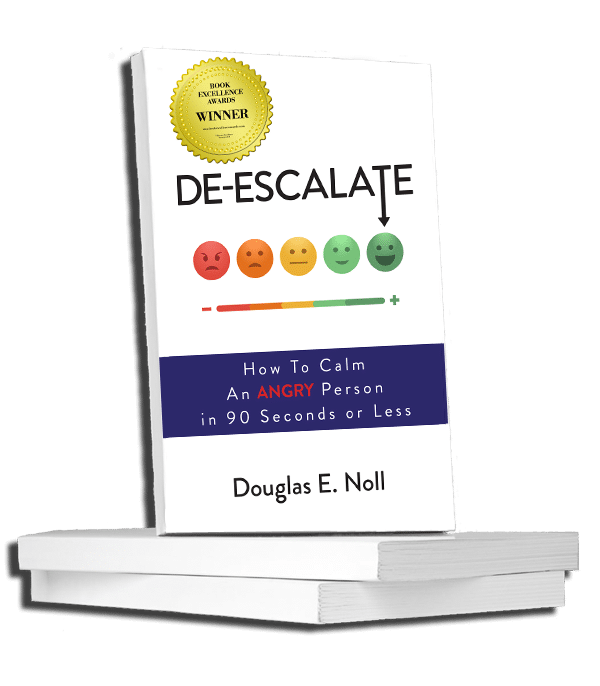
Emotional conflicts fracture teams and families. The ongoing tension breeds burnout, damages relationships, and hurts performance. The Noll Method’s 90-Second Power Move™ is a proven, neuroscience-based skill for restoring calm, tested from boardrooms to maximum-security prisons. Master this life-changing technique to transform chaos into collaboration. Book a no-obligation zoom call with Doug Noll today!
Why Tension Management Has Moved to Center Stage
Modern offices bring together people with sharply different communication styles, generational lenses, stress thresholds, and life experiences. Layer on asynchronous messaging, video-call fatigue, and the pressure of stretched resources, and the ingredients for friction are everywhere. A sharply worded Slack message, an interrupted point during a Zoom call, or a misinterpreted emoji can ignite resentment that lingers for days.
Progressive companies no longer wait for conflicts to reach HR. They equip entire teams from interns to C-suite executives with practical methods to recognize rising emotions and intervene before damage sets in. The payoff is measurable: quicker resolution of disagreements, fewer escalations to formal complaints, preserved psychological safety, and teams that return to high performance faster after friction occurs.
Tangible Gains Teams Experience
When people consistently apply de-escalation habits, the workplace atmosphere changes. Disagreements conclude with mutual understanding rather than grudges. Employees report feeling respected even during heated moments, which directly reduces burnout and voluntary turnover. Customer-facing staff convert tense client conversations into strengthened relationships because they stay composed and solution-focused under pressure.
These practices also reinforce diversity, equity, and inclusion efforts. Colleagues from varied backgrounds can surface and address differences without fear of personal attack. Cultural misreads or style clashes that once fractured trust now become moments of learning and connection. The cumulative effect is a more innovative environment where candid debate fuels progress instead of poisoning it.
Practical Techniques Gaining Widespread Adoption
Effective de-escalation rests on a handful of repeatable behaviors rooted in self-awareness and empathy. Organizations are prioritizing these because they deliver results quickly and require no elaborate setup:
- Active listening with reflection Paraphrasing what was just said (“So you’re feeling overlooked because the decision bypassed your input?”) demonstrates genuine effort to understand and almost always lowers the temperature.
- Calm, open non-verbal signals Uncrossed arms, steady eye contact, and an even tone communicate safety even when words alone are not enough.
- Emotion-labeling statements Simple acknowledgments such as “This clearly matters a great deal to you” or “I can hear how frustrating this has been” validate feelings without conceding fault.
- Strategic pauses Taking three conscious breaths before replying interrupts the instinct to fire back and creates space for a more constructive response.
- Respectful boundary-setting Clear, firm phrases like “I’m committed to resolving this, but I need us to keep voices at a normal level” protect dignity on both sides.
- Reframing around common purpose Shifting focus with “What outcome are we both trying to achieve here?” moves energy from winning an argument to solving a shared problem.
These are not abstract theories; they are small, learnable moves that produce immediate shifts in most workplace interactions.
Pairing De-Escalation with Intentional Team Bonding
Many organizations now integrate de-escalation practice into broader team-building initiatives. Corporate investment in experiences that deepen trust and sharpen collaboration has grown steadily in recent years as leaders recognize the link between strong interpersonal bonds and resilience under stress.
Instead of generic icebreakers, sophisticated programs simulate realistic workplace friction tight deadlines, competing priorities, ambiguous directives and give teams guided opportunities to practice calm navigation. When colleagues have already built rapport through shared challenges, they default more readily to de-escalation rather than defensiveness during everyday disagreements.
Addressing Skepticism and Securing Commitment
Resistance remains common. Some leaders dismiss these programs as “touchy-feely” or insist operational results matter more than interpersonal harmony. Others argue that time spent training in emotional regulation steals hours from core deliverables.
The most successful rollouts counter both objections with evidence tied directly to business performance. Executives share concrete stories: a multimillion-dollar client renewal saved because a key account manager de-escalated a heated escalation call, or a product launch kept on schedule after a cross-functional team resolved a design dispute without derailing into personal attacks.
Pilots with single departments, followed by before-and-after metrics on meeting satisfaction, conflict-related absences, or engagement survey scores, help doubters see value. Once teams experience how much faster and less draining productive disagreement can be, buy-in spreads organically.
The Long-Term Strategic Advantage
As artificial intelligence and automation absorb repetitive tasks, distinctly human capabilities creative problem-solving, nuanced judgment, and the ability to collaborate through uncertainty grow more valuable. Teams that consistently maintain trust and psychological safety during disagreement hold a decisive edge in fast-moving industries.
Organizations that embed de-escalation fluency into culture, training, and leadership expectations build antifragile teams: groups that emerge stronger from tension rather than fractured by it. In the end, the difference between average and exceptional performance often comes down to one question: Can people stay connected and effective when the stakes are high and emotions run hot? The companies mastering that answer are the ones writing tomorrow’s success stories.
Frequently Asked Questions
What are the most effective de-escalation techniques for workplace conflict?
The most widely adopted de-escalation techniques include active listening with reflection, emotion-labeling statements, and strategic pauses before responding. Other proven methods are calm open body language, respectful boundary-setting, and reframing conversations around shared goals. These are small, learnable behaviors that can produce immediate improvements in most workplace interactions without requiring elaborate training setups.
Why are companies investing in de-escalation training for their teams?
Organizations are prioritizing de-escalation training because unresolved workplace tension leads to burnout, voluntary turnover, and stalled productivity all of which directly impact business performance. The global corporate training market hit $361.5 billion in 2023, driven largely by demand for communication skills and emotional intelligence. Companies that embed these skills across all levels from interns to executives report faster conflict resolution, fewer formal HR escalations, and stronger psychological safety.
How does de-escalation training benefit hybrid and remote teams specifically?
Hybrid and remote teams are especially vulnerable to miscommunication, since tone can be misread in Slack messages, video-call fatigue lowers patience, and cultural or generational differences are harder to navigate across screens. De-escalation techniques give distributed teams practical tools to recognize rising emotions early and intervene before minor friction becomes lasting resentment. When combined with intentional team-bonding activities that simulate realistic workplace stress, these skills help colleagues default to calm collaboration rather than defensiveness during everyday disagreements.
Disclaimer: The above helpful resources content contains personal opinions and experiences. The information provided is for general knowledge and does not constitute professional advice.
You may also be interested in: The Impact of Specialized De-escalation Skills in Business
Emotional conflicts fracture teams and families. The ongoing tension breeds burnout, damages relationships, and hurts performance. The Noll Method’s 90-Second Power Move™ is a proven, neuroscience-based skill for restoring calm, tested from boardrooms to maximum-security prisons. Master this life-changing technique to transform chaos into collaboration. Book a no-obligation zoom call with Doug Noll today!
Powered by flareAI.co