December 20

Resilience Under Fire: Why Leaders Must Master Emotional Intelligence to Thrive in High-Pressure Environments

0  comments

  MINUTE READ

Resilience Under Fire: Why Leaders Must Master Emotional Intelligence to Thrive in High-Pressure Environments

In the crucible of a high-stakes boardroom or a crisis that threatens to unravel an organization, raw intellect or strategic acumen alone won’t suffice. What distinguishes exceptional leaders is their ability to remain composed, read the emotional undercurrents, and guide their teams through turmoil. This skill emotional intelligence (EI) is not just a leadership asset; it’s a necessity in today’s volatile world. Doug Noll, an award-winning mediator and bestselling author, has mastered this art with his neuroscience-backed Noll Method™, a technique that can defuse conflict in just 90 seconds. His approach, honed over four decades, offers leaders a powerful tool to thrive in high-pressure environments, from corporate negotiations to maximum-security prisons.

Emotional conflicts fracture teams and families. The ongoing tension breeds burnout, damages relationships, and hurts performance. The Noll Method’s 90-Second Power Move™ is a proven, neuroscience-based skill for restoring calm, tested from boardrooms to maximum-security prisons. Master this life-changing technique to transform chaos into collaboration. Book a no-obligation zoom call with Doug Noll today!

The Growing Imperative of Emotional Intelligence

Emotional intelligence, once a peripheral concept, has become a cornerstone of effective leadership. It encompasses the ability to recognize, understand, and manage emotions both one’s own and those of others to foster better decision-making and stronger relationships. In North America, where Noll’s work is gaining momentum, organizations are investing heavily in EI training for executives. The reason is clear: today’s leaders face an environment defined by volatility, uncertainty, complexity, and ambiguity what experts call a VUCA world. As the Smith School of Business at Queen’s University explains, leaders must contend with a deluge of information and sophisticated AI tools while navigating global challenges like trade tensions, market volatility, and unforeseen crises. EI equips them to cut through this chaos with clarity and composure.

Neuroscience is driving this shift. Advances in understanding how emotions influence the brain have led to innovative training methods. Noll’s Noll Method™, for example, uses precise emotional phrasing to calm heated situations, a technique he developed over 40 years, including training life inmates to stop prison violence. His bold guarantee that leaders can learn to halt conflicts has resonated with organizations across North America, from healthcare providers to educational institutions.

Proven Impact in High-Stakes Scenarios

Imagine a tech executive facing a room of skeptical investors, the fate of a multimillion-dollar deal hanging in the balance. By picking up on subtle cues a furrowed brow, a hesitant pause and adjusting their approach with empathy, they secure the deal. This is EI in action, and Noll’s clients, such as AdventHealth and Alchemy Home Co., are reaping the rewards. His 90-Second Power Move teaches leaders to use targeted language to de-escalate emotions, transforming potential conflicts into collaborative solutions.

Crisis management further underscores EI’s value. During the 2008 financial crisis or the COVID-19 pandemic, leaders with high EI excelled, communicating with clarity and rallying their teams without succumbing to stress. Noll’s work with organizations like Kaiser Permanente demonstrates how EI turns chaos into opportunity. By fostering emotional awareness, leaders can project calm, inspire trust, and navigate their teams through even the most turbulent times.

Addressing Skepticism and Misconceptions

Despite its impact, EI faces resistance. Some leaders argue, “Fights and arguments are inevitable,” dismissing the possibility of mastering conflict. Others doubt its effectiveness, saying, “I don’t believe it will work.” Noll counters these objections with evidence: his method has stopped prison riots and corporate disputes alike. Another barrier is fear leaders who worry that engaging with emotions signals weakness. Noll, who claims to be the only one teaching these skills, insists that mastering emotions is a mark of strength. His 40 years of experience, including work in high-stakes environments, lend credibility to his approach.

A persistent myth is that EI is a “soft skill,” less critical than financial or strategic expertise. This misconception underestimates EI’s measurable impact. Tools like emotional quotient assessments quantify its benefits, and organizations like Veterinary United and Speaking CPR have seen tangible improvements in performance and morale. Leaders who ignore EI risk alienating teams or derailing negotiations, while those who embrace it gain a competitive edge.

The Business Case for EI Investment

Why prioritize EI? It sharpens decision-making under pressure. When emotions surge, the brain’s rational centers can falter, leading to costly errors. Noll’s training helps leaders stay grounded, ensuring clear-headed choices that enhance outcomes and protect the bottom line. A leader who can defuse a boardroom clash or motivate a struggling team isn’t just resolving conflicts they’re driving efficiency and profitability.

Moreover, EI fosters emotionally safe workplaces. When leaders model empathy and self-awareness, employees feel valued, boosting engagement and retention. Organizations like Lewiston Public Schools and Ohio Hills have used Noll’s techniques to create thriving environments. As one executive noted after a Noll session, “I didn’t just learn to manage disputes I learned to build trust.” In an era where talent is a critical asset, this impact is invaluable.

A Vision for Leadership’s Future

As global complexity intensifies, emotional intelligence will become indispensable. Experts predict that over the next decade, EI training will integrate even more deeply with neuroscience, offering tools like Noll’s Noll Method™ to address emerging challenges. Companies that invest in EI now will position their leaders to excel in any crisis, from market disruptions to technological shifts. Noll’s work, shared via LinkedIn, Instagram, and YouTube, is already shaping this future, one de-escalation at a time.

The path forward is clear: resilience in high-pressure environments demands more than intellect it requires emotional mastery. Leaders who harness EI, as taught by Noll at dougnoll.com, can lead with clarity, empathy, and impact. In a world where chaos is the norm, this isn’t just a skill it’s a leadership superpower. Organizations ready to embrace it will find themselves not just surviving, but thriving, in the face of any storm.

Frequently Asked Questions

Why is emotional intelligence important for leaders in high-pressure environments?

Emotional intelligence enables leaders to remain composed, read emotional undercurrents, and guide teams through crises effectively. In today’s volatile business landscape, EI helps leaders make clear-headed decisions under pressure, prevent costly errors caused by emotional reactions, and foster emotionally safe workplaces that boost team engagement and retention. Research shows that leaders with high EI excel during crises by communicating with clarity and inspiring trust even in the most turbulent times.

What is the Noll Method™ and how does it help defuse conflicts?

The Noll Method™ is a neuroscience-backed technique developed by Doug Noll over 40 years that uses precise emotional phrasing to de-escalate heated situations in as little as 90 seconds. This approach, which Noll refined by training life inmates to stop prison violence, teaches leaders to use targeted language that calms emotions and transforms potential conflicts into collaborative solutions. Organizations across North America, including healthcare providers and educational institutions, have successfully implemented this method to handle high-stakes scenarios from boardroom disputes to crisis management.

How can leaders overcome skepticism about emotional intelligence training?

While some leaders dismiss EI as a “soft skill” or doubt its effectiveness, measurable evidence demonstrates its tangible impact on performance and morale. Tools like emotional quotient assessments quantify EI’s benefits, and real-world applications from stopping prison riots to resolving corporate disputes prove its effectiveness. Rather than signaling weakness, mastering emotional intelligence is a mark of strength that gives leaders a competitive edge by sharpening decision-making, preventing team alienation, and avoiding derailed negotiations.

Disclaimer: The above helpful resources content contains personal opinions and experiences. The information provided is for general knowledge and does not constitute professional advice.

You may also be interested in: The 5 Non-Negotiables of Effective Leadership – Douglas E. Noll

Emotional conflicts fracture teams and families. The ongoing tension breeds burnout, damages relationships, and hurts performance. The Noll Method’s 90-Second Power Move™ is a proven, neuroscience-based skill for restoring calm, tested from boardrooms to maximum-security prisons. Master this life-changing technique to transform chaos into collaboration. Book a no-obligation zoom call with Doug Noll today!

Powered by flareAI.co

{"email":"Email address invalid","url":"Website address invalid","required":"Required field missing"}

Loved this? Spread the word


Get Doug's Book

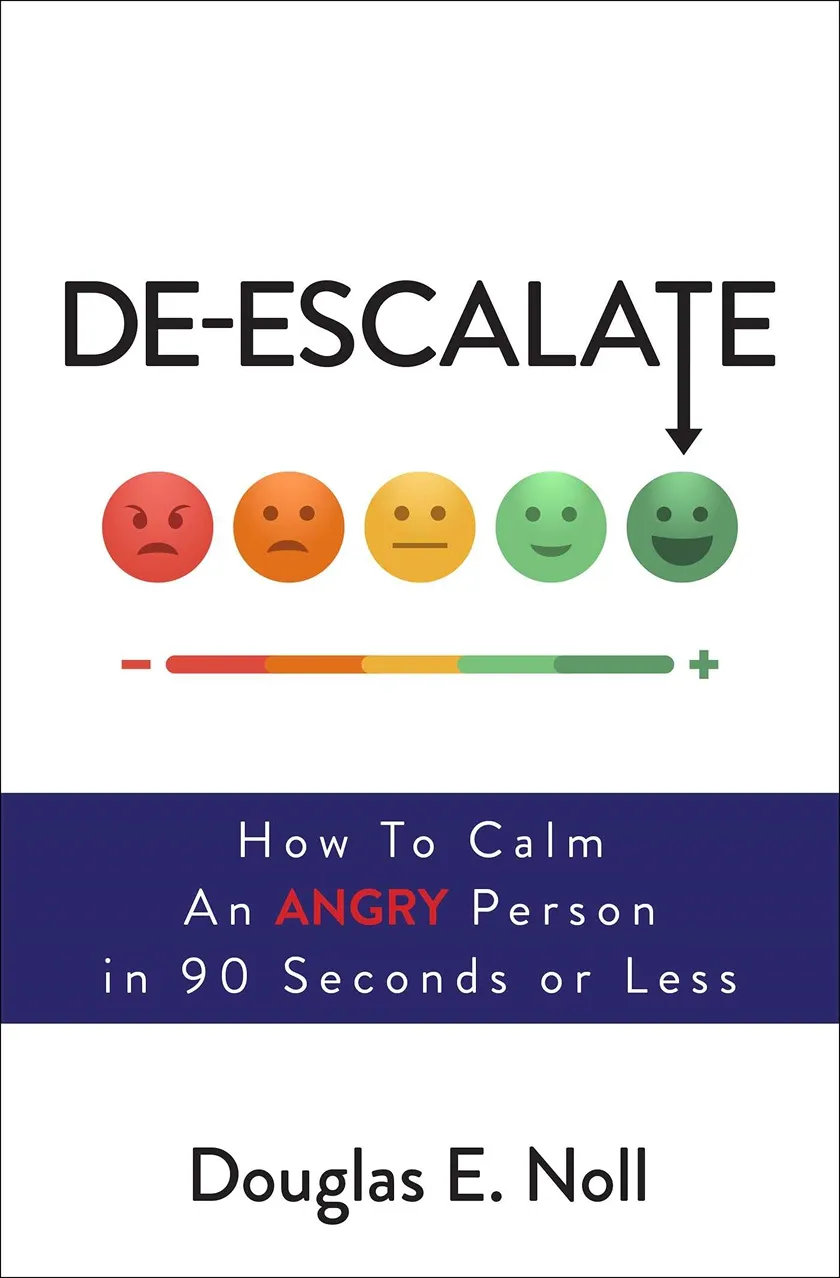
De-Escalate: How to Calm an Angry Person in 90 Seconds or Less

And receive deep discounts on Doug's online training when you purchase the book.


de-escalate doug noll

About the Author

flareAI Services

Related posts

The Rationality Myth: 5 Shocking Reasons Logic Fails Most Leaders

Read More

The Role of Emotional Intelligence in Preventing Employee Disengagement and Turnover

Read More

How Crisis Prevention Training Reduces Workplace Violence and Enhances Employee Safety

Read More

From Conflict to Cooperation: The Power of Emotional Intelligence in Negotiations

Read More
>