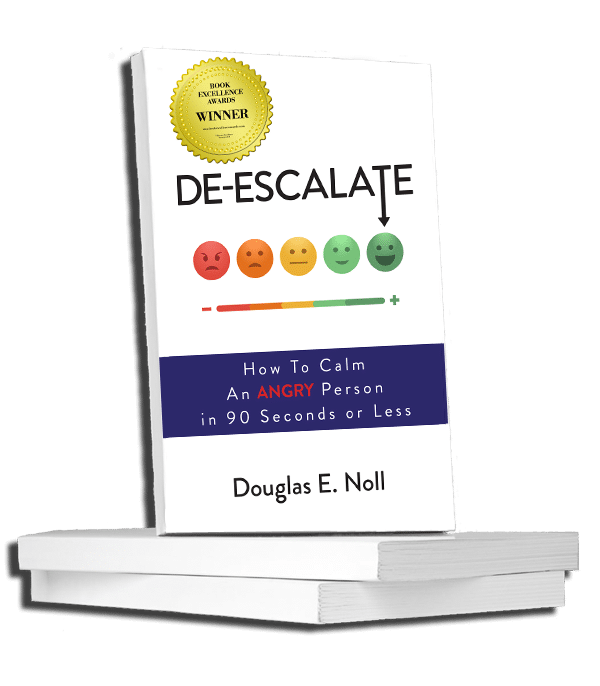
In a world where crises be it a corporate standoff or a natural disaster can erupt without warning, the ability to remain calm and clear-headed is a rare and vital skill. Emotional self-awareness, the capacity to understand and manage one’s own emotions, is no longer a luxury but a necessity for leaders navigating high-stakes situations. Across North America, where wildfires, workplace disputes, and security threats are on the rise, this skill is proving to be a linchpin of effective crisis management. Doug Noll, a renowned mediator and creator of the neuroscience-backed Noll Method™, has demonstrated its power, transforming conflicts in settings from maximum-security prisons to executive boardrooms with his signature 90-Second Power Move.
Emotional conflicts fracture teams and families. The ongoing tension breeds burnout, damages relationships, and hurts performance. The Noll Method’s 90-Second Power Move™ is a proven, neuroscience-based skill for restoring calm, tested from boardrooms to maximum-security prisons. Master this life-changing technique to transform chaos into collaboration. Book a no-obligation zoom call with Doug Noll today!
The Growing Crisis Management Imperative
North America faces a relentless array of challenges, from natural disasters to corporate upheavals. A 2024 report values the global incident and emergency management market at USD 131.92 billion, with North America holding a commanding 37.6% share. This reflects the region’s exposure to hurricanes, earthquakes, and industrial accidents, alongside a robust push for preparedness. Projections indicate this market will grow to USD 218.04 billion by 2033, with a steady 6.2% compound annual growth rate (CAGR). Similarly, the broader crisis management market, pegged at USD 140.3 billion in 2025, is forecasted to reach USD 289.1 billion by 2035, driven by a 7.5% CAGR, fueled by rising investments in risk mitigation and regulatory pressures.
At the core of these strategies lies emotional intelligence (EI), with emotional self-awareness as its foundation. This skill enables leaders to recognize their emotional triggers and respond with precision, a principle central to Doug Noll’s Noll Method™. Unlike conventional approaches that prioritize logistics, Noll’s technique uses targeted emotional phrasing to defuse tension in as little as 90 seconds, offering a transformative tool for leaders in high-pressure environments.
Emotional Intelligence: A Rising Priority
Emotional intelligence is reshaping leadership across North America. From corporate training programs to public sector initiatives, EI is now a cornerstone of professional development. Research from North American institutions underscores its role in reducing workplace stress and conflict, with organizations like Kaiser Permanente and AdventHealth embedding EI into their crisis response frameworks. A 2023 analysis highlights the crisis management market, valued at USD 121.4 billion, projecting growth at over 7.5% CAGR through 2032, driven by the increasing frequency of natural disasters and the recognition that emotionally intelligent leadership mitigates their human impact.
Doug Noll’s work epitomizes this shift. With over 40 years of experience, including training life inmates to curb prison violence, Noll stands alone in his field. “I am the only person teaching these skills,” he declares, emphasizing the uniqueness of his neuroscience-driven approach. His Noll Method™ has been embraced by diverse North American organizations, from healthcare providers to educational institutions like Lewiston Public Schools, showcasing its adaptability across sectors.
Proven Impact: Emotional Self-Awareness in Action
Noll’s methods deliver results in the most challenging environments. In one remarkable case, he trained life inmates in a maximum-security prison to use his 90-Second Power Move, significantly reducing violent incidents. In corporate settings, his coaching has reshaped executive dynamics. For instance, a healthcare organization applied the Noll Method™ to resolve a heated dispute among department leaders, fostering collaboration and averting a costly impasse. These outcomes align with research from the Journal of International Advanced Research, which found that leaders with high EI, marked by empathy and self-awareness, bolster employee morale and organizational resilience during crises.
Beyond prisons and boardrooms, EI is proving invaluable for public leaders. First responders trained in emotional intelligence maintain calm during emergencies, from wildfires to public health crises, by fostering trust and clear communication. This ability to create stability in chaos underscores why EI is becoming a critical asset across North America’s crisis management landscape.
Navigating Resistance: Overcoming Barriers
Despite its benefits, emotional self-awareness meets skepticism. Common objections include doubts about its efficacy “I don’t believe it will work” or the notion that conflict is inevitable: “Fights and arguments are a part of life and will never go away.” Some leaders hesitate, admitting, “I am afraid of working with and mastering my emotions,” wary of the vulnerability it demands. These concerns resonate in high-stakes settings where emotional exposure feels risky.
Noll addresses these doubts with a bold promise: “You will be able to stop fights and arguments.” His neuroscience-based approach sidesteps traditional conflict resolution flaws by prioritizing emotional regulation. However, implementing EI training faces hurdles, including cultural resistance to vulnerability and skepticism from past ineffective methods. Overcoming these requires dedication, but the rewards reduced conflict and sharper decision-making are undeniable.
Seizing Opportunities: Strengthening Organizations
Emotional self-awareness offers more than crisis resolution; it drives organizational success. Leaders with strong EI make empathetic, effective decisions under pressure, as highlighted in a Rise Up Global report. This translates to improved team collaboration, higher morale, and lower conflict costs. In North America, the homeland security and emergency management market, valued at USD 631.42 billion in 2023, is projected to reach USD 914.07 billion by 2030 with a 5.4% CAGR, underscoring the value of EI-driven strategies.
Leadership programs are capitalizing on this trend, integrating EI into crisis management training. Noll’s clients, including Veterinary United and Alchemy Healthcare, report enhanced team dynamics and crisis response, proving emotional self-awareness is a strategic necessity, not just a soft skill.
The Future of Crisis Leadership
As North America grapples with escalating crises, from climate-driven disasters to corporate challenges, emotional self-awareness emerges as a critical leadership tool. Doug Noll’s pioneering Noll Method™, refined over decades and validated by research, demonstrates that mastering emotions can turn chaos into calm in just 90 seconds. With crisis management markets surging and emotional intelligence gaining ground, the mandate is clear: leaders must embrace EI to navigate uncertainty with confidence. Organizations that prioritize this skill will not only survive crises but thrive, transforming challenges into opportunities for growth and resilience.
Frequently Asked Questions
What is emotional self-awareness and why does it matter in crisis management?
Emotional self-awareness is the ability to recognize and manage your own emotions, particularly during high-pressure situations. In crisis management, this skill enables leaders to identify their emotional triggers and respond with precision rather than react impulsively, which is essential when navigating workplace conflicts, natural disasters, or security threats. Leaders with strong emotional self-awareness can maintain clarity and make better decisions when chaos erupts, ultimately reducing conflict and improving organizational resilience.
What is Doug Noll’s 90-Second Power Move and how does it work?
The 90-Second Power Move is a neuroscience-backed technique developed by mediator Doug Noll as part of his Noll Method™. This approach uses targeted emotional phrasing to defuse tension and stop conflicts in as little as 90 seconds, rather than relying solely on traditional logistics-focused strategies. The method has proven effective in diverse settings from maximum-security prisons where it reduced violent incidents among inmates to corporate boardrooms where it resolved heated disputes among executives.
How can organizations benefit from training leaders in emotional intelligence during crises?
Organizations that invest in emotional intelligence training experience improved team collaboration, higher employee morale, reduced conflict costs, and more empathetic decision-making under pressure. Research shows that emotionally intelligent leaders bolster organizational resilience during crises, whether responding to natural disasters, workplace disputes, or public health emergencies. North American organizations ranging from healthcare providers like Kaiser Permanente to educational institutions have successfully integrated EI into their crisis response frameworks, demonstrating its strategic value across sectors.
Disclaimer: The above helpful resources content contains personal opinions and experiences. The information provided is for general knowledge and does not constitute professional advice.
You may also be interested in: Finding Calm in Chaos: 5 Effective Techniques to Manage Difficult
Emotional conflicts fracture teams and families. The ongoing tension breeds burnout, damages relationships, and hurts performance. The Noll Method’s 90-Second Power Move™ is a proven, neuroscience-based skill for restoring calm, tested from boardrooms to maximum-security prisons. Master this life-changing technique to transform chaos into collaboration. Book a no-obligation zoom call with Doug Noll today!
Powered by flareAI.co