Quick Listen:
A tech executive faces a room of wary investors, the tension palpable as a critical funding deal teeters on the edge. Rather than diving into numbers or pressing for agreement, she pauses, locks eyes with the group, and says, “I can see you’re concerned about the scalability projections.” The room exhales. The mood shifts. This isn’t just a clever move it’s a deliberate, science-backed strategy rooted in emotional intelligence, one that’s reshaping how North American leaders navigate conflict and close deals.
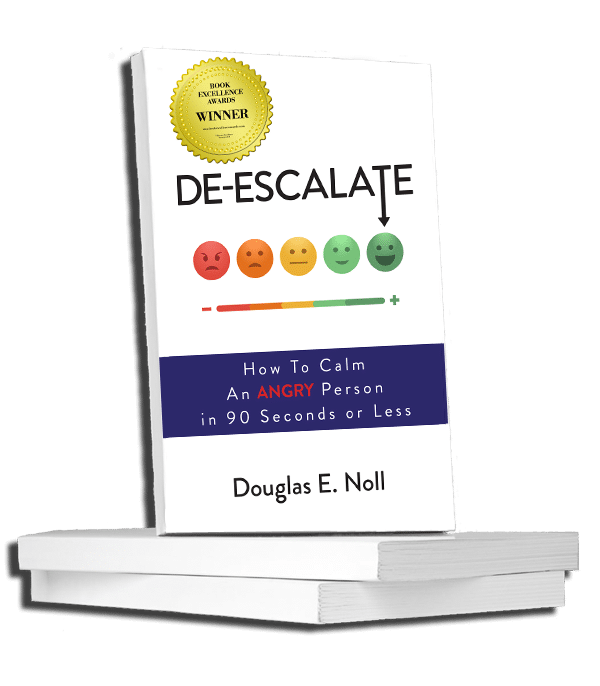
Emotional conflicts fracture teams and families. The ongoing tension breeds burnout, damages relationships, and hurts performance. The Noll Method’s 90-Second Power Move™ is a proven, neuroscience-based skill for restoring calm, tested from boardrooms to maximum-security prisons. Master this life-changing technique to transform chaos into collaboration. Book a no-obligation zoom call with Doug Noll today!
Building Trust Through Language: The New Negotiation Imperative
Across North America, from Silicon Valley’s venture capital tables to Ottawa’s policy roundtables, the art of negotiation is evolving. The old-school approach of steamrolling opponents with aggressive tactics or polished pitches is losing ground. In its place, emotionally intelligent communication precise, empathetic, and trust-building is emerging as the defining skill for success. A 2024 Harvard Program on Negotiation study reveals that negotiators using empathetic language close 32% more deals than those leaning on transactional or directive phrasing. Trust, it seems, is forged not in bold moves but in the careful choice of words.
The North American negotiation landscape is a complex tapestry of cultural diversity, virtual platforms, and high-pressure industries like healthcare, tech, and finance. Leaders must navigate emotional currents where a single misstep can unravel months of effort. Enter Doug Noll, a trailblazer in emotional de-escalation with over four decades of experience, including teaching life inmates to quell prison violence. Noll’s unique method identifying and reflecting emotions to build trust promises to stop arguments cold, whether in corporate offices or community disputes. His clients, spanning organizations like AdventHealth and Kaiser Permanente, are proof of its impact.
A Cultural Shift: From Confrontation to Connection
The traditional negotiation playbook dominate, persuade, conquer is fading fast. North American leaders are pivoting toward a model that prioritizes connection over control. A 2023 LinkedIn Workplace Learning Report notes an 18% surge in U.S. corporate spending on emotional intelligence training, signaling a demand for skills that foster collaboration. This shift is especially critical in virtual negotiations, where the absence of physical cues makes tone and word choice paramount. A poorly chosen phrase can fracture trust faster than a flawed proposal.
In high-stakes sectors like healthcare, the results are striking. A Fortune 500 provider in Ohio, adopting emotionally intelligent negotiation techniques, saw employee grievances plummet by 25% within a year, per a 2024 OhioHills Healthcare Network report. The key? Leaders were trained to acknowledge emotions frustration, uncertainty before tackling logistics, a core tenet of Noll’s approach. By validating feelings first, they diffused tension and paved the way for constructive dialogue. This isn’t just a trend; it’s a measurable transformation in how North Americans resolve conflict.
Noll’s influence extends beyond corporate settings. His client list, including organizations like Aces Matter, reflects a broad application of his techniques across community and professional spheres. His work underscores a truth: emotional intelligence isn’t a soft skill it’s a strategic advantage that reshapes outcomes in any high-pressure environment.
The Science Behind Trust: How Words Rewire the Brain
Neuroscience offers compelling evidence for this approach. Research from UC Berkeley’s Greater Good Science Center shows that validating emotions through language reduces cortisol levels in tense negotiations, enhancing cognitive flexibility and problem-solving. A 2023 University of Toronto study further supports this, finding that framing negotiation statements as collaborative rather than competitive increases agreement rates by 27%. These insights align with Noll’s methodology, which emphasizes mirroring emotional states before addressing rational arguments a sequence that proves effective whether defusing a labor dispute or sealing a corporate deal.
Noll’s framework has been tested in extreme contexts. In California’s correctional facilities, his training has cut violent incidents by over 80% by equipping inmates with reflective language skills to de-escalate conflicts. The same principles resonate in boardrooms and mediation rooms. For instance, Canada’s federal mediation office, adopting reflective language techniques in 2023, has streamlined labor negotiations across multiple provinces. This scalability underscores a universal truth: emotionally intelligent communication works, no matter the stakes.
The science also connects to linguistic style matching, a concept explored in a 2015 study on U.S. presidential debates. Researchers found that aligning linguistic styles with an opponent enhances third-party perceptions by signaling perspective-taking and easing comprehension. While some argue this risks appearing deferential, Noll’s approach flips the script: reflecting emotions doesn’t signal weakness it builds a bridge to mutual understanding.
Breaking Down Barriers: Addressing Skepticism
Despite the evidence, resistance persists. Many North American professionals harbor doubts: “Conflict is inevitable,” they argue, or “Mastering emotions feels too exposed.” These objections, rooted in a cultural bias that equates empathy with vulnerability, pose a significant challenge. Others fall into the trap of scripted communication, which can feel mechanical and undermine authenticity. Corporate training programs often exacerbate this by prioritizing compliance over genuine connection, leaving leaders unprepared for real-world disputes.
Noll tackles these hurdles head-on. His 40+ years of experience, from prisons to executive suites, demonstrate that emotional mastery is not a liability but a strength. By teaching leaders to name and navigate emotions, he dismantles the notion that conflict is unchangeable. His clients, ranging from healthcare leaders to community advocates, see tangible results that counter these objections. For example, organizations like Lewiston Public Schools have adopted his techniques to foster collaboration and reduce disputes, proving that emotional intelligence transcends traditional barriers.
The Trust Dividend: A Measurable Edge
In North America’s competitive markets, trust is a currency with quantifiable returns. The American Management Association’s 2024 data shows that teams led by linguistically empathetic leaders report 48% higher collaboration scores and 31% better retention. In sectors like tech and finance, where long-term relationships drive revenue, this “trust dividend” is transformative. Even in virtual environments, where miscommunication is a constant risk, emotionally intelligent leaders convert skepticism into commitment.
Technology is amplifying this shift. AI-driven coaching platforms, used by firms like those in Noll’s client roster, are embedding emotional intelligence into scalable training solutions. Yet, Noll’s unique edge lies in his exclusivity he’s the only expert teaching these specific de-escalation skills, honed in the most challenging environments. His methods offer a blueprint for leaders seeking not just compliance but authentic connection, a value that resonates across industries from healthcare to education.
The procurement analytics market, valued at USD 2.88 billion in 2021 and projected to reach USD 18.18 billion by 2030, underscores North America’s leadership in adopting efficiency-driven solutions, with a 40% revenue share in 2021. This focus on operational excellence mirrors the growing emphasis on trust-building as a core business strategy.
The Future of Negotiation: Trust as the Ultimate Currency
Negotiation is no longer about outmaneuvering opponents; it’s about forging understanding. As North American markets embrace purpose-driven leadership, the ability to wield language with emotional precision will define the next wave of dealmakers. Doug Noll’s insight is unequivocal: true mastery lies in recognizing and articulating emotions before pursuing agreement. From prison yards to corporate penthouses, his approach proves that trust, built word by careful word, can resolve even the most entrenched conflicts.
The path forward is unmistakable. As leaders in the U.S. and Canada tackle increasingly intricate deals and disputes, those who master empathetic communication will not only secure agreements they’ll cultivate relationships that endure. For executives, mediators, and anyone navigating high-stakes conversations, the mandate is clear: listen deeply, validate sincerely, and connect authentically. In the end, the right words don’t just end disputes they forge trust that lasts a lifetime.
Frequently Asked Questions
How does emotional intelligence improve negotiation outcomes in business?
Emotional intelligence transforms negotiation by prioritizing empathetic communication over aggressive tactics. Research shows that negotiators using empathetic language close 32% more deals, while organizations adopting emotionally intelligent techniques see measurable improvements like 25% reductions in employee grievances and 48% higher collaboration scores. By validating emotions before addressing logistics, leaders build trust that creates lasting agreements rather than just short-term wins.
What is the science behind using language to build trust in negotiations?
Neuroscience research demonstrates that validating emotions through language reduces cortisol levels during tense negotiations, which enhances cognitive flexibility and problem-solving abilities. Studies from UC Berkeley and the University of Toronto show that collaborative framing increases agreement rates by 27%, while reflective language techniques which involve identifying and mirroring emotional states create neural pathways that facilitate mutual understanding. This approach has proven effective in contexts ranging from prison conflict resolution to corporate boardrooms, with some programs reducing violent incidents by over 80%.
Why are North American companies investing more in emotional intelligence training for leaders?
The North American business landscape is shifting from confrontational negotiation tactics to connection-based approaches, with U.S. corporate spending on emotional intelligence training surging 18% as of 2023. This investment reflects the growing recognition that trust is a quantifiable currency teams led by emotionally intelligent leaders show 31% better retention and stronger long-term relationships. In virtual environments where miscommunication risks are higher and traditional physical cues are absent, mastering emotionally precise language has become essential for closing deals and resolving conflicts effectively.
Disclaimer: The above helpful resources content contains personal opinions and experiences. The information provided is for general knowledge and does not constitute professional advice.
You may also be interested in: Developing Empathy-5 Effective Ways And Its Role In Relationships
Emotional conflicts fracture teams and families. The ongoing tension breeds burnout, damages relationships, and hurts performance. The Noll Method’s 90-Second Power Move™ is a proven, neuroscience-based skill for restoring calm, tested from boardrooms to maximum-security prisons. Master this life-changing technique to transform chaos into collaboration. Book a no-obligation zoom call with Doug Noll today!
Powered by flareAI.co