Quick Listen:
Picture a tense moment in a Chicago corporate office: a project manager’s voice spikes during a heated debate over missed deadlines. In a Vancouver hospital, a nurse clashes with a supervisor over shift assignments, frustration palpable in the air. These snapshots of workplace conflict are increasingly common across North America, where stress and tension are reshaping team dynamics. With emotional intelligence (EI) now a cornerstone of effective leadership, managers are learning to defuse conflicts and restore calm, turning potential crises into opportunities for connection.
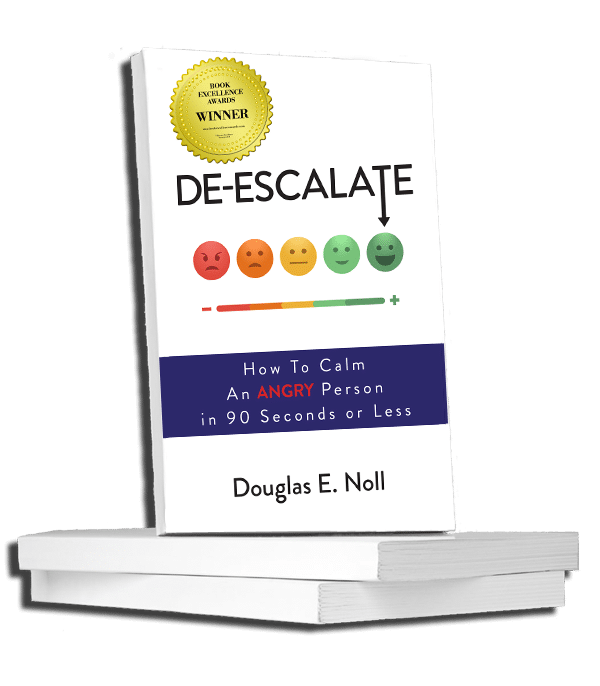
Emotional conflicts fracture teams and families. The ongoing tension breeds burnout, damages relationships, and hurts performance. The Noll Method’s 90-Second Power Move™ is a proven, neuroscience-based skill for restoring calm, tested from boardrooms to maximum-security prisons. Master this life-changing technique to transform chaos into collaboration. Book a no-obligation zoom call with Doug Noll today!
Workplace Stress: A Growing Challenge
The post-pandemic workplace is a crucible for emotional strain. Gallup’s 2024 State of the Workplace Report reveals that 36% of U.S. employees experience frequent stress, a trend echoed in Canada, where the Canadian Mental Health Association reports one in four workers faces monthly colleague conflicts. These aren’t mere disagreements unresolved disputes can fracture trust, sap morale, and drive costly turnover. The SHRM toolkit highlights a staggering 208 million daily acts of workplace incivility, underscoring the urgency for leaders to address tension effectively.
Emotional intelligence the ability to understand and manage emotions in oneself and others is proving to be a game-changer. It’s the skill that turns a shouting match into a constructive dialogue. As hybrid work, generational differences, and rising incivility fuel workplace friction, EI training is becoming a critical tool for leaders aiming to foster psychological safety and maintain team cohesion.
Equipping Leaders with EI Tools
North American organizations are investing heavily in EI training to empower managers with de-escalation strategies. According to the 2025 LinkedIn Learning Workplace Report, enrollments in EI and conflict-resolution courses among U.S. and Canadian managers have surged by 47%. Programs range from bite-sized micro-learning modules to immersive role-play simulations, teaching leaders to prioritize emotional acknowledgment over immediate problem-solving. Conflict resolution expert Doug Noll’s De-Escalate Method, for instance, emphasizes “listening others into existence,” a technique that validates feelings to defuse tension.
Government support is amplifying this trend. Canada’s Future Skills Centre and the U.S. Department of Labor’s Workforce Resilience Initiative are funding emotional-competency programs, recognizing that technical expertise alone can’t navigate today’s volatile workplace dynamics. Innovative tools are also emerging: virtual reality simulations and AI-driven emotional analytics provide real-time feedback, helping leaders refine their approach to high-stakes interactions. As companies embrace these advancements, they’re redefining leadership for a more emotionally complex era.
Success Stories: EI Transforming Workplaces
The impact of EI training is measurable. A Silicon Valley Fortune 500 tech firm saw an 18% reduction in team turnover after implementing EI-based coaching, per SHRM North America’s 2024 study. Managers trained to use phrases like “I see you’re upset let’s explore this together” resolved conflicts before they escalated to HR. Similarly, a Toronto healthcare provider used empathy-mapping sessions to address nurse-administrator tensions, achieving a 25% drop in reported grievances. These outcomes stem from practical techniques: naming emotions without judgment, using reflective statements, and setting respectful boundaries to preserve psychological safety.
The market for these solutions is booming. The North America workplace conflict management market is projected to grow from USD 3.56 billion in 2025 to USD 7.40 billion by 2032, with a compound annual growth rate of 11%. Mediation holds a leading 33.2% market share, while services dominate at 59.7%, driven by large enterprises (67.1% share). Companies are increasingly adopting AI-driven tools and tailored programs to tackle remote and hybrid work challenges, prioritizing collaboration and stress reduction.
Navigating Emotional and Cultural Hurdles
Despite progress, significant barriers remain. A 2024 Harvard Business Review Analytic Services report found that only 28% of North American managers feel equipped to handle emotional outbursts. Many lack training in self-regulation, leaving them vulnerable in high-pressure situations. Cultural differences compound the issue: U.S. workplaces often emphasize efficiency over empathy, while Canadian leaders grapple with balancing assertiveness and compassion. These dynamics create a delicate balancing act for managers navigating emotional terrain.
The stakes are high. Unresolved conflicts lead to disengagement, burnout, and costly HR escalations. As noted in the SHRM toolkit, unchecked tensions can cause serious operational harm, from disrupted workflows to damaged reputations. EI training is no longer optional it’s a strategic necessity for organizations aiming to thrive in a high-stress environment.
The Business Case for Emotional Intelligence
The return on investment for EI is undeniable. Deloitte Canada’s 2024 Human Capital Trends report shows that organizations with EI-focused leadership programs achieve 12% higher retention and 17% stronger team trust. In service-driven sectors, emotionally intelligent leaders drive lower absenteeism and higher customer satisfaction, transforming empathy into a competitive advantage. The global workforce management market, valued at USD 10.53 billion in 2024 and expected to reach USD 31.44 billion by 2034 with a CAGR of 11.56%, reflects the rising demand for tools that optimize human capital, including conflict resolution solutions.
This shift signals a broader evolution: from rigid, compliance-driven leadership to models that prioritize connection. By leveraging emotions strategically, leaders create environments where employees feel valued, not sidelined. As one leadership consultant aptly put it, EI is the “soft skill with hardwired returns,” delivering measurable benefits in productivity and morale.
The Next Frontier: Technology and EI
Experts like Dr. Daniel Goleman of the EI Research Consortium and Dr. Sarah Jane Lindsay of the Canadian Institute for Conflict Resolution view EI as the future of leadership. They foresee AI-driven emotional analytics and virtual reality conflict simulations revolutionizing training, enabling leaders to practice de-escalation in lifelike scenarios. The North America conflict management market underscores this, with mediation leading at 33.2% share in 2025 and technology-driven solutions gaining ground for real-time dispute resolution.
Yet, technology is only part of the equation. “Resolving conflict isn’t about algorithms it’s about human connection,” Goleman emphasizes. Lindsay agrees, noting that structured EI training empowers leaders to transform disputes into opportunities for collaboration, building resilience in an increasingly complex corporate landscape. As these tools evolve, they’ll complement, not replace, the human touch that defines effective leadership.
From Tension to Trust: A Path Forward
Calming an upset team member isn’t intuitive it’s a skill honed through deliberate practice. In North American workplaces, where stress and conflict are daily realities, emotional intelligence is proving its transformative power. By listening actively, validating emotions, and maintaining respectful boundaries, leaders can turn volatile moments into opportunities for trust and growth. With the conflict management market set to reach USD 7.40 billion by 2032 and companies investing in EI training, the message is clear: empathy isn’t just a leadership trait it’s the foundation of resilient, harmonious workplaces. For leaders ready to bridge divides, the journey starts with a single, empathetic conversation.
Frequently Asked Questions
How can I effectively de-escalate a conflict with an upset team member?
To de-escalate a conflict, start by actively listening to your team member’s concerns without interrupting, as this shows empathy and respect. Acknowledge their feelings and use a calm, neutral tone to keep the conversation constructive. The blog emphasizes creating a safe space for open dialogue, which helps reduce tension and fosters understanding. Practicing these steps can lead to a more collaborative resolution.
What are the best communication strategies for managing team conflicts?
Effective communication strategies include using “I” statements to express your perspective without assigning blame and asking open-ended questions to understand the team member’s viewpoint. The blog highlights the importance of staying composed and avoiding defensive responses, which helps maintain a productive conversation. These techniques build trust and encourage a solution-focused mindset during conflicts.
Why is emotional intelligence important when handling an upset team member?
Emotional intelligence is crucial because it allows you to recognize and manage your own emotions while empathizing with the team member’s feelings. The blog notes that high emotional intelligence helps leaders navigate conflicts by responding thoughtfully rather than reacting impulsively. This approach creates a supportive environment, making it easier to resolve issues and strengthen team relationships.
Disclaimer: The above helpful resources content contains personal opinions and experiences. The information provided is for general knowledge and does not constitute professional advice.
You may also be interested in: Vets Use De-Escalation Techniques for Workplace Conflicts
Emotional conflicts fracture teams and families. The ongoing tension breeds burnout, damages relationships, and hurts performance. The Noll Method’s 90-Second Power Move™ is a proven, neuroscience-based skill for restoring calm, tested from boardrooms to maximum-security prisons. Master this life-changing technique to transform chaos into collaboration. Book a no-obligation zoom call with Doug Noll today!
Powered by flareAI.co