Quick Listen:
Imagine a boardroom where tempers flare, deadlines loom, and collaboration grinds to a halt. This isn’t just a rough moment it’s a workplace conflict with the potential to unravel team cohesion, sap morale, and cripple productivity. Conflict is inevitable in any workplace, but how it’s managed can define an organization’s culture and success. In today’s dynamic, often remote work landscape, mastering conflict de-escalation is no longer optional it’s essential. Experts, including those featured on NPR’s Life Kit, provide actionable strategies to transform workplace disputes into opportunities for growth, collaboration, and stronger relationships.
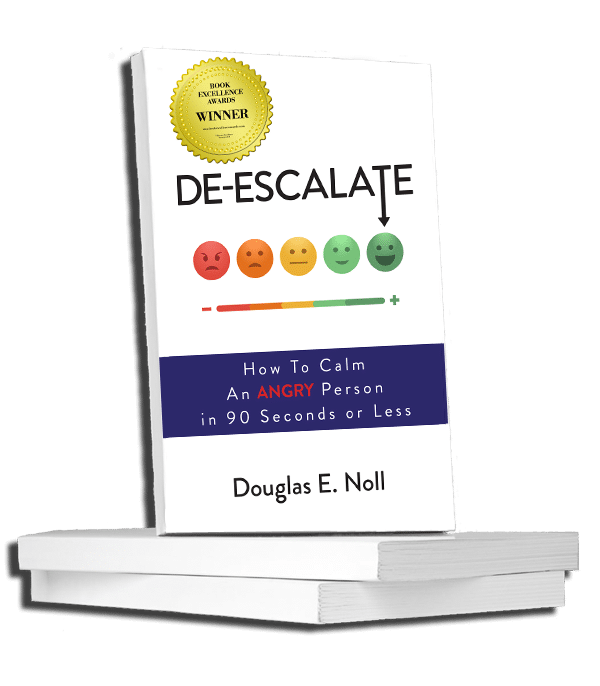
Emotional conflicts fracture teams and families. The ongoing tension breeds burnout, damages relationships, and hurts performance. The Noll Method’s 90-Second Power Move™ is a proven, neuroscience-based skill for restoring calm, tested from boardrooms to maximum-security prisons. Master this life-changing technique to transform chaos into collaboration. Book a no-obligation zoom call with Doug Noll today!
Harnessing Emotional Intelligence for Conflict Resolution
At the core of effective conflict management lies emotional intelligence the ability to recognize, understand, and manage emotions in oneself and others. Leaders skilled in EI can defuse tense situations by fostering open dialogue and mutual respect. Research consistently shows that employees who feel genuinely heard are more likely to engage in collaborative problem-solving, turning potential conflicts into constructive discussions. A 2024 Gallup report underscores this, revealing that teams with strong conflict resolution frameworks achieve 18% higher engagement scores compared to those without.
Emotional intelligence isn’t exclusive to leadership. Employees at all levels benefit from training in self-regulation and social awareness, which can prevent minor disagreements from escalating. Consider a scenario where a missed deadline sparks tension. An EI-driven approach shifts the focus from blame to understanding: “What caused this misstep?” or “How can we align our goals?” This mindset transforms workplaces, making conflicts less about winning and more about finding shared solutions. By fostering curiosity over confrontation, EI empowers teams to resolve disputes with clarity and respect.
Adapting to Conflict in Remote and Hybrid Workspaces
The shift to remote and hybrid work has reshaped conflict dynamics. Without non-verbal cues like body language or tone, digital communication often amplifies misunderstandings. A study from the University of California notes that virtual conflicts take longer to resolve due to these missing signals. A terse email or a poorly phrased message can quickly escalate into a full-blown dispute, especially when immediate clarification isn’t possible.
To address this, organizations are adopting tailored communication strategies for digital environments. Advanced tools, including AI-driven platforms, are gaining traction for their ability to monitor disputes in real time and suggest de-escalation tactics. According to a 2025 market report, the North American workplace conflict management market, valued at $3.56 billion in 2025, is projected to grow to $7.40 billion by 2032, driven by an 11% compound annual growth rate. These tools, alongside customized conflict management programs, help organizations tackle the challenges of remote and hybrid work, promoting collaboration and reducing stress.
Lessons from Leaders: Real-World Conflict Resolution
Some organizations are setting the gold standard for conflict resolution. Google, for instance, integrates its “Psychological Safety” framework into leadership training, encouraging employees to voice concerns without fear of backlash. In one case, a product team and a design department clashed over a feature’s direction. By leveraging EI principles, leaders facilitated a dialogue that clarified priorities and fostered collaboration, transforming a potential deadlock into a shared success.
The healthcare sector offers another powerful example. At Mayo Clinic, where high-pressure environments are common, staff receive training in emotional regulation to manage conflicts effectively. This approach has reduced workplace altercations and improved patient care outcomes, proving that de-escalation is not only possible but transformative, even in high-stakes settings. These examples highlight how structured training and a focus on empathy can turn conflict into an opportunity for growth.
Another resource for managers is the step-by-step mediation process outlined by Pollack Peacebuilding. Their guide emphasizes structured communication to resolve disputes between coworkers, offering practical tools for supervisors to mediate effectively. For organizations facing persistent conflict, such frameworks provide a roadmap to address systemic issues and restore harmony.
Overcoming Barriers to Effective Conflict Resolution
Despite its benefits, conflict resolution isn’t without challenges. One significant hurdle is employee skepticism about training programs. A 2024 study by the North American Institute for Workplace Harmony found that 30% of employees question the value of EI training, often seeing it as a corporate formality rather than a practical solution. Overcoming this resistance requires leaders to demonstrate measurable outcomes, proving that these skills deliver real results.
High-conflict personalities pose another challenge. These individuals, often characterized by aggression or inflexibility, can derail resolution efforts. Specialized techniques, such as setting firm boundaries or redirecting discussions toward common objectives, are essential for managing such dynamics. Additionally, power imbalances complicate matters. A 2023 American Management Association report highlights that conflicts involving leadership often discourage employees from speaking up, emphasizing the need for transparent and inclusive resolution processes.
The Rewards of Mastering Conflict Resolution
Effective conflict resolution yields significant benefits. Swift de-escalation minimizes disruptions, boosts morale, and enhances productivity. Employees who feel their concerns are addressed are more engaged and committed, with Gallup’s data linking strong conflict management to higher retention rates. On a broader scale, resolving conflicts fosters collaboration, breaking down silos and sparking innovation across teams.
Leaders who excel in these skills also cultivate stronger organizational cultures. By modeling empathy and open communication, they create environments where employees feel safe to express ideas and resolve disputes constructively. This cultural shift has tangible economic impact. The global conflict resolution solutions market, valued at $8.79 billion in 2024, is projected to reach $12.68 billion by 2029, reflecting a 7.4% compound annual growth rate. This growth underscores the rising demand for tools and training that address workplace disputes effectively.
A Path Forward: Building a Conflict-Resilient Workplace
Conflict doesn’t have to be a workplace villain. As experts on NPR’s Life Kit emphasize, approaching disputes with empathy and openness can turn tension into a bridge for connection. Whether through emotional intelligence training, AI-powered tools, or structured mediation, organizations have a wealth of resources to navigate conflicts with finesse. The future of work demands leaders who can transform disagreements into opportunities for growth, fostering environments where collaboration and productivity flourish.
North America’s growing investment in conflict management solutions signals a promising shift. With the market set to nearly double by 2032 and innovations like real-time dispute monitoring gaining traction, companies are well-positioned to make conflict a catalyst for progress. The next time a disagreement erupts whether in a conference room or a virtual chat see it not as a setback but as a chance to build a stronger, more cohesive team. To get started, consider exploring leadership training or emotional intelligence workshops to equip your organization with the tools to thrive in any storm.
Frequently Asked Questions
What role does emotional intelligence play in workplace conflict resolution?
Emotional intelligence (EI) is fundamental to effective conflict management, enabling individuals to recognize, understand, and manage emotions in themselves and others. Leaders and employees skilled in EI can defuse tense situations by fostering open dialogue and shifting focus from blame to understanding. Research shows that teams with strong conflict resolution frameworks achieve 18% higher engagement scores, demonstrating that EI transforms workplace disputes into opportunities for collaborative problem-solving.
How has remote work changed the way workplace conflicts occur and need to be resolved?
Remote and hybrid work environments have amplified workplace conflicts due to the absence of non-verbal cues like body language and tone, making digital communication prone to misunderstandings. Virtual conflicts take longer to resolve, as a terse email or poorly phrased message can quickly escalate without immediate clarification. Organizations are addressing this by adopting AI-driven platforms that monitor disputes in real time and suggest de-escalation tactics, with the North American workplace conflict management market projected to grow from $3.56 billion in 2025 to $7.40 billion by 2032.
What are the measurable benefits of implementing conflict resolution training in organizations?
Effective conflict resolution delivers significant business outcomes, including minimized disruptions, boosted morale, enhanced productivity, and higher employee retention rates. Organizations with strong conflict management practices see employees who are more engaged and committed to their work. The global conflict resolution solutions market, valued at $8.79 billion in 2024 and projected to reach $12.68 billion by 2029, reflects the growing recognition that investing in conflict resolution tools and training provides tangible economic returns through improved collaboration and innovation.
Disclaimer: The above helpful resources content contains personal opinions and experiences. The information provided is for general knowledge and does not constitute professional advice.
You may also be interested in: Expert Keynote on Workplace Emotional Intelligence Today
Emotional conflicts fracture teams and families. The ongoing tension breeds burnout, damages relationships, and hurts performance. The Noll Method’s 90-Second Power Move™ is a proven, neuroscience-based skill for restoring calm, tested from boardrooms to maximum-security prisons. Master this life-changing technique to transform chaos into collaboration. Book a no-obligation zoom call with Doug Noll today!
Powered by flareAI.co