Quick Listen:
In an era of hybrid work, instant messaging storms, and ever-present performance pressure, managers face a reality that no spreadsheet or KPI dashboard can fully prepare them for: the moment a conversation turns tense. Technical know-how and strategic vision remain important, but the ability to recognize rising emotions and guide them back to constructive ground has quietly emerged as one of the most valuable competencies a leader can possess. De-escalation skills long the domain of first responders, hostage negotiators, and frontline service professionals are now becoming table stakes for anyone responsible for people in modern organizations.
Picture a routine one-on-one that suddenly veers off course: one person believes their contributions have been consistently overlooked, another feels buried under an uneven distribution of tasks across time zones, and what began as a status update becomes a charged exchange. Left unchecked, these moments erode trust, sap energy, and eventually show up in higher attrition numbers and weaker team performance. Leaders who can intervene effectively, however, frequently convert friction into stronger working relationships and clearer mutual understanding.
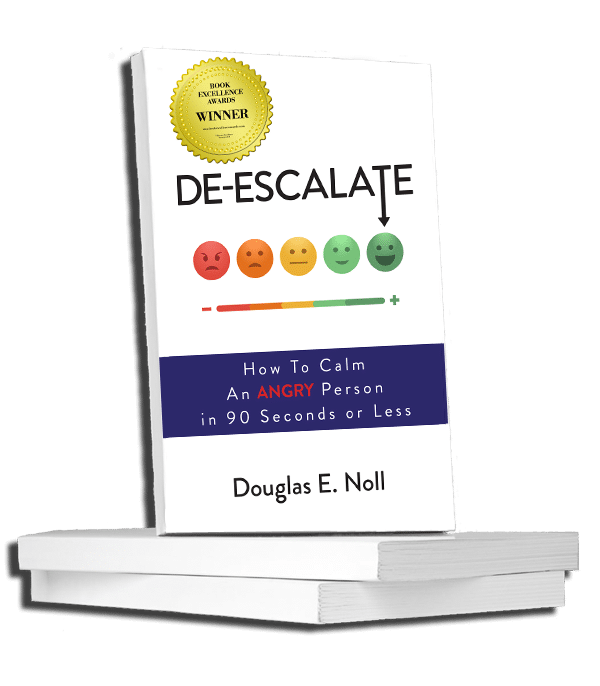
Emotional conflicts fracture teams and families. The ongoing tension breeds burnout, damages relationships, and hurts performance. The Noll Method’s 90-Second Power Move™ is a proven, neuroscience-based skill for restoring calm, tested from boardrooms to maximum-security prisons. Master this life-changing technique to transform chaos into collaboration. Book a no-obligation zoom call with Doug Noll today!
The New Reality of Conflict in Distributed Teams
The widespread adoption of remote and hybrid models has permanently altered the texture of daily work. While these arrangements deliver flexibility and access to broader talent pools, they also remove many of the subtle social signals that once helped prevent escalation. A raised eyebrow, a quick nod of acknowledgment, or even casual hallway small talk often diffused tension before it could build. Today those signals are absent, replaced by emoji, reaction gifs, and carefully worded emails that still manage to misfire.
Layer on persistent economic unease, widening generational perspectives, and the long tail of pandemic-era burnout, and it becomes clear why many managers say they are handling more frequent and emotionally loaded disagreements than ever before. The issues may appear small on the surface an unclear priority, a delayed response but they frequently carry heavier underlying meaning. The capacity to spot early warning signs and respond with intention is no longer optional; it directly influences whether a team stays cohesive or slowly frays.
Why De-escalation Has Become a Core Leadership Skill
At its heart, skillful de-escalation preserves psychological safety the shared belief that the team environment is safe for interpersonal risk-taking. When someone feels genuinely listened to rather than talked over or dismissed, they are far more willing to collaborate, innovate, and hold themselves accountable. Without that foundation, even technically strong teams underperform because energy gets diverted to self-protection instead of shared goals.
Hybrid settings amplify the challenge. Face-to-face time is scarcer, so misunderstandings compound more quickly. A leader who knows how to lower the emotional temperature can rescue a deteriorating video call and steer it toward resolution. Over time these interventions produce measurable dividends: lower voluntary turnover, higher engagement scores, and teams that recover more rapidly from setbacks.
Organizations also benefit at a systemic level. Chronic unresolved tension consumes managerial bandwidth and creates drag on decision-making. Proactive de-escalation keeps attention where it belongs on customers, strategy, and results rather than on interpersonal repair work.
Practical De-escalation Techniques Leaders Can Use Today
The good news is that de-escalation is a learnable skill set built on relatively straightforward principles. The foundation is active listening: giving someone your full attention, resisting the urge to interrupt, and reflecting back what you hear. A short, sincere statement “It’s clear this situation is weighing heavily on you” can reduce defensiveness faster than any logical counter-argument.
Maintaining Your Own Composure First
Everything starts with self-regulation. When another person’s volume or intensity rises, the strongest response is often to slow your own breathing, lower your voice, and keep your posture open. That steady presence communicates safety more powerfully than words alone and frequently invites the other party to match your calmer state.
Asking Open Questions and Showing Authentic Empathy
Sentences that begin with “Help me understand…” or “What I’m hearing is…” keep the dialogue moving forward without assigning blame. Likewise, naming the emotion without judgment “It sounds like you’re feeling really frustrated by the lack of clarity here” validates the person’s experience and signals that their perspective matters, even if you ultimately see the situation differently.
Knowing When and How to Pause
Occasionally the wisest move is to create space: “Let’s step back for a moment so we can come back to this with clearer heads.” Done respectfully, this boundary protects the conversation from irreversible damage while keeping the relationship intact.
- Anchor discussion in observable facts rather than interpretations
- Eliminate accusatory patterns such as “you always” or “you never”
- Actively search for shared interests that can serve as a bridge
Adapting De-escalation for Remote and Hybrid Work
Distributed teams require extra vigilance. Asynchronous communication magnifies the risk of tone misinterpretation, while asynchronous schedules can leave grievances to simmer longer than they should. Proactive leaders schedule video conversations when emotions appear elevated, choose words and emojis that convey warmth rather than sterility, and reach out before small issues grow large.
Thoughtfully implemented workforce management software can also reduce common flashpoints. By improving visibility into schedules, workloads, and time tracking, these platforms help eliminate perceptions of unfairness that often ignite conflict. The sustained appetite for remote and flexible arrangements remains strong surveys continue to show that an overwhelming majority of knowledge workers want to retain at least partial remote options as a permanent part of their careers. When technology handles routine fairness questions more transparently, managers gain bandwidth to focus on the human side of leadership.
How Managers Can Build De-escalation Capability
Many organizations now incorporate de-escalation training into leadership curricula, often blending conflict-resolution frameworks with emotional-intelligence development. Scenario-based practice is particularly effective: rehearsing realistic workplace situations builds confidence and reflexes so that real moments feel less overwhelming.
Even without formal programs, progress is possible. Commit to reflective listening in routine interactions. Ask a trusted peer for candid feedback after difficult conversations. Over months these small repetitions compound into a noticeably steadier leadership presence.
The Long-term Advantage of Emotionally Skilled Leaders
Work is not getting simpler, and human dynamics are not becoming less complex. Automation and analytics will continue to streamline operations, but only human judgment can navigate the unpredictable terrain of hurt feelings, mismatched expectations, and competing priorities. Managers who treat de-escalation as a serious discipline do more than avert crises; they cultivate environments where people dare to bring their full attention and creativity because they trust the relational container around them.
Great leadership has never been about the absence of conflict it has always been about the quality of response when tension arrives. In that response lies the difference between teams that fracture under pressure and those that emerge stronger, more aligned, and more resilient than before.
Frequently Asked Questions
Why are de-escalation skills important for managers in hybrid and remote work environments?
De-escalation skills help managers preserve psychological safety the foundation of high-performing teams by ensuring team members feel heard rather than dismissed. In hybrid and remote settings, the absence of non-verbal cues like facial expressions and body language means misunderstandings escalate more quickly. Leaders who can lower emotional tension during difficult conversations reduce voluntary turnover, boost engagement, and help teams recover faster from setbacks.
What are the most effective de-escalation techniques managers can use in the workplace?
The most effective techniques start with self-regulation: slowing your breathing, lowering your voice, and maintaining open body language to model calm. Active listening is equally critical using phrases like “Help me understand…” or “What I’m hearing is…” keeps dialogue constructive without assigning blame. Managers should also anchor conversations in observable facts, avoid accusatory language like “you always” or “you never,” and know when to pause a conversation to prevent irreversible damage to a working relationship.
How can organizations help managers build de-escalation and conflict resolution skills?
Many organizations are now weaving de-escalation training into leadership development programs, combining conflict-resolution frameworks with emotional intelligence coaching. Scenario-based practice is especially effective, as rehearsing realistic workplace situations builds the confidence and reflexes needed for high-stakes moments. Even without formal programs, managers can make meaningful progress by committing to reflective listening in everyday interactions and seeking candid peer feedback after difficult conversations.
Disclaimer: The above helpful resources content contains personal opinions and experiences. The information provided is for general knowledge and does not constitute professional advice.
You may also be interested in: Why Conflict Resolution Training Works Despite Skepticism
Emotional conflicts fracture teams and families. The ongoing tension breeds burnout, damages relationships, and hurts performance. The Noll Method’s 90-Second Power Move™ is a proven, neuroscience-based skill for restoring calm, tested from boardrooms to maximum-security prisons. Master this life-changing technique to transform chaos into collaboration. Book a no-obligation zoom call with Doug Noll today!
Powered by flareAI.co