Quick Listen:
In high-pressure professions, the margin between sharp performance and costly error often comes down to a matter of seconds. A pilot managing sudden turbulence, an ER physician handling multiple critical cases, or a CEO addressing a boardroom filled with skeptical investors all face the same fundamental challenge: keeping emotions from hijacking judgment. While conventional wisdom long relied on grit and suppression, a more sophisticated understanding has taken hold. Today’s most effective professionals are adopting deliberate, science-backed techniques to regulate emotion under extreme stress, transforming pressure from an enemy into a manageable force.
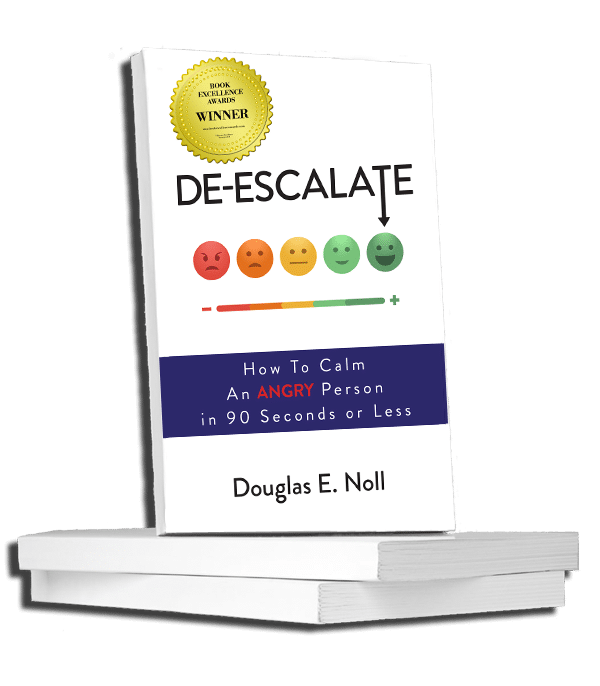
Emotional conflicts fracture teams and families. The ongoing tension breeds burnout, damages relationships, and hurts performance. The Noll Method’s 90-Second Power Move™ is a proven, neuroscience-based skill for restoring calm, tested from boardrooms to maximum-security prisons. Master this life-changing technique to transform chaos into collaboration. Book a no-obligation zoom call with Doug Noll today!
The Limits of Traditional Coping Mechanisms
For generations, high-achievers were told to “tough it out,” compartmentalize feelings, or simply power through adversity. Those approaches sometimes sufficed in less connected, less accelerated times. Today’s reality is different. Chronic stress, amplified by always-on communication and relentless performance expectations, quietly erodes even the strongest individuals. Burnout statistics climb, engagement drops, and quiet quitting becomes a widespread phenomenon. Forward-thinking organizations and individuals now recognize that suppressing emotion is neither effective nor sustainable. The new paradigm treats emotional regulation as a learnable competency one that, like strategic thinking or technical expertise, improves with structured practice.
Foundational Elements of Contemporary Regulation Techniques
Modern methods begin with self-awareness. Practitioners train to detect early physiological cues quickening pulse, shallow breathing, muscle tension before an emotional wave fully crests. Once noticed, the next step is often cognitive reappraisal: deliberately shifting perspective so a looming crisis becomes a solvable problem rather than an overwhelming disaster. Complementary tools include somatic grounding exercises rooted in polyvagal theory and brief mindfulness practices that restore parasympathetic balance in under two minutes.
Unlike traditional stress-management seminars, these approaches embed regulation into the workflow itself. Ninety-second resets during transitions, pre-meeting centering rituals, and post-incident debriefs become routine. Over months, the nervous system learns to return to baseline more rapidly, building what researchers call “emotional agility.”
Digital Tools That Extend Human Capacity
Technology now plays a quiet but powerful supporting role. Wearable devices track heart-rate variability in real time and offer discreet prompts precisely when physiological arousal spikes. Biofeedback applications convert invisible internal states into clear visual or auditory signals, training users to modulate activation through controlled breathing or posture shifts. Immersive virtual-reality environments allow surgeons, negotiators, first responders, and executives to rehearse emotionally charged scenarios repeatedly in complete safety. The advantage is immediacy and portability: regulation ceases to be a separate activity and becomes an integrated, pocket-sized skill.
Leadership Development Embraces Emotional Mastery
Progressive companies have integrated these principles directly into leadership pipelines. The global corporate leadership training market reached USD 37.45 billion in 2024, underscoring how seriously organizations now view the connection between emotional competence and business outcomes. Once limited to classic strategy and execution topics, today’s programs routinely feature dedicated modules on self-regulation, empathy under pressure, and reading team emotional dynamics. The result is leaders who remain composed during volatility, model steady behavior, and foster environments where psychological safety becomes the norm rather than the exception.
Digital delivery has made high-quality training accessible regardless of geography or schedule. Busy executives complete scenario-based modules during travel, receive personalized coaching feedback, and apply insights immediately. The practical return appears in crisper decision-making, stronger team cohesion, and noticeably lower voluntary attrition among high-performers.
Real-World Applications Across High-Stakes Domains
The utility of these methods extends far beyond corner offices. Air-traffic controllers employ structured breathing sequences to maintain razor-sharp focus during traffic surges. SWAT team members practice micro-pauses to recalibrate before dynamic entries. Software engineers use emotion-labeling phrases to interrupt escalating sprint-room tension. In every case the pattern is consistent: regulated emotion unlocks higher cognitive function, reduces preventable mistakes, and preserves relationships that sustained performance depends upon.
Practical Steps for Meaningful Adoption
Successful implementation avoids grand overhauls. Organizations typically begin with pilot groups perhaps one department or a single leadership cohort. A four-to-six-week introduction introduces one or two micro-practices per day, each requiring no more than a few minutes. Measurable early improvements (shorter recovery times after conflict, fewer stress-induced escalations) are tracked and communicated widely. Peer accountability groups form naturally, reinforcing habits through shared experience. Most important is visible leadership endorsement: when senior figures openly use regulation techniques, the entire culture receives permission to prioritize composure over bravado.
Addressing Persistent Myths
Resistance often stems from misunderstanding. Many still believe emotional regulation means becoming robotic or suppressing authentic feeling neither is true. Others assume meaningful change demands hours of silent meditation incompatible with demanding schedules. In practice, the most potent interventions are brief, pragmatic, and context-specific. Another frequent misconception is that only executives need these skills. Front-line roles frequently involve the most acute emotional load; when those teams receive equivalent training, organizational resilience improves dramatically.
Evidence of Impact Beyond Anecdote
Outcomes manifest in concrete ways. Individuals demonstrate quicker physiological recovery after stressors. Teams exhibit more constructive dialogue during disagreements. Sustained focus replaces afternoon fatigue even on long, intense days. Organizations notice higher reported psychological safety, which reliably correlates with greater innovation and lower unwanted turnover. These gains accumulate quietly, reshaping culture more powerfully than any single policy pronouncement.
Looking Toward the Near Future
Advancements on the horizon promise even greater precision. Emerging systems already analyze vocal tone, typing rhythm, and facial micro-expressions to anticipate rising tension and suggest timely interventions before awareness fully registers. Yet technology remains secondary. The decisive factor continues to be the human choice to interrupt an automatic reaction, name the feeling, and select a deliberate response. That moment of agency turns acute pressure from a destructive force into fuel for exceptional performance.
No credible approach pretends stress can be eliminated; the goal is mastery rather than avoidance. By equipping professionals with reliable tools to meet intensity with clarity and humanity, these evolving practices offer a decisive advantage in environments where margins matter most.
Frequently Asked Questions
What are the most effective new approaches to emotional regulation in high-stress environments?
Modern emotional regulation techniques go beyond “toughing it out” and focus on science-backed, practical methods. These include cognitive reappraisal (reframing a crisis as a solvable problem), somatic grounding exercises rooted in polyvagal theory, and brief mindfulness resets that restore calm in under two minutes. The key is embedding these micro-practices directly into the workday during transitions, before meetings, or after high-pressure incidents rather than treating them as separate activities.
How are digital tools and technology being used to support emotional regulation at work?
Wearable devices now track heart-rate variability in real time and prompt users when physiological stress spikes, while biofeedback apps train people to self-regulate through controlled breathing or posture shifts. Virtual reality environments allow professionals like surgeons, negotiators, and first responders to safely rehearse emotionally charged scenarios repeatedly. These tools make regulation portable and immediate, turning it into an integrated skill rather than an occasional practice.
Do emotional regulation techniques really work for front-line employees, or are they just for executives?
A common misconception is that emotional regulation training is only relevant for leaders in reality, front-line roles often carry the most acute emotional load. Research and real-world application show that when entire teams receive equivalent training, organizational resilience improves dramatically. Measurable outcomes include faster recovery after conflict, fewer stress-induced escalations, higher psychological safety scores, and lower voluntary turnover across all levels of an organization.
Disclaimer: The above helpful resources content contains personal opinions and experiences. The information provided is for general knowledge and does not constitute professional advice.
You may also be interested in: Why Conflict Resolution Training Works Despite Skepticism
Emotional conflicts fracture teams and families. The ongoing tension breeds burnout, damages relationships, and hurts performance. The Noll Method’s 90-Second Power Move™ is a proven, neuroscience-based skill for restoring calm, tested from boardrooms to maximum-security prisons. Master this life-changing technique to transform chaos into collaboration. Book a no-obligation zoom call with Doug Noll today!
Powered by flareAI.co