Quick Listen:
In today’s fast-moving workplaces, where uncertainty is the only constant and emotional undercurrents can derail even the best-laid plans, a surprisingly straightforward skill is quietly transforming how effective leaders operate. It requires no budget, no title, no PowerPoint deck. The practice is called affect labeling the deliberate act of naming emotions, whether your own or those of the people you lead. Backed by neuroimaging evidence and increasingly visible in executive coaching rooms, this deceptively simple habit is proving to be one of the most reliable levers for staying composed, strengthening trust, and steering teams through tension.
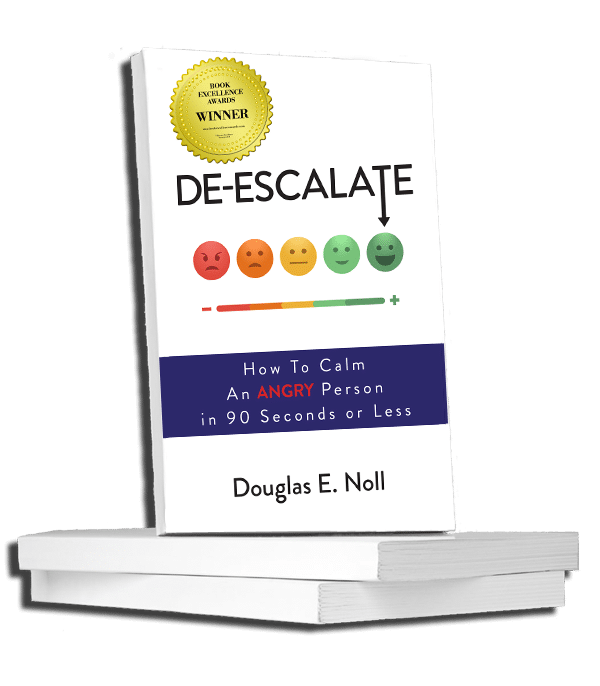
Emotional conflicts fracture teams and families. The ongoing tension breeds burnout, damages relationships, and hurts performance. The Noll Method’s 90-Second Power Move™ is a proven, neuroscience-based skill for restoring calm, tested from boardrooms to maximum-security prisons. Master this life-changing technique to transform chaos into collaboration. Book a no-obligation zoom call with Doug Noll today!
What Affect Labeling Actually Is
Affect labeling consists of accurately identifying and voicing an emotion yours or someone else’s without rushing to judge, advise, or solve. When a direct report snaps, “We’ll never hit this target,” the reflex is often to counter with logic or reassurance. A leader trained in affect labeling might instead respond calmly: “You sound extremely frustrated and perhaps a little hopeless right now.” That one sentence changes the atmosphere. The person feels seen rather than dismissed, and the conversation can shift from confrontation toward collaboration.
The power of this technique rests on solid neuroscience. A widely cited 2007 study led by UCLA neuroscientist Matthew Lieberman showed that when people put negative feelings into words, activation in the amygdala the brain’s alarm center drops noticeably, while regions involved in reasoning and regulation light up. In everyday language: naming the emotion helps move the brain out of fight-or-flight mode and back into clear thinking.
Why Emotional Turbulence Challenges Modern Leadership
Executives and managers confront emotional heat every day: anxiety during restructurings, irritation in stalled projects, quiet resentment after repeated scope changes. Left unaddressed, these feelings cloud judgment, erode psychological safety, and slow decision-making. Traditional leadership training often emphasizes strategy, delegation, and results yet pays far less attention to the moment-by-moment management of emotion. Affect labeling fills that gap with almost surgical precision.
When a leader openly names their own state “I’m feeling some real pressure about these numbers” they demonstrate self-awareness and invite candor without sacrificing credibility. When they name what others appear to feel “It looks like this change has left a lot of people feeling uncertain” they signal empathy and reduce defensiveness. Both moves build the relational capital that high-performance teams depend on.
Seeing the Technique in Action
Picture a tense performance conversation. The employee is defensive; the manager’s instinct is to justify the rating. Instead the manager pauses and says, “I can see this feedback has left you feeling disappointed and maybe unfairly judged.” Frequently the employee’s shoulders drop, they take a breath, and the real conversation begins. What started as a standoff becomes mutual problem-solving.
In team meetings the effect can be even more dramatic. During a strategy session that is turning combative, a seasoned leader might interject: “I’m picking up a lot of urgency and some underlying frustration in the room right now.” By naming the shared mood without pointing fingers, the leader validates the emotion, lowers the temperature, and re-opens space for constructive dialogue.
Self-Labeling as a Private Leadership Discipline
- Before walking into a high-stakes discussion, silently label your internal state: “I’m anxious about delivering this news.” The acknowledgment alone dampens physiological arousal.
- Midway through a stressful exchange, a quick mental note “This is irritation rising” creates enough distance to respond rather than react.
- After receiving tough feedback or suffering a setback, naming disappointment or anger short-circuits rumination and speeds emotional recovery.
Addressing the Most Frequent Objections
Leaders often hesitate for two main reasons. First: “What if I guess the wrong emotion?” In practice this concern rarely materializes as a problem. If a leader ventures, “You seem pretty angry,” and the reply comes back, “Actually I’m more hurt than angry,” the correction itself advances the dialogue and demonstrates genuine interest. Accuracy improves quickly with repetition.
Second objection: “Won’t this feel manipulative or pseudo-therapeutic?” When delivered authentically, sparingly, and with respect, affect labeling feels like nothing more than attentive listening. Leaders who adopt the practice consistently report that colleagues respond with relief and openness precisely because they feel understood instead of managed.
Wider Organizational Ripple Effects
Companies that cultivate emotional literacy where naming feelings becomes an accepted part of conversation tend to resolve conflicts faster, innovate more freely, and adapt more nimbly to disruption. In the soft-skills training market, demand continues to climb steadily as organizations recognize that technical competence alone no longer guarantees results; interpersonal and emotional capabilities increasingly determine who rises and who stalls.
The shift is especially pronounced in distributed and hybrid settings. Without casual hallway interactions to surface unspoken tension, a brief, well-timed label “You sound really discouraged on this call” can prevent small frustrations from hardening into lasting disengagement.
Even in fields where disputes are routine, parallel trends reinforce the value of emotional clarity. The rapid expansion of alternative dispute resolution services reflects a broader cultural preference for faster, less adversarial ways of handling conflict many of which begin with acknowledging the emotions involved before moving to solutions.
How to Build the Habit Without Overthinking It
No formal credential is necessary. The entry point is deliberately modest:
- Train yourself to notice emotion in real time yours first, then other’s before jumping to action.
- Start with tentative, low-stakes phrasing: “It seems like…,” “I’m sensing…,” “You sound…”
- After offering the label, pause and listen. Resist the impulse to fix or explain.
- Build fluency privately through self-labeling so the words feel natural when spoken aloud.
Within weeks most people notice a subtle but real shift: greater calm under pressure, fewer escalations, deeper conversations, and stronger relational trust.
Why This Skill Will Matter Even More Tomorrow
Technical expertise and strategic foresight remain indispensable. Yet as automation handles more routine cognition, the human advantage lies in precisely the domain where machines still struggle: reading, regulating, and responding to emotion. Affect labeling is not a passing leadership fad; it is a foundational practice that equips leaders to maintain clarity and connection when everything else feels volatile.
In boardrooms, project rooms, and virtual rooms alike, the leaders who will shape the next decade are those who can name what is felt quietly, precisely, and without flinching then channel that awareness into decisions that move people forward together.
Frequently Asked Questions
What is affect labeling and how does it help leaders manage their teams?
Affect labeling is the deliberate practice of identifying and naming emotions your own or those of others without immediately judging, advising, or problem-solving. For leaders, it helps de-escalate tense situations by making people feel understood rather than dismissed. Neuroscience research from UCLA shows that putting negative feelings into words reduces activity in the brain’s alarm center (the amygdala), shifting the brain from fight-or-flight mode back into clear, rational thinking.
Can affect labeling improve workplace communication and team performance?
Yes when leaders use affect labeling consistently, it builds psychological safety, reduces conflict escalation, and deepens relational trust within teams. By naming shared emotions during tense meetings or one-on-ones (e.g., “I’m sensing a lot of frustration in the room right now”), leaders validate feelings without pointing fingers, which reopens space for constructive dialogue. Organizations that foster this kind of emotional literacy tend to resolve conflicts faster and adapt more readily to change.
How can managers start practicing affect labeling without formal training?
No credential or formal program is required to begin. Start by noticing your own emotions in real time before jumping to action, then practice low-stakes phrases like “It seems like…” or “You sound…” when responding to others. After offering a label, pause and listen rather than rushing to fix or explain. Most leaders report noticeable improvements greater calm under pressure, fewer escalations, and stronger team trust within just a few weeks of consistent practice.
Disclaimer: The above helpful resources content contains personal opinions and experiences. The information provided is for general knowledge and does not constitute professional advice.
You may also be interested in: A Mediator’s Approach to Stopping Arguments in Boardrooms
Emotional conflicts fracture teams and families. The ongoing tension breeds burnout, damages relationships, and hurts performance. The Noll Method’s 90-Second Power Move™ is a proven, neuroscience-based skill for restoring calm, tested from boardrooms to maximum-security prisons. Master this life-changing technique to transform chaos into collaboration. Book a no-obligation zoom call with Doug Noll today!
Powered by flareAI.co