In the middle of a heated argument, the instinct is almost automatic: “Just calm down” or “Let’s look at this rationally.” These phrases feel natural, even constructive. Yet time after time they land like gasoline on a fire, transforming a manageable disagreement into something louder, more personal, and far harder to repair. Anyone who has watched a small misunderstanding explode or endured a meeting where unspoken tension made every word feel dangerous recognizes the cycle. The deeper question is not why conflict happens, but why the conflict-resolution approaches most people rely on so consistently make the situation worse.
Arguments and emotional flare-ups are part of human life. They will not disappear. But the standard toolkit active listening, logical arguments, appeals to fairness was designed for calm, reflective moments, not the raw, amygdala-driven states that dominate real conflict. When intense emotion takes over, the brain’s reasoning center steps back. What actually works in those moments is quieter, faster, and far more neurologically precise. Several unmistakable signs indicate that your current approach to handling conflict needs serious rethinking.
Emotional conflicts fracture teams and families. The ongoing tension breeds burnout, damages relationships, and hurts performance. The Noll Method’s 90-Second Power Move™ is a proven, neuroscience-based skill for restoring calm, tested from boardrooms to maximum-security prisons. Master this life-changing technique to transform chaos into collaboration. Book a no-obligation zoom call with Doug Noll today!
You Keep Using “Calm Down” and It Backfires Every Time
Few phrases escalate tension faster than telling someone to calm down. It arrives as an implicit judgment: your feelings are wrong, unacceptable, out of line. Rather than lowering the emotional temperature, the instruction compels the person to defend their right to feel what they feel creating a second, often fiercer argument about legitimacy rather than the original issue.
Neuroscience offers a clear explanation. During anger or fear, the amygdala assumes command of the brain’s threat-detection system. Words that invalidate emotion register as additional danger, intensifying the fight-or-flight response instead of quieting it. If this pattern repeats at home with a partner, in the office during feedback, or with an upset client it is powerful evidence that the default phrases in your conflict repertoire are mismatched to how the brain actually processes threat.
Presenting Facts and Logic Isn’t Shifting the Conversation
You deliver the reasonable explanation, the data, the obvious next step. The other person doubles down, withdraws, or attacks. Conventional training emphasizes objectivity, evidence, and problem-solving. Yet when the prefrontal cortex the region responsible for perspective and reasoning is temporarily suppressed by overwhelming emotion, those same facts and solutions frequently feel like criticism or dismissal.
The mismatch appears across contexts: a spouse who cannot discuss finances while still wounded by an earlier comment, a team member who freezes during performance reviews, a negotiation that collapses despite measured tones. When logical arguments repeatedly fail to move emotionally charged discussions forward, the problem lies not in how clearly you speak, but in the assumption that rationality is currently accessible to the other person.
Resentment and Distance Persist Long After the “Resolution”
The argument officially ends perhaps with a forced apology or an agreement to disagree yet the emotional atmosphere stays heavy. Silence replaces shouting, trust frays quietly, small interactions carry an edge for days or weeks. Surface-level settlements rarely touch the underlying emotional current. Unprocessed feelings do not dissolve; they wait for the next trigger.
Recurring cycles over the same issues, colleagues who avoid each other, teams that develop elaborate rituals to sidestep conflict these are reliable indicators that current methods address symptoms rather than causes. Lasting resolution requires attending to emotion first, not last.
The Techniques You Were Taught Leave You Drained Without Real Progress
Active listening, open-ended questions, “I statements” these strategies shine when both parties are relatively regulated. In genuine distress, they can sound mechanical, condescending, or like delay tactics. You finish the conversation exhausted, yet the core tension remains untouched. Persistent fatigue after conflict episodes, paired with minimal forward movement, signals that the method itself is misaligned with the intensity of the moment.
Leaders notice it in endless tense meetings that resolve nothing. Parents feel it repeating the same explanations to furious teenagers. Couples sense it cycling through familiar loops in counseling. Exhaustion without meaningful change is one of the clearest calls for a different approach.
A Neuroscience-Backed Alternative: Affect Labeling
Research reveals a strikingly effective intervention. In a widely cited 2007 study led by Matthew Lieberman, participants simply named the emotions visible in photographs of faces. The act of affect labeling naming feelings such as anger, fear, or sadness measurably decreased amygdala activation while increasing activity in brain regions associated with emotional regulation. The threat response began to subside, often rapidly.
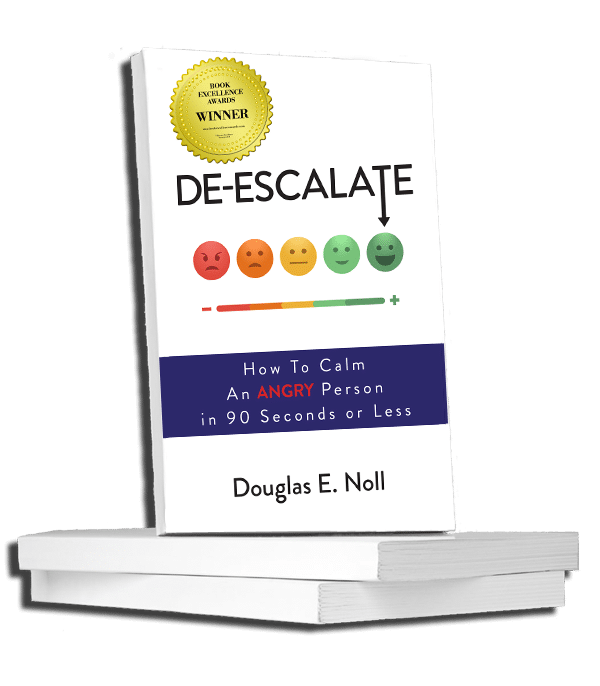
This principle underpins the Noll Method™, refined by Douglas Noll through decades of mediation, including transformative work with life-sentenced inmates in maximum-security prisons. The technique involves naming the other person’s emotion with precision and neutrality “You sound really frustrated right now,” or “It seems like this feels deeply unfair to you” without judgment, advice, or debate. Experienced practitioners consistently achieve noticeable de-escalation within approximately 90 seconds, aligning with both clinical observation and neuroimaging findings.
Unlike conventional tools that attempt to engage logic prematurely, affect labeling meets the person in their current emotional state. It offers validation without agreement, reduces physiological arousal without condescension, and clears space for rational dialogue to resume once the nervous system settles.
Why Effective De-escalation Skills Are Increasingly Valuable
Organizations increasingly recognize the power of emotional intelligence and related soft skills. North America continues to lead demand for training in leadership, communication, and interpersonal effectiveness. Industry reports show that employees who receive such training frequently experience improved performance and stronger retention. Yet many workplaces still offer these programs to only a minority of staff, leaving a substantial opportunity for leaders who can reliably lower tension and rebuild connection under pressure.
Professionals equipped with fast, reliable de-escalation methods distinguish themselves in boardrooms, classrooms, customer interactions, and family life alike. The ability to shift a charged moment toward calm is no longer a nice-to-have it is a competitive advantage.
Responding to Common Doubts
Skepticism is reasonable. Some argue that conflict is inevitable and cannot be tamed so quickly. Others worry that engaging with strong emotions feels risky or uncomfortable. These concerns are valid until the technique is experienced directly. The Noll Method does not promise the end of all disagreement; it delivers a practical way to prevent escalation and shorten recovery time. With consistent practice, users report markedly fewer spirals, faster resolutions, and noticeably stronger relationships. The real guarantee is not zero conflict, but the confidence that arguments need not grow destructive.
The Shift That Changes Everything
Mastering conflict is not about preventing every upset; it is about changing what happens immediately afterward. When familiar tactics leave arguments longer, louder, and more damaging than necessary, the evidence is compelling. A method rooted in contemporary understanding of the brain one proven across prison yards, executive suites, courtrooms, and living rooms provides what most training overlooks: speed, accuracy, and genuine calming power.
The next time emotion surges, pause the impulse to explain, fix, or reason. Instead, name what you observe. “You sound incredibly angry about this.” Observe the shift. In under ninety seconds the atmosphere can change. Dialogue becomes possible again not from a defended position, but from a place of being truly heard. That moment is where real resolution begins.
Frequently Asked Questions
Why does telling someone to “calm down” make conflict worse?
Telling someone to calm down signals that their emotions are invalid, which the brain interprets as an additional threat. During intense conflict, the amygdala takes over the brain’s threat-detection system, so phrases that dismiss emotion actually intensify the fight-or-flight response rather than easing it. This turns a single disagreement into two arguments the original issue and a battle over whether the person’s feelings are even legitimate.
Why don’t logic and facts work during emotional arguments?
When someone is overwhelmed by strong emotion, the prefrontal cortex the brain region responsible for reasoning and perspective becomes temporarily suppressed. This means that presenting data, explanations, or solutions during a heated moment often registers as criticism or dismissal rather than helpful input. Rationality simply isn’t accessible to someone in an emotionally activated state, no matter how clearly the argument is made.
What is affect labeling, and how does it help de-escalate conflict?
Affect labeling is the practice of naming another person’s emotion out loud for example, saying “You sound really frustrated right now” without judgment or advice. A landmark 2007 study by Matthew Lieberman found that simply naming emotions measurably reduces amygdala activation and engages brain regions tied to emotional regulation. Used in the Noll Method™, this technique can produce noticeable de-escalation within about 90 seconds, creating the calm needed for productive dialogue to resume.
Disclaimer: The above helpful resources content contains personal opinions and experiences. The information provided is for general knowledge and does not constitute professional advice.
You may also be interested in: 5 Powerful Signs Your Emotional Intelligence is Failing in Family
Emotional conflicts fracture teams and families. The ongoing tension breeds burnout, damages relationships, and hurts performance. The Noll Method’s 90-Second Power Move™ is a proven, neuroscience-based skill for restoring calm, tested from boardrooms to maximum-security prisons. Master this life-changing technique to transform chaos into collaboration. Book a no-obligation zoom call with Doug Noll today!
Powered by flareAI.co