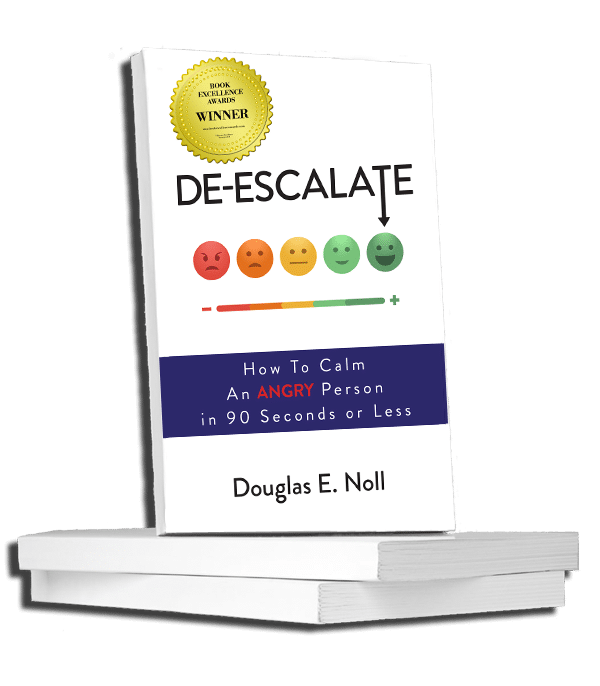
In the middle of a heated argument, few expressions fail as spectacularly as “calm down.” Intended to lower the temperature, those two words usually have the opposite effect pouring fuel on an already blazing emotional fire. The reason is rooted in basic neuroscience: when strong feelings take hold, the brain’s threat-detection system the amygdala gains the upper hand. Instructions to suppress emotion register as criticism or control, which only heightens the sense of danger and pushes tension higher.
Fortunately, there is a far more effective way to guide conversations away from reaction and toward resolution. These methods are not vague self-help advice; they rest on decades of practical application and solid brain science. They prove reliable whether the setting is a family kitchen, a high-pressure boardroom, a busy hospital corridor, or even the most volatile cellblocks in maximum-security prisons. Central to this approach stands one disarmingly simple yet remarkably powerful skill: affect labeling.
Emotional conflicts fracture teams and families. The ongoing tension breeds burnout, damages relationships, and hurts performance. The Noll Method’s 90-Second Power Move™ is a proven, neuroscience-based skill for restoring calm, tested from boardrooms to maximum-security prisons. Master this life-changing technique to transform chaos into collaboration. Book a no-obligation zoom call with Doug Noll today!
Why Telling Someone to “Calm Down” Almost Always Backfires
The phrase “calm down” tends to inflame rather than soothe because it dismisses the other person’s lived experience. When someone is emotionally flooded, they already feel unseen or invalidated. Your well-meaning directive lands as judgment, signaling that their feelings are unwelcome or inappropriate. Neuroimaging research consistently shows that during intense emotion, the prefrontal cortex responsible for reasoning and impulse control temporarily loses influence while the amygdala amplifies perceived threats. Direct attempts to override feelings in that state are interpreted as another threat, not as help.
You see this pattern repeat across contexts: a colleague bristles after receiving blunt feedback, partners spiral over a forgotten anniversary, a supervisor’s correction sparks defensiveness instead of reflection. In every case, bypassing the emotion and jumping straight to “fix it” mode keeps the conflict cycle spinning. The alternative is surprisingly straightforward: acknowledge the feeling first.
Affect Labeling: The Science and Speed of Emotional Validation
Affect labeling is the act of calmly naming the emotion you observe in someone else “You sound really frustrated right now,” or “It seems like this really upset you.” The statement is observational, not interpretive. There is no advice attached, no rush to solve, no subtle criticism hidden in the words.
Functional MRI studies demonstrate why this works so quickly. Simply putting a feeling into words reduces activity in the amygdala while activating regions involved in emotional regulation. For many people, the physiological shift begins within seconds and becomes noticeably calming in under ninety seconds. The technique does not erase the emotion; it honors it, communicates safety, and allows the brain’s reasoning networks to come back online.
This is far more than laboratory curiosity. The method has been rigorously tested in some of the most challenging environments imaginable. One expert with over forty years of experience including training individuals serving life sentences to interrupt prison violence has relied on affect labeling to transform explosive situations into manageable dialogue. The same principle translates seamlessly to everyday professional and personal conflicts, revealing its broad, universal effectiveness.
Turning Down the Heat in Professional Environments
Effective communication is the lifeblood of any high-performing organization. When misunderstandings accumulate or emotions run unchecked, resentment builds, collaboration erodes, and turnover climbs. Companies that deliberately build emotional de-escalation skills into their culture consistently report stronger teamwork, fewer destructive conflicts, and improved employee satisfaction.
Modern workplaces already invest heavily in communication infrastructure. The explosive growth of unified communication platforms and internal messaging tools reflects how seriously enterprises now treat connection as strategic infrastructure rather than a nice-to-have feature. Yet technology alone cannot address the human dynamics of tension and misunderstanding. Training in affect labeling and related de-escalation methods fills that critical gap, giving people practical tools to navigate the emotional side of workplace friction.
Five Practical Steps Leaders and Teams Can Use Today
- Pause and observe: Before responding, take a breath and notice the emotional undercurrent.
- Name what you see: Use simple, nonjudgmental language “You seem really disappointed” or “This looks overwhelming for you.”
- Keep your tone neutral and curious: Avoid sarcasm, exasperation, or any hint of superiority.
- Allow space for the shift: Most people begin to settle within ninety seconds once the emotion is acknowledged.
- Transition to collaborative problem-solving: Only after the emotional intensity drops should you move into solutions.
These five steps turn reactive moments into opportunities for genuine understanding and progress.
Addressing the Most Common Objections
Skepticism about these techniques usually falls into three camps. Some insist that arguments are simply an unavoidable part of human relationships. Others question whether naming feelings can really change anything. A third group admits to discomfort with engaging emotions both their own and other people’s.
Experience and evidence counter each objection. Conflict may never disappear entirely, but the way we handle it can change dramatically. Affect labeling does not pretend to end disagreement; it prevents unnecessary escalation and creates space for constructive dialogue. The reluctance to work with emotions often fades quickly once people experience how much calmer and more effective conversations become after a brief labeling moment. In settings ranging from correctional facilities to Fortune 500 conference rooms, the approach has repeatedly proven its reliability no special personality or advanced degree required, only a willingness to name feelings before trying to fix them.
Creating Lasting Change: From Reaction to Resolution
Mastering these skills requires deliberate practice, yet the return on that investment is substantial. Everyday conversations become less volatile and more productive. Relationships personal and professional grow more resilient. Teams solve problems faster because they spend less time entangled in defensiveness.
In today’s world of hybrid teams, digital overload, and constant connectivity, small misunderstandings can snowball with alarming speed. The ability to de-escalate quickly and authentically has become a genuine competitive advantage.
The conflict resolution methods developed and taught by Doug Noll draw on more than four decades of frontline experience and cutting-edge neuroscience. His promise is straightforward and bold: learn and apply these techniques, and you will gain the power to stop fights and destructive arguments in their tracks.
The next time emotion begins to rise, resist the reflex to say “calm down.” Instead, offer a calm, accurate name for what you observe. Then wait. In ninety seconds or less, you may see something remarkable: tension giving way to clarity, defensiveness dissolving into dialogue, and conflict transforming quietly but powerfully into resolution.
Frequently Asked Questions
Why does telling someone to “calm down” make things worse?
Saying “calm down” tends to backfire because it dismisses the other person’s feelings, making them feel unseen or judged. Neurologically, when someone is emotionally flooded, the amygdala (the brain’s threat-detection center) is in control, and a directive to suppress emotion registers as another threat not as help. This actually intensifies the conflict rather than defusing it.
What is affect labeling and how does it reduce conflict?
Affect labeling is the practice of calmly naming the emotion you observe in someone else for example, “You seem really frustrated right now.” Functional MRI research shows that simply putting a feeling into words reduces amygdala activity and activates the brain’s emotional regulation systems, often producing a noticeable calming effect within 90 seconds. Unlike telling someone what to feel, affect labeling validates their experience and creates the psychological safety needed for productive dialogue.
Can de-escalation communication techniques really work in high-pressure professional environments?
Yes affect labeling and related de-escalation strategies have been successfully applied in some of the most challenging settings imaginable, from maximum-security prisons to Fortune 500 boardrooms. Organizations that embed emotional de-escalation skills into their culture report stronger teamwork, fewer destructive conflicts, and higher employee satisfaction. The key is following a simple process: acknowledge the emotion first, allow space for the emotional intensity to drop, and only then transition to collaborative problem-solving.
Disclaimer: The above helpful resources content contains personal opinions and experiences. The information provided is for general knowledge and does not constitute professional advice.
You may also be interested in: Home – Douglas E. Noll
Emotional conflicts fracture teams and families. The ongoing tension breeds burnout, damages relationships, and hurts performance. The Noll Method’s 90-Second Power Move™ is a proven, neuroscience-based skill for restoring calm, tested from boardrooms to maximum-security prisons. Master this life-changing technique to transform chaos into collaboration. Book a no-obligation zoom call with Doug Noll today!
Powered by flareAI.co